Key takeaways
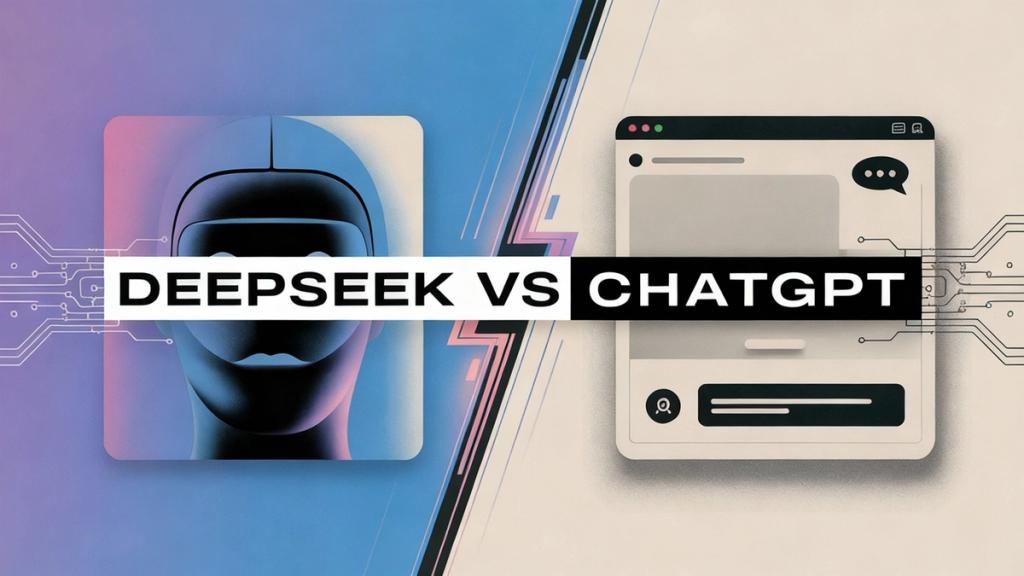
Explore our detailed DeepSeek vs ChatGPT comparison. We analyze performance, coding, data analysis, and pricing to help you choose the right AI for your needs.
Ask an AI about this article
The AI landscape just got a massive shake-up. While ChatGPT has dominated conversations since late 2022, a new challenger from China called DeepSeek burst onto the scene in early 2025, rapidly gaining hundreds of millions of users and sending tech stocks tumbling.
This isn't just another AI tool launch. DeepSeek's meteoric rise represents something bigger: proof that innovation doesn't require the biggest budgets or the most expensive hardware. Built with clever engineering and far fewer resources than ChatGPT, research shows DeepSeek achieved comparable performance while being completely free to use.
But which AI chatbot actually serves your needs better? We've tested both extensively to give you the complete picture. This comparison covers everything from technical capabilities and cost to privacy considerations and real-world performance.
All information reflects the current state as of 2025, though the AI field moves incredibly fast.
What's the difference between DeepSeek and ChatGPT?
Before diving deep, here's what sets these two AI systems apart:
Aspect | ChatGPT | DeepSeek |
|---|---|---|
Origin | OpenAI (USA), unified GPT-5 transformer models | High-Flyer (China), clever MoE architecture |
System Type | Closed-source black box | Completely open-source |
Pricing Model | Limited free, $20/month Plus | Entirely free (for now) |
Feature Focus | Multimodal Swiss Army knife | Text-only with web search |
Hardware Approach | Brute force computation | Efficient expert routing |
Transparency | Behind-the-scenes reasoning | Shows step-by-step thinking |
How do DeepSeek and ChatGPT actually work?
How ChatGPT processes your questions
ChatGPT uses OpenAI's latest GPT-5 models built on transformer architecture. Think of it as one massive expert that consults all of its billions of parameters for every single query. This approach requires enormous computational power but delivers consistently fluent, context-aware responses.
GPT-5 features a massive 400K token context window - meaning it can process and remember entire books, lengthy documents, or hours of conversation without losing track of details. The training process involved feeding the model massive amounts of internet text (with training data through September 2024), then fine-tuning it with human feedback to follow instructions and avoid problematic outputs. It's the "throw everything at the wall" approach.
And it works remarkably well.

Why DeepSeek runs so much cheaper
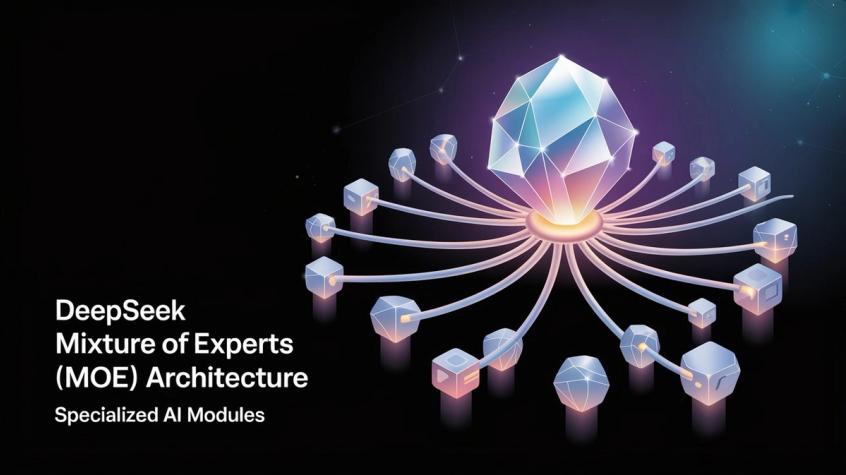
DeepSeek's flagship V3 model is actually larger than ChatGPT at 671 billion parameters, but here's the twist: it only uses about 37 billion parameters per query.
This is possible through Mixture-of-Experts (MoE) architecture. Instead of one giant model, DeepSeek is essentially a panel of specialized experts. When you ask a question, a gating system determines which expert modules are most relevant and only activates those.
The result: DeepSeek can match GPT-4-level performance while running on cheaper hardware. It's like having a whole team of specialists but only calling in the ones you actually need for each task.
This efficiency was crucial because of export restrictions on high-end GPUs to China. The DeepSeek team had to innovate around hardware limitations, and they turned constraint into advantage.
What's the difference between standard and deep thinking modes?
Both platforms offer more than basic text generation:
Platform | Standard Mode | Advanced Reasoning |
|---|---|---|
ChatGPT | GPT-5 (unified reasoning) | o3, o4-mini models with internal chain-of-thought |
DeepSeek | V3 fast responses | R1 "DeepThink" with visible step-by-step process |
The DeepThink feature is fascinating. You can literally watch the AI work through a problem, seeing exactly how it arrives at its conclusion. ChatGPT's o3 and o4-mini models provide similar deep reasoning capabilities, though the thinking process usually happens behind the scenes with GPT-5 automatically deciding when to engage deeper reasoning.
DeepSeek vs ChatGPT performance: Which is better for what?
Which AI chatbot feels more natural to talk to?
ChatGPT excels at natural, conversational responses. It's been fine-tuned to be friendly and engaging, often providing just the right amount of detail and context. Studies show ChatGPT grasps intent behind vague questions and responds in a helpful, almost human-like manner. GPT-5 also features 45% fewer hallucinations compared to previous models, making it more reliable for factual queries.
For brainstorming sessions or when you need an AI that "gets" what you're trying to accomplish, ChatGPT feels more intuitive. It adds commentary, asks clarifying questions, and generally behaves like a knowledgeable conversation partner.
DeepSeek delivers more formal, to-the-point answers. Users often describe its responses as "more robotic" but incredibly precise on factual or technical questions. It doesn't add extra commentary unless specifically asked, which can be both a strength and limitation depending on your needs.
Where DeepSeek shines is factual accuracy, especially with its built-in web search. While ChatGPT's free version might say it doesn't have information past 2021, DeepSeek can search the web in real-time for current information.
Which AI is better for math and logic problems?
This is where DeepSeek takes a clear lead.
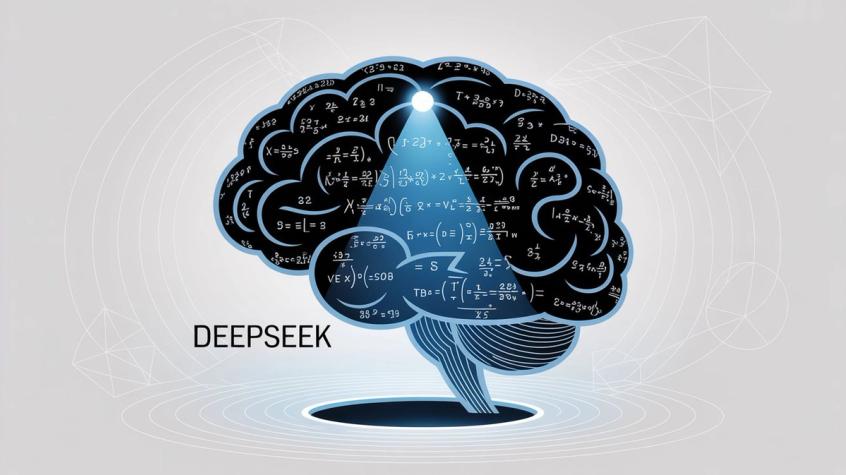
Research shows DeepSeek achieved roughly 90% accuracy on math queries, outperforming many other models including early GPT-4 versions.
The R1 "DeepThink" mode is specifically designed for step-by-step reasoning. When you give DeepSeek a tricky math problem or logical puzzle, it methodically works through each step, showing its reasoning process. This makes it less likely to make arithmetic mistakes or logical errors.
ChatGPT is certainly capable of math and reasoning, especially with proper prompting ("let's think step by step"). But DeepSeek's reasoning-by-design approach often produces more rigorous solutions for complex logical tasks.
For students, researchers, or professionals who regularly work with quantitative problems, this could be a deciding factor.
Which AI chatbot is better for coding help?
Both are excellent coding assistants, but with different strengths:
→ ChatGPT (especially GPT-5)
Acts like an amazing coding tutor. It not only generates code but provides detailed explanations of what it wrote and why. Research shows ChatGPT walks you through each step of the solution, making it invaluable for learning or understanding complex implementations.
→ DeepSeek
Features a specialized "DeepSeek Coder" model under the hood. When you input programming questions, its MoE system routes them to code-optimized expert networks. Developers report that DeepSeek produces clean, efficient code quickly, though with less explanatory text unless requested.
The practical difference: ChatGPT is your coding mentor, while DeepSeek is your efficient coding partner. Choose ChatGPT for learning, DeepSeek for rapid prototyping.
Which AI writes better content and copy?
ChatGPT's conversational training really shows here. It excels at:
• Generating diverse creative ideas
• Maintaining consistent tone across long pieces
• Adapting to different writing styles
Studies indicate ChatGPT provides multiple approaches and thinks creatively. Perfect for overcoming writer's block or brainstorming campaigns.
DeepSeek tends to provide fewer but more thoroughly developed ideas. Rather than throwing out ten quick concepts, it might present two or three well-thought-out approaches. Its writing style is more formal by default, though it can be prompted to be more casual.
For marketing teams or content creators, ChatGPT's natural creativity and variety often feels more inspiring. DeepSeek works better when you need one solid, well-developed piece rather than multiple options.
What can ChatGPT do that DeepSeek can't?
Here's where the platforms diverge most dramatically:
ChatGPT is becoming a true multimodal AI:
→ Image analysis: Upload photos, charts, or diagrams for analysis
→ Image generation: Create graphics through integrated GPT-4o with improved text rendering and multi-object handling
→ Voice conversations: Speak with ChatGPT and hear responses
→ File handling: Upload documents for analysis (PDFs, text files, etc.)
→ Video creation: Pro users can generate short videos with Sora
→ Integrated tool use: GPT-5 can autonomously use tools like web browsing, code execution, and image generation as needed
DeepSeek focuses purely on text but does it exceptionally well:
① Document uploads: Extract and analyze text from PDFs or documents
② Web search: Built-in real-time web search for current information
③ Reasoning transparency: See the AI's step-by-step thought process
GPT-5 comes in multiple variants (base, mini, nano, chat) optimized for different speed and cost requirements, all sharing the same core capabilities and 400K context window.
If your work involves visual content, design, or multimedia, ChatGPT is the clear choice. For text-intensive tasks like research, analysis, or coding, DeepSeek's focus can actually be an advantage. No distractions, just powerful text processing.
DeepSeek vs ChatGPT cost: How much do they actually cost?
Is DeepSeek really free to use?
Yes, completely free.
DeepSeek is completely free for end users through its website and mobile apps. The only real limitation is around 50 reasoning messages per day when using "DeepThink" mode, but regular usage feels unlimited.
For developers, DeepSeek's API is remarkably cheap:
Token Type | Peak Rate | Off-Peak Rate |
|---|---|---|
Input tokens | $0.14 per million | $0.035 per million |
Output tokens | $2.19 per million | $0.55 per million |
These rates are roughly 27x cheaper than OpenAI's GPT-5 API, making it incredibly attractive for businesses building AI-powered applications. For context, Spur's AI pricing calculator shows exactly how these costs compare across different AI models and usage patterns.
How much does ChatGPT cost per month?
Free Tier: Access to GPT-5 with daily limits, web browsing, and basic features.
ChatGPT Plus ($20/month):
• Full access to GPT-5 and all model variants
• Image understanding and generation
• Advanced voice mode
• Custom GPTs
• Priority access during peak times
ChatGPT Pro ($200/month):
• Enhanced reasoning with GPT-5-pro mode
• Higher usage limits (400K token context)
• Dedicated compute power
For casual users, DeepSeek's free tier is hard to beat. For professionals who need reliability, advanced features, and business-grade support, ChatGPT Plus offers compelling value at $20/month. GPT-5 is now the default model for all users, with free tier users getting access to the same model with usage limits.
Is DeepSeek safe to use? Privacy and security concerns
This is where choosing between DeepSeek and ChatGPT gets complicated:
Where is your data stored with each AI?
DeepSeek's servers are based in China, which raises legitimate concerns about data privacy. Under Chinese law, authorities could potentially access any data on those servers. For casual queries, this might not matter. For confidential business information or sensitive personal data, it's a significant concern.
Several organizations have already banned DeepSeek for this reason, and some governments are considering restrictions.
ChatGPT operates from the U.S. with enterprise-grade security options. OpenAI offers:
① SOC 2 compliance for business users
② Option to disable chat history and training data usage
③ "Temporary chat" mode for privacy-focused conversations
④ Enterprise plans with strong data protection commitments
What topics can each AI discuss?
Both platforms filter harmful content, but their boundaries differ:
Platform | Restrictions | Additional Limits |
|---|---|---|
ChatGPT | Illegal activities, violence, hate speech | Based on global ethical standards |
DeepSeek | Same general restrictions | Chinese government censorship requirements |
For research or analysis involving political topics, these restrictions could significantly impact usefulness.

How to use AI for customer support (without the technical headaches)
While we're comparing these impressive AI models, it's worth noting how businesses can actually use AI capabilities in practical applications.
The Challenge with DIY AI Integration
Both ChatGPT and DeepSeek are powerful tools, but they're designed for general use. Implementing them for specific business functions (like customer support on WhatsApp, Instagram, or live chat) requires significant technical work and ongoing maintenance.
You'd need to:
① Build custom integrations for each messaging platform
② Train the AI on your specific business knowledge
③ Set up proper handoff systems for complex queries
④ Manage multiple conversations across different channels
⑤ Ensure compliance with data privacy requirements
The Spur Approach
This is exactly why we built Spur differently. Instead of asking businesses to cobble together their own AI solutions, we provide actionable AI agents that are specifically designed for customer engagement across WhatsApp, Instagram, Facebook Messenger, and live chat.
Unlike basic chatbots that just answer FAQ questions, Spur's AI agents can actually take actions: check order status, book appointments, process payments through integrations, and seamlessly hand off complex issues to human agents.
The key difference? Spur trains AI on your knowledge base. Your website data, help articles, product information, and business processes.
Our comprehensive guide on training chatbots on website data explains exactly how this knowledge base training works and why it's crucial for effective customer support automation.
Model Flexibility
Here's something interesting: Spur doesn't lock you into one AI model. We support OpenAI, Claude, Gemini, and Grok, giving you the flexibility to switch between models based on performance or cost considerations. This model switching capability means you can test and optimize without engineering work.
Whether you choose DeepSeek's cost efficiency or ChatGPT's advanced features, Spur can integrate with multiple AI backends to provide no-code automation tools that work across all your messaging channels.
DeepSeek vs ChatGPT: Which should you choose?
When to choose DeepSeek over ChatGPT
→ You're budget-conscious or a heavy user
Getting GPT-4-level performance for free is remarkable, especially for students, researchers, or professionals who need extensive AI assistance but can't justify monthly subscriptions.
→ Your work is primarily text-based and technical
DeepSeek excels at coding, mathematical reasoning, and analytical tasks. The transparent reasoning mode is invaluable for understanding how the AI arrived at its conclusions.
→ You value open-source principles
Being able to inspect, modify, or self-host the model appeals to developers and organizations wanting more control.
→ You frequently need current information
The built-in web search makes it easy to get up-to-date facts and data.
When to choose ChatGPT over DeepSeek
✓ You need more than text
If your work involves images, voice, or multimedia content, ChatGPT is currently the only option between these two.
✓ You're building business applications
ChatGPT's enterprise features, compliance certifications, and established ecosystem make it more suitable for professional use.
✓ You prefer conversational, friendly AI
ChatGPT's training for natural conversation makes it feel more like a helpful assistant than a formal tool.
✓ Data privacy is crucial
For sensitive information or compliance-heavy industries, ChatGPT's data handling and enterprise options provide necessary assurances.
Should you use both AI chatbots?
Absolutely.
Many users don't pick exclusively. DeepSeek for technical work and unlimited usage, ChatGPT for creative tasks and multimodal needs. The competition between these platforms benefits everyone by driving innovation and (hopefully) better pricing.
For businesses implementing AI-powered customer service, platforms like Spur can help you use the best features of multiple AI models without the complexity of managing them directly.
What DeepSeek vs ChatGPT means for the future of AI
DeepSeek's emergence proves that AI innovation isn't limited to Silicon Valley or massive budgets. Research demonstrates that clever engineering can rival brute force spending, shaking up assumptions about what's required to build world-class AI.
For businesses looking to set up AI in customer support and engagement, the key isn't necessarily choosing between DeepSeek and ChatGPT. It's finding solutions that use AI effectively for your specific use cases. Whether that's through direct API integration or platforms like Spur that handle the complexity for you.
The competition between these models ultimately benefits users.
ChatGPT must continue innovating to maintain its lead, while DeepSeek's success encourages more open, efficient approaches to AI development.

Businesses implementing chatbots for customer service can now choose from multiple world-class AI backends, each with unique strengths. Live chat widgets powered by these advanced AI models can provide more natural, helpful customer interactions than ever before.
The Bottom Line
The AI landscape in 2025 gives us unprecedented choice and capability. Whether you choose DeepSeek's free efficiency or ChatGPT's premium features, you're accessing technology that was science fiction just a few years ago.
The real winner? Users who now have multiple world-class AI assistants to choose from.
And businesses that can use these advances through specialized platforms to deliver exceptional customer experiences.
Frequently Asked Questions
For text-based tasks, DeepSeek often matches or exceeds ChatGPT's performance, especially in mathematical reasoning and coding. But ChatGPT's multimodal capabilities, GPT-5's unified reasoning, and conversational polish give it advantages in creative tasks and general use.
DeepSeek's efficient architecture makes it much cheaper to run, and the Chinese company may be using free access as a growth strategy. OpenAI's approach focuses on premium features and enterprise services for revenue.
While technically possible, most businesses should carefully consider the data privacy implications of using Chinese-hosted servers, especially for sensitive information. For business-grade AI implementation, consider platforms like Spur that provide enterprise security while using multiple AI models.
ChatGPT provides better educational explanations and context, making it ideal for learning. DeepSeek generates clean code quickly, making it better for experienced developers who need rapid assistance.
Nothing is guaranteed, though the open-source nature means community versions would likely remain available even if the official service introduced pricing.
Both DeepSeek and ChatGPT represent the current state-of-the-art, generally outperforming older models. Claude and Gemini have their own strengths, but these two currently lead in overall capability and availability. For businesses, having AI model flexibility allows you to choose the best model for each specific use case.
Both models are quite accurate but not perfect. DeepSeek's web search capability can help verify current information, while ChatGPT's extensive training reduces common errors. Always verify important information regardless of the source. This is why proper AI agent training on business-specific data is so important for customer-facing applications.
ChatGPT with GPT-5 officially supports 50+ languages with generally strong performance and improved accuracy. DeepSeek is strongest in English and Chinese, with less reliable performance in other languages. Spur supports 95+ languages for global customer engagement.
Was this article useful?