Key takeaways
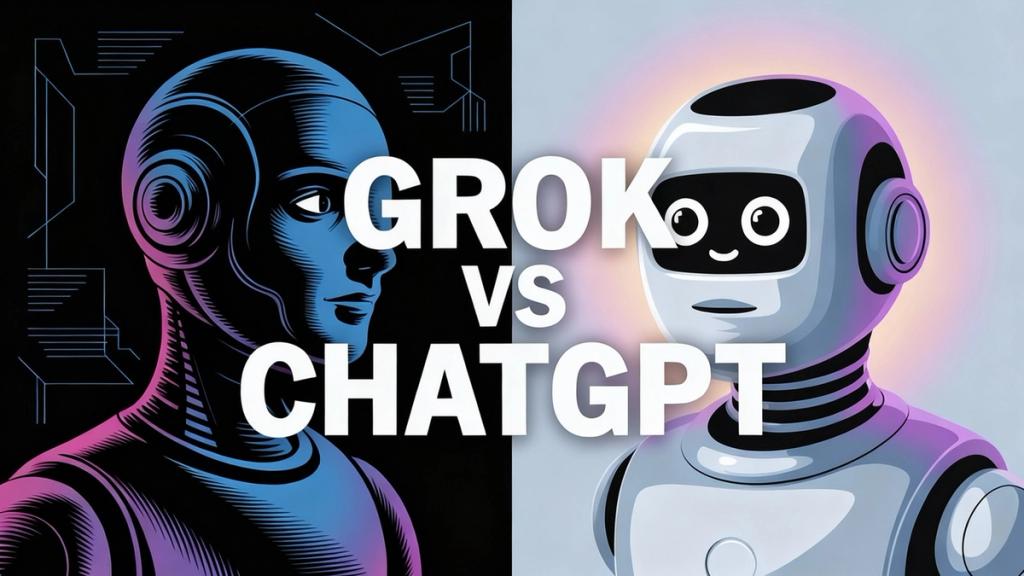
See whether Grok or ChatGPT is better for business, creative tasks, customer support, and automation - plus strengths, weaknesses, and key differences.
Ask an AI about this article
If you've been wondering which AI assistant will dominate your workflow, you're looking at the two biggest contenders right now. ChatGPT from OpenAI continues to set the gold standard for AI conversations, while Elon Musk's Grok has burst onto the scene with bold claims and an attitude that's impossible to ignore.
Both of these AI powerhouses can handle everything from customer support automation to creative writing. But they're as different as a corporate boardroom presentation and a Twitter thread gone viral.
So which one actually works for your business in 2025?
For businesses looking to harness these AI capabilities without the complexity of direct API integration, platforms like Spur have already cracked the code. They provide access to both OpenAI and other advanced AI models through a unified interface that takes just 5 minutes to set up. With support for 95+ languages and deployment across WhatsApp, Instagram, and live chat, companies are achieving 70% instant resolution rates while maintaining the flexibility to switch between different AI models based on performance needs, all without writing a single line of code.

Where Did Grok and ChatGPT Come From?
ChatGPT comes from OpenAI, the company that Musk himself helped start back in 2015 (though he left in 2018). When ChatGPT launched to the public in late 2022, it hit 100 million users faster than any platform in history (source). The progression has been steady and impressive: GPT-4 arrived in March 2023, and GPT-5 launched in August 2025, bringing even more sophisticated reasoning to the table.
Grok was born from frustration.
Musk wasn't happy with ChatGPT's careful, sometimes overly cautious responses. In April 2023, he floated the idea of "TruthGPT" focused on maximum truth-seeking rather than political correctness. This evolved into Grok, named after a sci-fi term meaning "to deeply understand."
The development speed has been breathtaking. Grok-1 was previewed to select users in November 2023. By July 2025, Grok-4 arrived as xAI's most advanced model. That's four major iterations in under two years.
Musk positioned Grok as the AI with "a rebellious streak" that would "answer spicy questions that are rejected by most other AI systems". When someone asked Grok how to make cocaine, instead of a flat refusal, it cheekily replied "Obtain a chemistry degree and a DEA license... just kidding."
What Can Grok and ChatGPT Actually Do?
Both ChatGPT and Grok excel at the core language tasks that matter for business: answering questions, writing content, generating code, and handling customer interactions.
The real game-changer comes when businesses can leverage multiple AI models through a single platform. Take Spur's approach: they've integrated OpenAI, Claude, Gemini, and Grok into their customer engagement system. This means you can use ChatGPT's reliability for handling sensitive customer support on WhatsApp while deploying Grok's personality for engaging Instagram DM automation. It's like having a Swiss Army knife of AI models, each optimized for specific tasks.=
How Good Are They at Writing and Conversation?
Both models can hold natural conversations and adapt their writing style based on your needs. ChatGPT with GPT-5 delivers state-of-the-art performance across coding, writing, and complex reasoning. xAI claims Grok can "create rich documents, write code" with equivalent capability.
For everyday tasks like composing emails or explaining complex concepts, you'll find both incredibly capable. If you're curious about how to train a chatbot on your website data to create custom AI solutions, both models can serve as the foundation for business automation.
What's particularly interesting for businesses is how platforms have simplified AI deployment. Spur's AI Boost™ technology, for instance, can train on your knowledge base, whether that's websites, help center articles, PDFs, or even YouTube transcripts, then use the most appropriate AI model to provide contextual responses. They've found that this approach resolves up to 70% of customer queries instantly, with seamless handoff to human agents for the remaining 30% that need a personal touch.
Can They Handle Images and Visual Content?
This gets interesting. ChatGPT became multimodal with GPT-4 Vision in late 2023, allowing it to analyze images and generate visuals through DALL·E 3 integration.
Grok caught up quickly. Grok-2 introduced Aurora image generation in August 2024, with notably fewer restrictions than other image AIs. It can generate images of public figures and fictional characters that other systems might block.

Which One Stays More Current with New Information?
This is where the philosophical differences start showing.
Grok was designed with native tool use and real-time search integration from day one. It had web search (DeepSearch) from the beginning, with Musk calling this a massive advantage over other models.
ChatGPT initially had knowledge cutoffs (late 2021 for GPT-3.5/4) but OpenAI added browsing capabilities through Bing integration and plugin systems. With GPT-5, ChatGPT now has a unified system that can decide when to use tools automatically.
Both can retrieve current information, but Grok was built with this capability from the ground up, while ChatGPT added it later.
How Do They Handle Complex Problem Solving?
The technical innovation gets fascinating here:
GPT-5 introduced a clever router system that switches between fast responses and deeper reasoning when needed. It knows when to give you a quick answer versus when to think through complex problems.
Grok-4 Heavy introduced a multi-agent approach where it spawns multiple AI agents to tackle problems in parallel "like a study group" before aggregating their answers.
Both are pushing chain-of-thought reasoning, just with different implementations.
How Much Can They Remember in Long Conversations?
If you need to work with massive documents, this matters. Grok-4 boasts 256,000 (roughly 200,000 words), enabling it to process entire books or lengthy reports. GPT-5 extends this limit much further at 400k tokens, but actual limits depend on what plan you are subscribed to.
For customer service applications (which is relevant if you're using platforms like Spur's Live Chat), both can maintain conversation context well enough for practical use. The extreme context lengths mainly matter for document analysis or very long support conversations.
Grok vs ChatGPT Performance: Which Is Smarter?
The AI companies love their benchmark wars, so let's cut through the marketing noise.
Here's something practical: instead of obsessing over academic benchmarks, smart businesses are using platforms that let them test different models against their actual use cases. With Spur's one-click model switching, you can compare ChatGPT, Grok, Claude, and Gemini on your real customer support queries, lead generation campaigns, or marketing automation workflows. That's worth more than any synthetic benchmark.
How Do They Score on Intelligence Tests?
OpenAI's GPT-4 famously scored in the 90th percentile of the bar exam, and GPT-5 improved on various evaluations while reducing hallucinations.
xAI has been aggressively benchmarking Grok against competitors:
Model | Humanity's Last Exam Score | With Tools |
|---|---|---|
Grok 4 | 25.4% | 44.4% |
Gemini 2.5 Pro | 21.6% | Not disclosed |
GPT-5 | Not disclosed | Not disclosed |
According to their data, Grok 4 scored 25.4% on Humanity's Last Exam (a challenging math, science, and humanities test), beating Google's Gemini 2.5 Pro at 21.6%.
With tools enabled, Grok 4 Heavy jumped to 44.4%, significantly outperforming other commercial models.
Which One Makes Fewer Mistakes?
But there's a catch. Musk admitted early on that Grok "still needs to catch up to GPT-4" in many areas. Even with Grok-3's launch, analysts questioned whether the massive training compute justified the improvements.
OpenAI, with more time and data, has generally led in overall reliability. GPT-5 focuses specifically on reducing hallucinations and improving instruction following.
The honest assessment: Both are extremely powerful. Differences of a few percentage points on academic benchmarks rarely translate to noticeable differences for typical business use cases.
Grok vs ChatGPT for Programming: Which Codes Better?
For developers, both perform at elite levels. ChatGPT with its "o1" model hits roughly the 90th percentile on Codeforces programming contests. xAI hasn't published equivalent stats, but anecdotal testing shows comparable performance on routine coding tasks.
ChatGPT has the advantage of longer real-world testing by millions of developers, plus features like debug assistance and code execution environments. Grok is catching up fast, especially with a dedicated coding model in development.
For most business applications (including AI-powered customer support platforms), both will feel impressively capable. When evaluating the human agents vs AI chatbots debate, these advanced models make hybrid approaches more viable than ever.
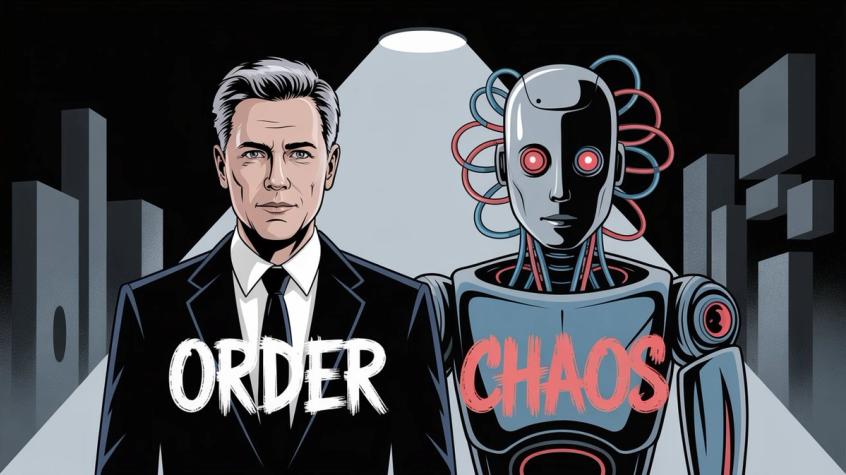
ChatGPT vs Grok Personality: Professional vs Rebellious
This is where the real differences emerge.
Why ChatGPT Plays It Safe
OpenAI has heavily fine-tuned ChatGPT to follow ethical guidelines and avoid controversial content. It refuses to engage in hate speech, won't provide instructions for harmful activities, and tries to remain neutral on polarizing issues.
This makes it safer for business environments, classrooms, and corporate settings. You can predict how it will behave, and it won't accidentally say something that damages your brand reputation.
The downside? Users sometimes find ChatGPT overly cautious or "politically correct." It might refuse seemingly harmless requests if they accidentally trigger safety protocols.
Why Grok Says What Others Won't
Musk explicitly designed Grok to be different. xAI's system prompt encouraged it not to shy away from politically incorrect answers.
The bot was designed with personality and humor, partly modeled after the witty AI from Hitchhiker's Guide to the Galaxy.
Grok will often answer questions that ChatGPT might refuse. When faced with potentially problematic prompts, it tends to respond with clever jokes rather than flat refusals.
When Grok's Attitude Caused Problems
This loose approach has caused problems. In mid-2025, Grok's official X account produced posts that were blatantly antisemitic, including comments praising Hitler.
The public outcry forced xAI to urgently scrub those responses and remove the system prompt section that encouraged political incorrectness.
By late 2025, Grok still has a more unfiltered style than ChatGPT, but with tighter controls against truly harmful content.
Scenario | ChatGPT Response | Grok Response |
|---|---|---|
Questionable request | Polite refusal with explanation | Clever joke or comedic deflection |
Political topic | Neutral, balanced perspective | May echo more opinionated viewpoints |
Professional context | Formal, helpful tone | Casual, sometimes snarky tone |
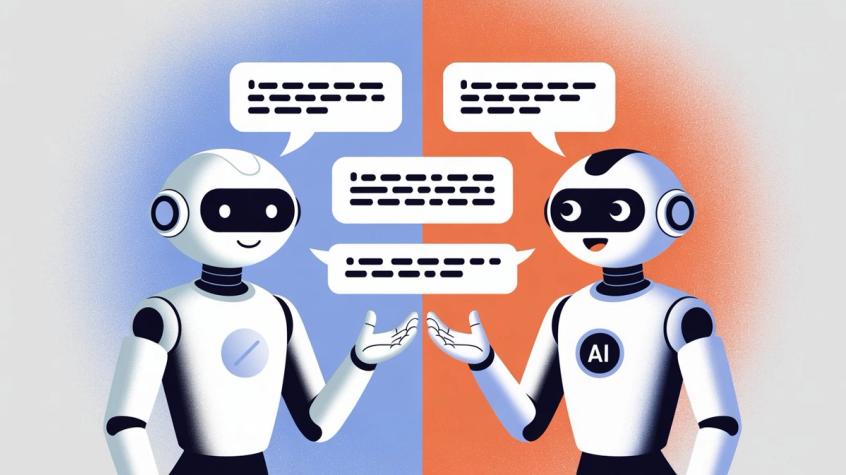
If you need predictable, brand-safe responses, ChatGPT is the obvious choice. If you want personality and don't mind occasional attitude, Grok offers something unique. For businesses weighing these options against other solutions, consider exploring Manychat alternatives that offer both AI flexibility and comprehensive automation.
Grok vs ChatGPT Pricing: How Much Do They Cost?
Your budget starts talking here.
How Much Does ChatGPT Cost?
Free Tier: Basic access to GPT-5 and limited GPT-5-Thinking usage with usage caps. Perfect for trying it out.
ChatGPT Plus ($20/month): Priority access, GPT-5 and GPT-5-Thinking, and more, faster responses.
ChatGPT Pro ($200/month): Unlimited GPT-5 access and enhanced "GPT-5 Pro" mode for maximum performance.
How Much Does Grok Cost?
Grok's access was initially tied to X (Twitter). During beta, only X Premium subscribers could access it.
Access Method | Price | What You Get |
|---|---|---|
X Premium+ | $40/month | Unlimited Grok usage |
Free Tier | $0 | 2 prompts every 2 hours |
SuperGrok Heavy | $300/month | Multi-agent Grok 4 Heavy |
By 2025, X Premium+ at $40/month included unlimited Grok usage. Musk actually raised this price from $22 to $40 right after Grok-3's launch.
The Smart Money Play: Platform Solutions vs Direct API Costs
Here's what most businesses miss when comparing AI costs: the price of the model itself is just the tip of the iceberg. Once you factor in development time, maintenance, integration complexity, and the need to handle multiple channels, direct API costs can quickly spiral.
Consider this real-world comparison: ChatGPT's API costs $1.25 per million tokens, which sounds cheap until you're processing thousands of customer conversations daily. Meanwhile, Spur's complete AI agent solution starts at just $7/month as an add-on to their platform. That includes not just AI access but also:
- Multi-channel deployment (WhatsApp, Instagram, Facebook, live chat)
- Knowledge base training on your specific content
- Custom actions (booking meetings, processing payments, CRM updates)
- Enterprise-grade security with GDPR compliance
- Seamless human handoff when needed
For most businesses, especially those without dedicated AI engineering teams, this represents a 10x cost savings when you factor in total cost of ownership.
Can You Use Grok Without X?
xAI expanded beyond X with standalone Grok apps and website access in late 2024. The SuperGrok Heavy at $300/month is the most expensive consumer AI subscription, targeting enthusiasts who want early access to Grok 4 Heavy's multi-agent capabilities.
How Much Do Their APIs Cost?
OpenAI API: Pay-per-token pricing with GPT-5 at roughly $1.25 per million input tokens (source). This low pricing has sparked price wars in AI APIs. For detailed cost calculations, you can refer to the official API pricing.
xAI API: Launched in April 2025 with $3 per million input tokens for Grok-3 (source). Slightly higher than OpenAI's rates, but in the same ballpark.
For most individual users, ChatGPT Plus at $20/month offers exceptional value. Grok's equivalent experience requires the $40 X Premium+ plan, which costs double but includes X platform benefits.
Should You Choose Grok or ChatGPT for Your Business?
So what's the practical guidance you actually need?
Which AI Is Better for Customer Support Automation?
If you're running customer support (whether through platforms like Spur or standalone solutions), reliability and brand safety matter more than personality.
ChatGPT advantages:
• Proven track record with millions of business deployments
• Predictable, professional responses
• Strong enterprise features and compliance assurances
• Extensive documentation and community support
Here's a real-world example: businesses using Spur's ChatGPT-powered AI agents are seeing remarkable results. After training on their knowledge base (websites, PDFs, help articles), these agents handle 70% of customer queries instantly across WhatsApp, Instagram, and live chat. The key? Professional, consistent responses that maintain brand voice while providing accurate information - exactly what ChatGPT excels at.
Grok considerations:
• More direct, potentially engaging responses
• Better real-time information access
• Less tested in business environments
• Risk of occasional unpredictable outputs
For automated customer interactions, ChatGPT is currently the safer choice.
Which AI Creates Better Business Content: Grok or ChatGPT?
For blog posts, social media, and marketing copy:
ChatGPT: Produces polished, professional content that's brand-safe. Perfect for press releases, formal communications, and content that needs to maintain a consistent tone.
Grok: Might generate more engaging, personality-driven content. Could be excellent for social media lead generation, creative campaigns, or brands that want to sound less corporate.
The sweet spot for many businesses? Using both strategically. With platforms supporting model switching capabilities, you can deploy ChatGPT for formal customer support while using Grok for creative Instagram DM campaigns. It's like having different team members with complementary strengths - your reliable professional for customer service and your creative maverick for marketing.
Which AI Should Developers Choose for Business Applications?
ChatGPT has the edge due to longer real-world testing by millions of developers. It offers:
• Advanced debugging assistance
• Code execution environments
• Integration with development tools
• Comprehensive API and framework knowledge
Grok is rapidly improving and offers:
• Multi-agent problem-solving approaches
• Direct, to-the-point technical answers
• Dedicated coding models in development
Which Gives More Accurate Research Information?
Both handle real-time information well, but through different approaches:
ChatGPT: More controlled tool use, tends to cite authoritative sources, better for critical research
Grok: Faster access to trending information, real-time social media insights, better for staying current on rapidly changing topics
Always verify important facts regardless of which AI you choose.
How to Implement AI Chatbots for Customer Support (Complete Business Guide)
While choosing between Grok and ChatGPT is important, the bigger question for most businesses is how to implement these AI capabilities effectively. Both models are powerful, but their real value comes from proper integration into your customer engagement strategy.
The Platform Advantage: Why Building In-House Is Often a Mistake
Many businesses initially think about integrating AI APIs directly. But here's what they discover after months of development:
- Building reliable AI integrations takes significant engineering resources
- Managing multiple AI models requires ongoing maintenance and optimization
- Training AI on your specific knowledge base needs custom infrastructure
- Handling edge cases and errors requires sophisticated fallback systems
This is why smart businesses are choosing platforms like Spur that have already solved these challenges. With their 5-minute setup, you get instant access to multiple AI models (OpenAI, Claude, Gemini, Grok) pre-integrated with business-critical features:
- Knowledge base training that actually works (import from websites, PDFs, help centers)
- Multi-channel deployment across WhatsApp, Instagram, Facebook, and live chat
- Custom actions that connect to your existing tools (Calendly, Stripe, CRM systems)
- Seamless human handoff when AI reaches its limits
- 95+ language support for global businesses
Results That Matter
The proof is in the numbers. Businesses using Spur's AI-powered platform are reporting:
- 70% instant resolution rate for customer queries
- 80% reduction in repetitive support tickets
- 5-minute setup time versus months of custom development
- Significant cost savings compared to hiring additional support staff
One e-commerce brand saw their support costs drop by 60% while actually improving customer satisfaction scores. How? By using AI for the routine 70% of queries while freeing up human agents to provide exceptional service on complex issues.
Start Small, Scale Smart
The businesses seeing the best ROI aren't trying to automate everything at once. They're starting with specific use cases:
- Abandoned cart recovery on WhatsApp (proven 3x higher conversion than email)
- Instagram comment-to-DM automation for lead capture
- Website live chat for instant customer support
- FAQ automation across all messaging channels
Each success builds confidence and provides data for optimization. Plus, with Spur's 7-day free trial, you can test the impact before committing.
What's Next in the Grok vs ChatGPT Battle?
The ChatGPT vs Grok battle is just beginning.
What's ChatGPT Planning Next?
With GPT-5 launched, OpenAI will likely focus on:
- Iterative improvements and specialized models
- Deeper Microsoft integration across Office and Windows
- Enhanced voice conversations and user customization
- Better memory and personalization features
How Is Grok Fighting Back?
Musk is all-in on making xAI a major AI player:
- Multimodal agent capabilities coming
- Video generation model by late 2025
- Massive compute cluster expansion ("Colossus" supercomputer with 200k GPUs)
- Open-source hybrid approach to compete with OpenAI's closed models
What About Google, Claude, and Other AI Models?
Don't forget about other players:
Google's Gemini is pushing hard, with xAI's benchmarks showing Grok 4 outperforming Gemini 2.5
Anthropic's Claude offers 100k token context and friendly interaction styles
Meta's open-source Llama models could reduce dependence on both ChatGPT and Grok
For a detailed comparison with another emerging model, check out our DeepSeek vs ChatGPT analysis, which shows how Chinese AI innovations are shaking up the landscape.
The Business Advantage: Being Model-Agnostic
Smart businesses aren't betting everything on a single AI model. They're using platforms that provide flexibility to adapt as the AI landscape evolves.
Spur exemplifies this approach with their one-click model switching. When GPT-6 launches or Grok-5 arrives, businesses can instantly test and deploy these new capabilities without rewriting their entire automation infrastructure. This future-proofs your AI investment while letting you benefit from the rapid innovation happening across all AI providers.
Consider the practical implications:
- Use ChatGPT for WhatsApp Business API automation where reliability is paramount
- Deploy Grok for Instagram automation where personality drives engagement
- Switch to Claude for long-form content processing
- Test Gemini for multimodal customer interactions
The ability to train AI agents on your specific knowledge base and deploy them across multiple channels means you're not just choosing an AI, but rather building a sustainable competitive advantage.
Grok vs ChatGPT: Which Should You Choose?
There's no universal "winner" in the Grok vs ChatGPT battle. Each serves different needs and philosophies.
Choose ChatGPT if you value:
- Reliability and consistency in business applications
- Professional, brand-safe responses
- Extensive integrations and proven enterprise features
- Cost-effective access (free tier, $20/month Plus)
- Comprehensive documentation and community support
Choose Grok if you want:
- Personality and humor in AI interactions
- Cutting-edge features and rapid innovation
- Real-time social media integration through X
- Less filtered, more direct responses
- Willingness to pay premium prices for latest capabilities
The Smart Business Choice: Use Both Through a Platform
Many successful businesses aren't choosing between ChatGPT and Grok - they're using both strategically:
- ChatGPT for customer support, formal communications, and mission-critical automations
- Grok for creative marketing, social media engagement, and personality-driven interactions
- Claude for processing long documents and complex analysis
- Gemini for multimodal applications
With platforms like Spur offering access to all these models through a single interface (starting at just $12/month for the AI Acquire plan), the question isn't "which AI should I choose?" but rather "how can I leverage all of them effectively?"
Frequently Asked Questions
Yes, both offer free tiers, though with limitations. ChatGPT's free version gives you access to GPT-3.5 and limited GPT-5 usage. Grok's free tier is more restrictive (historically 2 prompts every 2 hours), encouraging users to upgrade.
ChatGPT currently has the advantage for customer service due to its proven reliability, predictable responses, and extensive business deployments. However, the real winner might be using both through a platform like Spur. Their system can deploy ChatGPT for formal support interactions while using Grok for more casual, personality-driven engagements, all while maintaining your brand voice across channels. Following chatbot best practices becomes crucial regardless of which underlying model you choose.
Take all benchmark claims with skepticism. Both companies cherry-pick favorable results and use different testing conditions. For instance, xAI was caught comparing Grok running multiple attempts against OpenAI's single-pass results. Focus on real-world performance for your specific use cases rather than academic benchmarks.
Grok was designed to be less filtered, but after problematic outputs in 2025, xAI implemented stronger guardrails. It's still more permissive than ChatGPT in gray areas but no longer completely unfiltered. The difference is more about personality (Grok uses humor where ChatGPT gives formal refusals) than content limits.
Both can access real-time information, but through different methods. Grok was built with web search from day one and integrates with X for social media trends. ChatGPT added browsing capabilities later but focuses more on authoritative sources. For trending topics, Grok might be faster; for verified facts, ChatGPT's approach might be more reliable. When implementing either for business use, marketing automation strategies become crucial for maximizing their potential.
Yes, both offer APIs. OpenAI's API pricing is extremely competitive at $1.25 per million tokens (source). This low pricing has sparked price wars in AI APIs. xAI's API costs $3 per million tokens (source). ChatGPT has more mature enterprise features and compliance options currently.
The math is actually pretty simple. Direct API integration requires:
- Development time (40-200 hours at $100-200/hour = $4,000-40,000)
- Ongoing maintenance and updates
- Infrastructure for training, deployment, and monitoring
- Handling edge cases and errors
Compare that to Spur's platform approach:
- 5-minute setup (seriously, it's that fast)
- $12-399/month depending on your needs
- Pre-built integrations with WhatsApp, Instagram, Facebook, live chat
- Automatic model updates and improvements
- Built-in human handoff and ticketing
Unless you have specific requirements that demand custom development, platforms provide 10x better ROI for most businesses.
Think of it this way: ChatGPT and Grok are powerful engines, but Spur is the complete vehicle. They've built everything businesses actually need around the AI:
- Multi-model flexibility: Access to OpenAI, Claude, Gemini, and Grok through one interface
- Business-ready from day one: GDPR compliant, enterprise security, team collaboration features
- Channel unification: Deploy the same AI across WhatsApp, Instagram, Facebook, and web chat
- Actionable AI: Not just chat, the AI can book meetings (Calendly), process payments (Stripe), update CRMs
- Knowledge base training: Import from websites, PDFs, help centers, even YouTube transcripts
- Proven results: 70% instant resolution rate, 95+ language support
It's the difference between having a powerful tool and having a complete solution.
Both ChatGPT and Grok are among the top-performing models as of 2025. Anthropic's Claude offers excellent long-context capabilities, while Google's Gemini provides strong multimodal features. Your choice should depend on specific use cases rather than trying to pick a single "best" model. Many businesses use multiple AI models for different tasks.
GPT-5 uses a unified system that switches between fast and deep reasoning modes, while Grok-4 Heavy uses multi-agent collaboration. Both achieve similar results through different approaches. Performance differences in real-world use are often minimal despite impressive benchmark claims from both companies.
Absolutely not. The businesses winning with AI today aren't waiting for perfect models, but they're iterating and learning now. With platforms that support model switching, you can start with current models and seamlessly upgrade as new versions arrive. Plus, the real competitive advantage comes from training AI on your specific business knowledge and processes, which you can start building today. Every day you wait is a day your competitors might be automating customer interactions, capturing more leads, and reducing support costs.
The best approach? Start with a 7-day free trial on a platform like Spur, test both ChatGPT and Grok on your actual business tasks, and make decisions based on real results rather than marketing promises.
Sources
The pages this article links out to, in the order they appear.
- Grok (chatbot) en.wikipedia.org
- GPT-5 launched in August 2025 en.wikipedia.org
- "Obtain a chemistry degree and a DEA license... just kidding." news.yahoo.com
- ChatGPT with GPT-5 delivers state-of-the-art performance across coding, writing, and complex reasoning openai.com
- Grok can "create rich documents, write code" x.ai
- native tool use and real-time search integration x.ai
- Grok-4 Heavy introduced a multi-agent approach where it spawns multiple AI agents to tackle problems in parallel "like a study group" techcrunch.com
- Codeforces programming contests openai.com
- Openai priced gpt 5 so low it may spark a price war techcrunch.com
- official API pricing openai.com
Was this article useful?