Key takeaways
Explore our definitive ChatGPT vs Bard comparison. Discover key differences in performance, features, and use cases to choose the right AI for your needs.
Ask an AI about this article
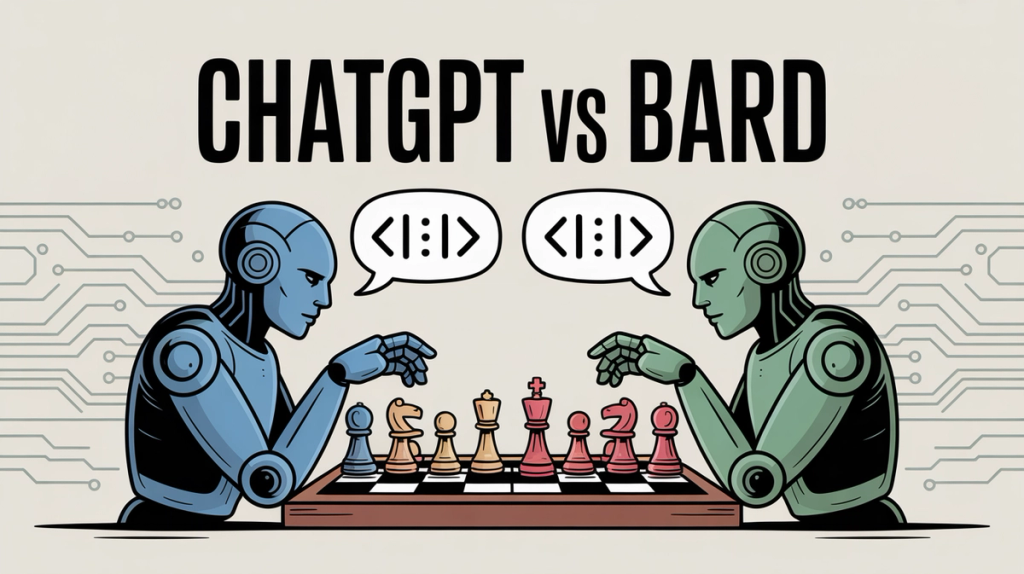
ChatGPT and Google Bard (now powered by Gemini) represent the cutting edge of conversational AI. But which one actually serves business needs better? Extensive testing reveals key differences for customer support, marketing automation, and daily business operations.
Both are incredibly powerful for general tasks. But neither was built specifically for business messaging and customer engagement. They excel at writing emails and answering questions, sure. But businesses often need something more specialized for WhatsApp customer support, Instagram automation, and knowledge-base training.
You're about to discover exactly how ChatGPT and Bard compare for business use. Plus why many companies are finding success with dedicated business AI platforms like Spur that combine multiple AI models with business-specific features.

How Did ChatGPT and Bard Become Business Tools?
Knowing where these AI chatbots came from helps explain their strengths and limitations for business applications.
ChatGPT's journey started at OpenAI with heavy Microsoft backing. It launched in late 2022 and quickly gained millions of users with its human-like conversations. OpenAI's research shows that GPT-5, released in August 2025, brought sophisticated reasoning capabilities that make complex problem-solving feel natural. The progression from GPT-3.5 to GPT-4 to GPT-5 has been remarkable for general intelligence tasks.
Google Bard's path began as Google's response to ChatGPT in March 2023. Originally powered by LaMDA, it evolved through PaLM 2 and finally to Gemini in early 2024. Google's development approach focused on real-time information access and integration with Google's ecosystem. By mid-2025, Gemini 2.x models delivered impressive capabilities for research and data analysis.
Both represent significant AI achievements. But they were designed as general-purpose tools, not business-specific solutions.
Neither was built with your business messaging needs in mind.
Which AI Chatbot Has Better Knowledge and Data?
Training data differences create distinct advantages for different business scenarios:
Why Does Bard Know Current Information Better?
Key advantage: Bard's real-time web access through Google Search provides instant access to current events and breaking news.
Bard draws from Google's massive Infiniset dataset combined with real-time web access. Research shows this includes:
• Public web content and research papers
• Google's proprietary data (Search index, Books, YouTube transcripts)
• Live web information when needed through Google Search integration
• Continuous knowledge updates without retraining
This makes Bard excellent for current events, recent industry developments, and fact-checking. For businesses that need up-to-date market information or trending topics, Bard's real-time capabilities are valuable for customer communication management.
What Makes ChatGPT's Knowledge Different?
ChatGPT was trained on diverse internet content including websites, forums, books, and licensed databases. But ChatGPT's knowledge cutoff creates limitations:
• Free version stops at late 2021 for most knowledge
• ChatGPT Plus users can access web browsing through Bing
• Generally more static knowledge base compared to Bard
• Excellent depth on topics within its training period
For businesses, this means ChatGPT might miss recent industry changes or product updates unless you're using the paid version with web access. This is exactly where multi-model AI platforms become essential.
Business Reality Check: Neither AI can be trained on your specific business knowledge out of the box. They don't know your products, pricing, policies, or customer history without additional integration.
Which AI Is Easier to Use for Business Teams?
Interface and interaction differences matter more for business teams than most comparisons acknowledge.
How Does ChatGPT Handle Business Conversations?
ChatGPT feels like talking with a knowledgeable consultant. The interface is clean and chat-focused, with strong context retention throughout conversations. Research shows users prefer ChatGPT for content generation tasks like writing emails and articles.
The real strength isn't just conversation quality. It's the ability to maintain context across complex, multi-turn discussions.
Business advantages:
→ Maintains context well during long troubleshooting sessions
→ Custom instructions let you set business context once
→ Plugin ecosystem allows integration with business tools
→ Natural conversation flow for complex problems
Business limitations:
→ No built-in customer data integration
→ Can't access your CRM or knowledge base directly
→ Requires manual context for each customer interaction
What's Different About Bard's Business Approach?
Bard approaches conversations more like a research assistant than a conversational partner. It shows multiple draft responses by default. You can also edit prompts after submission.
Business advantages:
① Cites sources for fact-checking
② Large context window for analyzing lengthy documents
③ Voice input/output available to all users
④ Direct export to Google Workspace tools
Business limitations:
① Less personality customization
② No persistent memory between sessions
③ Limited third-party integrations outside Google
The bigger picture: Both require significant manual work to handle customer interactions. They can't automatically pull customer history, update orders, or take business-specific actions. And that's precisely where customer support automation platforms provide crucial advantages.
ChatGPT vs Bard: What Does Each Do Best?
Which Is Better for Content Creation and Customer Communication?
Task | ChatGPT | Bard | Business Impact |
|---|---|---|---|
Email drafting | Excellent, natural tone | Good, more formal | ChatGPT edges out for customer communication |
Long-form content | Superior creativity | Factual, concise | Depends on content type needed |
Social media posts | Creative, engaging | Straightforward | ChatGPT better for marketing content |
Technical writing | Detailed explanations | Accurate, structured | Both have strengths |
Research consistently shows ChatGPT producing more engaging written content. Bard excels at factual summaries. For businesses focused on social media automation, this difference becomes significant.

Which AI Is Better for Technical and Data Analysis?
ChatGPT's coding strength: GPT-5's coding capabilities are impressive for debugging, explaining code, and writing complex programs. It handles algorithmic thinking. It provides detailed explanations that help teams learn.
Bard's research power: The massive context window means Bard can analyze entire documents or datasets in one prompt. Research has documented cases of summarizing 1,500-page documents successfully.
For business applications: ChatGPT works better for training teams and solving complex technical problems. Bard excels at analyzing large amounts of data or research. When businesses need both capabilities, no-code automation tools that integrate multiple AI models provide the best of both worlds.
Which AI Gives You Current Information Faster?
This represents Bard's clearest business advantage. When customers ask about:
→ Current shipping delays or weather impacts
→ Recent product updates or policy changes
→ Latest industry news affecting your services
Bard can search and provide current information with sources. ChatGPT's free version simply can't access recent developments.
But most businesses need AI that knows their specific information, not just general web content. And that's exactly where customer data integration becomes critical.
Why ChatGPT and Bard Don't Work for Most Business Needs
Despite their impressive capabilities, both ChatGPT and Bard have significant gaps for business customer engagement:
Can ChatGPT or Bard Actually Help Customers?
Reality check: Neither can actually do anything for customers. They can't:
→ Track orders in your system
→ Update customer accounts
→ Book appointments in your calendar
→ Process refunds or exchanges
→ Connect to your inventory system
Think about it: If AI can't check order status or book appointments, how much is it really helping your customers?
They're essentially very smart Q&A systems. Not actionable business assistants.
This limitation is why successful businesses use customer service automation that goes beyond simple chatbots.
Do They Work with WhatsApp Business and Instagram?
Modern businesses communicate with customers across multiple channels:
• WhatsApp Business messaging for order updates and support
• Instagram DMs for product inquiries and engagement
• Facebook Messenger for customer service
• Live chat on websites for immediate help
Neither ChatGPT nor Bard was designed for business messaging workflows across these channels. Effective multi-channel marketing automation requires specialized platforms.
Can You Train Them on Your Business Information?
Your business has unique information:
• Product specifications and pricing
• Company policies and procedures
• Customer history and preferences
• Integration data from your CRM and e-commerce platform
General AI models can't access this information naturally. Every interaction requires manual context.
Critical business insight: The choice between simple chatbots and actionable AI agents will determine whether your customer support scales or struggles.
Without proper knowledge base training, even the best AI remains generic.
What Do Smart Businesses Use Instead?
Companies finding real AI success often use dedicated business platforms that combine multiple AI models with business-specific capabilities.
Spur integrates ChatGPT, Gemini, Claude, and Grok in a unified platform designed specifically for business messaging. This approach provides several advantages:
How Does Multi-AI Work Better Than Choosing One?
The breakthrough approach: Instead of choosing ChatGPT or Bard, businesses can use:
• ChatGPT's creativity for engaging customer responses
• Gemini's research capabilities for real-time information
• Specialized models for specific tasks like sentiment analysis
• Automatic model selection based on query type
Spur's multi-AI approach allows switching between models instantly. You get the best tool for each situation. This means you get benefits from both ChatGPT and Gemini without choosing sides.
What Can Business AI Do That ChatGPT and Bard Can't?
Unlike general chatbots, business-focused platforms provide:
Action | What AI Actually Does | Business Value |
|---|---|---|
Order tracking | AI checks status and provides specific delivery information | Reduces support tickets by 40-50% |
Appointment scheduling | Direct calendar integration for booking and rescheduling | Saves 2-3 hours daily on scheduling |
Inventory queries | Real-time product availability and alternatives | Increases conversion by suggesting alternatives |
Payment processing | Secure transaction handling for upgrades or add-ons | Enables 24/7 sales without human intervention |
CRM integration | Access to customer history and preferences | Personalizes every interaction automatically |
How Does Multi-Channel Business Messaging Actually Work?
Business platforms like Spur unify everything:
→ WhatsApp Business API for customer support and marketing automation
→ Instagram automation for comment-to-DM workflows and engagement
→ Facebook Messenger automation for customer service continuity
→ Live chat widgets for website visitors
→ Shared inbox where human agents can seamlessly take over from AI
This creates a cohesive customer experience across all touchpoints. Something neither ChatGPT nor Bard can provide alone.
How Do You Train AI on Your Specific Business Data?
Business AI platforms allow training on your specific data:
This changes everything: When AI knows YOUR products, policies, and procedures, it transforms from a generic helper into a specialized team member.
• Product catalogs and specifications
• Company policies and procedures
• FAQ databases from your existing support system
• Customer interaction history for personalized responses
Companies using Spur report up to 70% of customer queries resolved instantly by AI trained on their specific business knowledge. This level of customization isn't possible with general-purpose AI tools.
ChatGPT vs Bard: Which Costs Less for Business?
Cost considerations often determine which AI solution businesses can actually use:
How Much Do Free vs Paid Versions Actually Cost?
The pricing reality isn't as simple as the sticker price suggests.
Google Bard remains free for most users. Gemini Advanced is available to Google One subscribers ($19.99/month). For businesses, this seems attractive until you consider the integration costs and limitations.
ChatGPT offers a free tier with GPT-3.5. But serious business use requires ChatGPT Plus ($20/month) for GPT-4/5 access, or Enterprise plans with custom pricing for larger organizations.
The hidden costs: Both require significant development work to integrate with business systems. API usage, custom development, and maintenance can quickly exceed $100-500+ monthly for meaningful business use.
What Do Business AI Platforms Cost Compared to DIY?
Dedicated business AI platforms often provide better value:
Solution Type | Monthly Cost | Includes | Business Ready |
|---|---|---|---|
ChatGPT Plus | $20 | General AI, limited integrations | Requires development |
Bard/Gemini | Free-$20 | General AI, Google integration | Requires development |
$31 | Multi-AI, business messaging, integrations | Ready to deploy |
When you factor in development time and multi-channel support, specialized platforms often cost less while delivering more business value. Plus you get access to multiple AI models instead of being locked into just one.

Which AI Should Different Business Types Choose?
Should E-commerce Businesses Use ChatGPT or Bard?
E-commerce has unique needs that general AI often misses.
If you sell products online and need customer support automation:
ChatGPT/Bard limitations:
→ Can't access order status
→ No WhatsApp/Instagram integration
→ Requires manual setup for each channel
Better approach: Business messaging platforms that integrate with Shopify, WooCommerce, and popular e-commerce tools. They provide AI across WhatsApp, Instagram, and live chat. For e-commerce businesses, WhatsApp marketing automation often delivers better ROI than general AI tools.
Which AI Works Best for Service Businesses?
For consulting, healthcare, real estate, or professional services:
AI Tool | Best Use Case | Limitations |
|---|---|---|
ChatGPT | Initial content creation, explaining complex services | No appointment integration |
Bard | Research and current market information | Can't access client records |
Business AI | Full customer lifecycle automation | Higher initial cost |
Business reality: Most benefit from appointment scheduling integration, client history access, and multi-channel communication that neither provides natively. Service businesses particularly benefit from customer onboarding automation and lead generation capabilities.
What Should Marketing Teams Use for Content Creation?
Use ChatGPT for:
- Creative content and blog writing
- Ad copy generation
- Brainstorming campaigns
ChatGPT's creative edge makes it ideal for marketing content that needs personality.
Use Bard for:
- Research and fact-checking
- Current trends analysis
- Competitive intelligence
Bard's real-time data access provides the market intelligence that keeps campaigns relevant.
Consider business platforms for: Social media automation, comment-to-DM workflows, and customer engagement campaigns.

The Best AI Strategy for Your Business in 2025
The real question isn't which AI to choose. It's how to use AI to actually serve customers, not just chat with them.
ChatGPT vs Bard isn't really the right question for most businesses. Both are exceptional general-purpose AI tools. But modern customer engagement requires more than conversation.
ChatGPT brings creative communication and complex problem-solving to the table. Its natural conversation style and reasoning capabilities make it excellent for content creation and detailed explanations.
Bard provides real-time information access and research capabilities that keep businesses current with market developments and customer inquiries about recent events.
The winning approach? Smart businesses recognize that different situations call for different AI capabilities. Instead of choosing sides, they use platforms that provide access to multiple AI models while adding the business-specific features that general AI lacks.
Spur represents this evolved approach to business AI. By combining ChatGPT's conversational abilities, Gemini's research power, and other specialized models with actionable business features, companies achieve what neither individual AI could provide: comprehensive customer engagement that actually moves the business forward.

Your customers don't care which AI you use. They care about getting their problems solved.
Whether you start with ChatGPT, Bard, or jump directly to a business-focused solution, the goal should be AI that doesn't just talk to customers but actually helps them. In 2025, that's not just possible. It's essential for competitive customer experience. Check out Spur's case studies to see how businesses are achieving real results with multi-AI platforms.
Frequently Asked Questions
Neither was designed specifically for business customer engagement. ChatGPT excels at creative and conversational tasks. Bard provides better real-time information access. But businesses typically need actionable AI that can integrate with their systems and handle multi-channel customer communication. Platforms like Spur combine both AI models with business-specific features for better results. For detailed comparisons, check out Spur's analysis of Claude vs ChatGPT and Gemini vs ChatGPT.
Both can answer general questions. But they can't take actions like tracking orders, updating accounts, or accessing customer history. They also weren't designed for business messaging channels like WhatsApp Business or Instagram DMs. For effective customer support, businesses need AI that integrates with their CRM and e-commerce systems while supporting multiple communication channels. Learn more about customer service best practices for modern businesses.
No. Neither ChatGPT nor Bard provides native integration with WhatsApp Business API or Instagram automation. Business messaging requires specialized platforms that handle comment-to-DM workflows, automated responses, and customer data integration across these channels.
Bard is free and ChatGPT Plus costs $20/month. But using either for serious business use requires significant development work. The total cost including integration, maintenance, and multi-channel support often exceeds dedicated business AI platforms that come ready-to-deploy with business messaging features. Check out Spur's pricing comparison for business-ready solutions.
Neither ChatGPT nor Bard can be directly trained on your business data in their standard form. OpenAI offers custom fine-tuning for enterprise customers (but it's complex and expensive). Business AI platforms typically provide knowledge base upload features where you can train AI on your products, policies, and procedures without technical complexity.
General AI like ChatGPT and Bard are designed for conversation and information tasks. Business AI agents can take specific actions like checking order status, booking appointments, updating customer records, and integrating with business systems. The difference is between talking about solutions versus actually doing them for customers. Learn more about human agents vs AI chatbots in business contexts.
No. Both are conversational AI without direct system integration capabilities. They can't access your e-commerce platform, CRM, or business databases to perform actual customer service actions. Business AI platforms provide these integrations along with the conversational AI capabilities. For e-commerce businesses, this includes integration with platforms like Shopify, Stripe, and WooCommerce.
Sources
The pages this article links out to, in the order they appear.
- OpenAI's research openai.com
Was this article useful?