How to Get More Replies on WhatsApp Broadcasts (2026 Guide)

Discuss with AI
Get instant insights and ask questions about this topic with AI assistants.
💡 Pro tip: All options include context about this blog post. Feel free to modify the prompt to ask more specific questions!
If your broadcasts sit on "read" with zero replies, you're not alone. The fix? Stop treating WhatsApp like email. Build real conversations through strategic segmentation, interactive buttons, perfect timing, and lightning-fast follow-ups. The brands winning on WhatsApp get 40-60% reply rates by making messages feel personal, valuable, and stupidly easy to respond to.
Your WhatsApp broadcasts are getting delivered. People are reading them. But nobody's replying.
You're sitting there wondering if anyone actually cares about your messages, or if you're just adding to the noise. Meanwhile, your competitors are getting floods of replies, booking appointments, closing sales, and building relationships through the exact same channel. What gives?
WhatsApp has a 98% open rate and drives reply rates between 45-60% for well-executed campaigns. That's not a typo. When done right, nearly half your audience will respond. Compare that to email's single-digit reply rates, and you start to see why getting this right matters so much.
The difference between silence and engagement isn't luck. It's understanding that WhatsApp is a conversation platform, not a broadcast channel. When you treat it like one-way communication, people treat your messages like spam. When you design for dialogue, you get replies that turn into revenue.
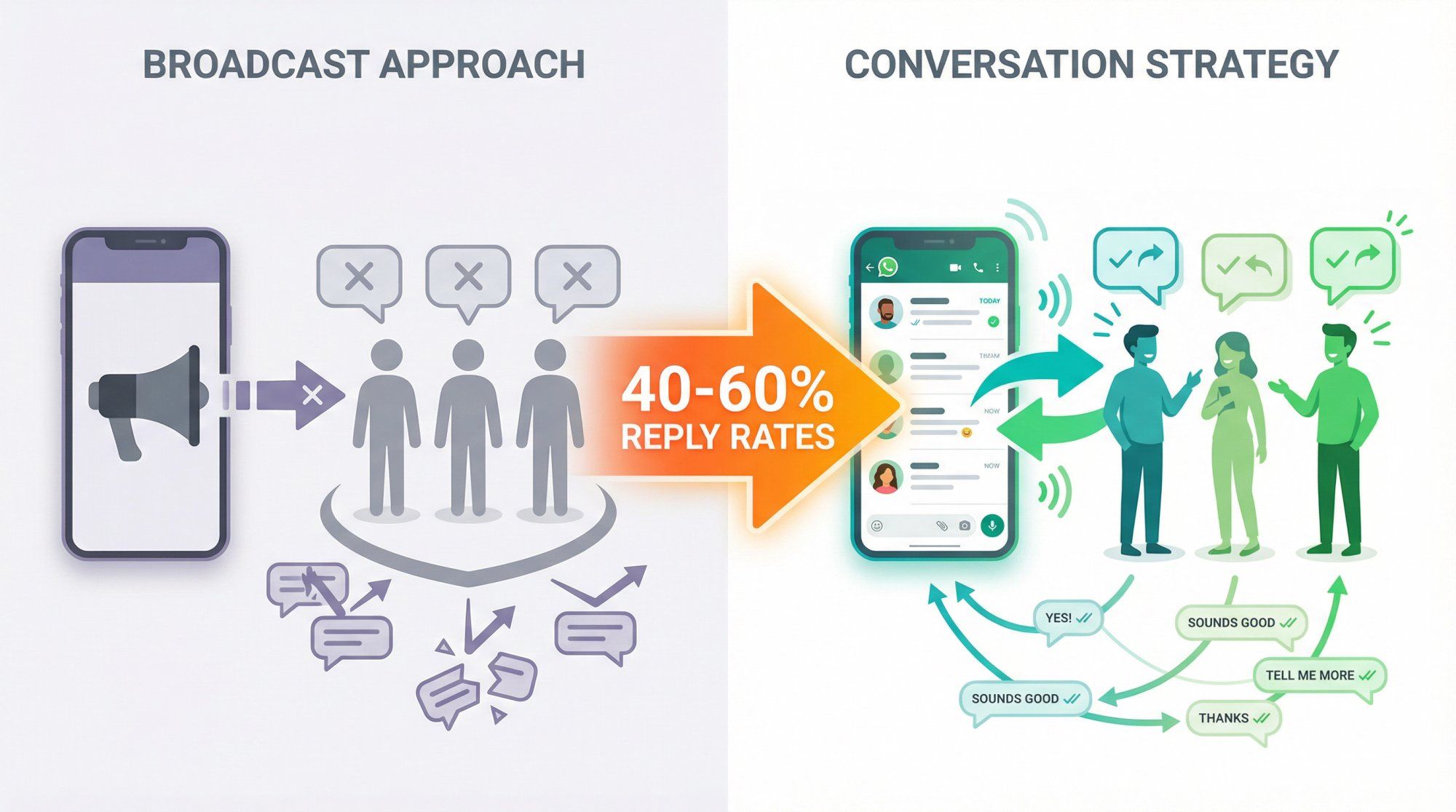
Let's fix your broadcast strategy so you actually start getting responses.
Sending to 10,000 random contacts won't beat sending to 1,000 people who actually want to hear from you.
The foundation of reply rates is simple: message people who opted in. Not people who gave you their number three years ago. Not contacts you bought or scraped. People who explicitly said "yes, message me on WhatsApp."
WhatsApp's policy is clear: only message people who gave you their number with permission. This isn't just about compliance. Meta tracks how people respond to your messages. When recipients ignore, block, or report you, your quality rating tanks. A bad quality rating means your messages don't deliver, or worse, your number gets banned.
Build your list properly:
Collect explicit consent. When someone signs up, be clear: "Get order updates and exclusive offers on WhatsApp." Store when they opted in and where (website form, QR code, Instagram bio). This protects you and ensures you're messaging engaged contacts.
Make opt-out frictionless. Include "Reply STOP to unsubscribe" in your broadcasts. Sounds counterintuitive? It's not. People who don't want your messages will either opt out cleanly or just ignore you forever. The opt-out keeps your list warm and your quality rating safe. Spur's WhatsApp automation even handles STOP replies automatically, removing those contacts from future sends.
The WhatsApp Business App trap. If you're using the built-in broadcast feature (not the API), there's a gotcha: contacts must have your number saved or they won't receive your message at all. Your "1,000 person broadcast" might only reach 300 people, and you'd never know. The WhatsApp Business API solves this, but if you're on the app, remind new subscribers to save your contact.
Prune inactive contacts. That person who hasn't opened a message in six months? Remove them. Every non-responder drags down your engagement metrics and signals to WhatsApp that your messages aren't valuable. Better to have 500 hot leads than 5,000 cold ones.
Quality lists get replies. Spray-and-pray lists get you banned.
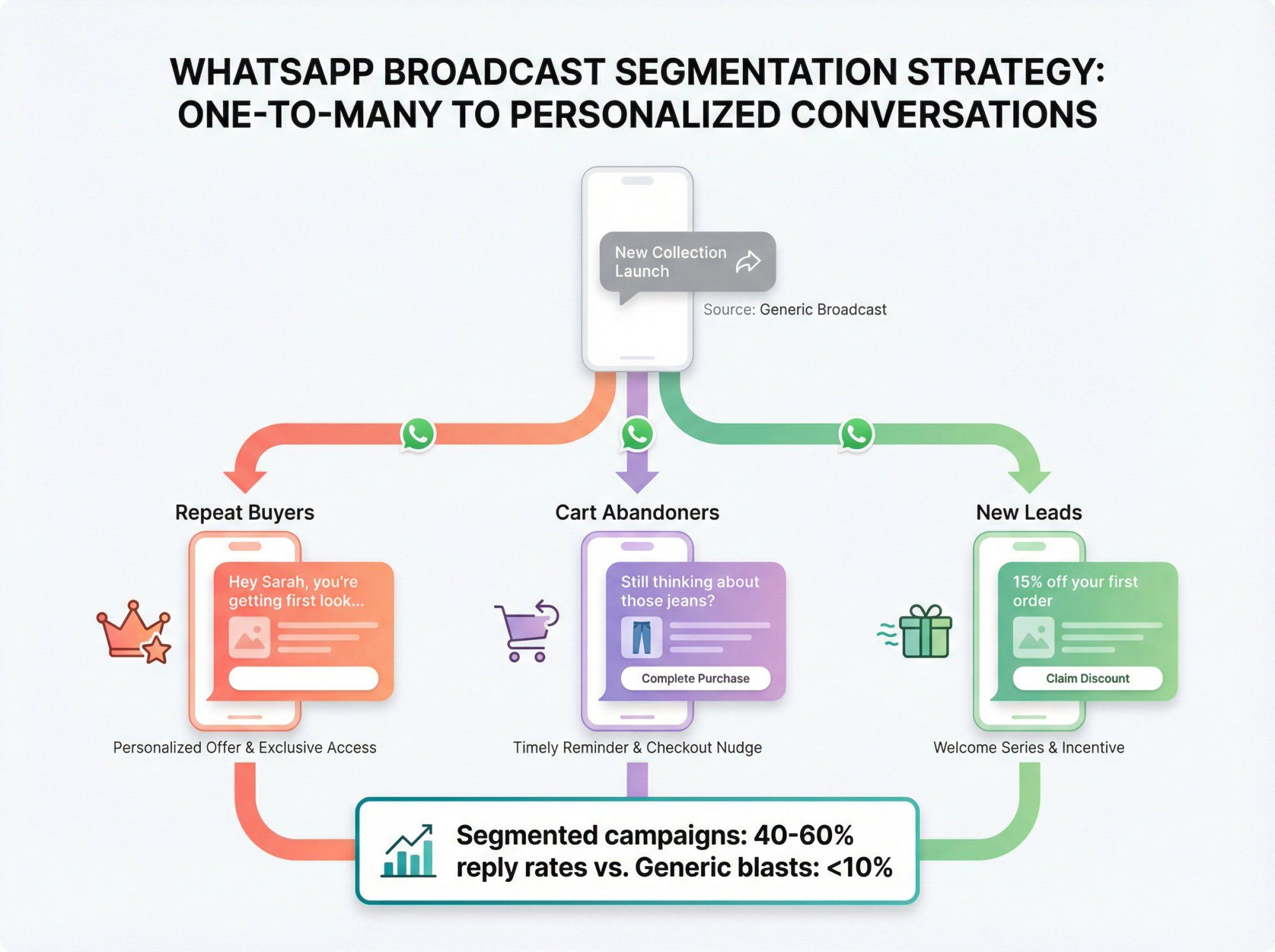
One message to everyone is a message to no one.
The single biggest mistake in WhatsApp broadcasting? Treating your entire contact list like they're the same person. They're not. Someone who bought yesterday needs a different message than someone who abandoned their cart three weeks ago.
Segmentation makes messages feel relevant, and relevance drives replies. When a message speaks directly to someone's situation, they respond. When it's generic, they scroll past.
Minimum viable segments:
• Purchase stage: New leads, cart abandoners, first-time buyers, repeat customers, churned users
• Product interest: What they browsed, bought, or asked about previously
• Engagement recency: Last message they opened, last time they replied
• Geography and language: Send in their timezone, in their language
Here's a practical example. You're a fashion brand. Don't send the same "New Collection Launch" message to everyone. Instead:
→ Send early access to repeat buyers: "Hey Sarah, you're getting first look at our new collection before anyone else."
→ Send styling tips to cart abandoners: "Still thinking about those jeans? Here's how our customers are styling them."
→ Send a discount to new leads: "Welcome! Here's 15% off your first order."
Same collection, three different messages that feel personal because they match where each person is in their journey.
The reply flywheel segment. Create a segment of people who replied or clicked in the last 30-90 days. These are your most engaged contacts. Send your best offers and most conversational broadcasts to this group first. Why? They've already shown they interact with brands on WhatsApp. They're less likely to report you and more likely to respond again.
This aligns with WhatsApp's stated approach of delivering fewer marketing messages to users who don't engage. If you keep messaging people who never respond, WhatsApp will eventually stop delivering your messages to them entirely.
Segmented campaigns consistently outperform generic blasts. Not by a little. By a lot. When you send fewer, more targeted messages, your reply rates go up, your quality rating stays healthy, and your ROI improves.
Stop broadcasting to "all contacts." Start having specific conversations with specific segments.
Adding {{first_name}} to your template isn't personalization. It's a placeholder.
Real personalization means the message couldn't have been sent to anyone else. It references something specific about that person: what they bought, where they're located, what stage they're in, what they care about.
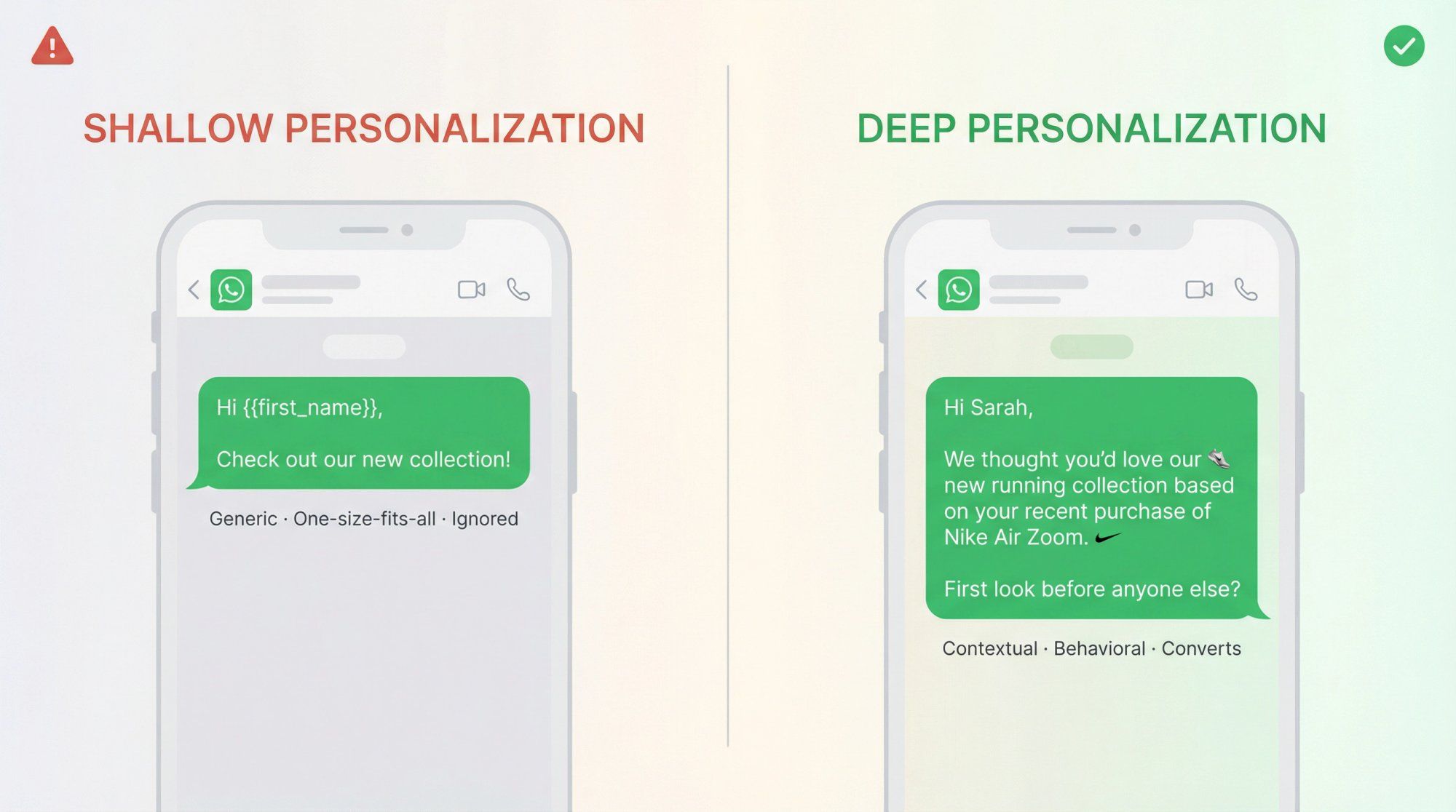
Research shows that personalized messages dramatically increase reply rates because they feel like real conversations, not mass broadcasts. When someone sees a message that clearly knows them, they respond.
Beyond names:
• Reference recent orders: "Hey Alex, how are you liking the running shoes you got last week?"
• Use location context: "We just opened in Mumbai. Want to be one of the first to visit?"
• Acknowledge their interests: "You browsed our skincare collection. We just launched a new serum that fits your routine."
• Tie to their behavior: "You left three items in your cart. Need help deciding?"
Each of these shows you're paying attention. They're not generic blasts. They're messages written for one person.
Technical personalization through templates. If you're using WhatsApp Business API through platforms like Spur, you can set up templates with dynamic variables. A single template can send thousands of personalized messages:
"Hi {{name}}, we thought you'd love {{product_name}} based on your recent purchase of {{previous_product}}. Reply to get 20% off."
Each recipient sees their name, a relevant product recommendation, and what they bought before. That's real personalization at scale.
Sound human. Even with automation, write like you're messaging a friend. Use contractions (it's, you're, we've). Be conversational. Maybe even sign off with a name: "Need anything? I'm here. - Priya, Customer Support."
When messages feel personal, people forget they're automated. They reply like they're talking to a real person. Because in their mind, they are.
You have three seconds before someone decides whether to engage with your message or move on.
Long messages lose. Complicated messages lose. Messages that ask for five things lose.
Keep your broadcasts short, focused, and built around a single objective. What's the one thing you want from this message? A reply? A click? Feedback? Pick one and build everything around it.
The focus rule: Every broadcast should answer these questions in order:
① Who is this from? (Your brand name, no mystery)
② Why should I care? (The value for them, immediately)
③ What should I do? (One clear next step)
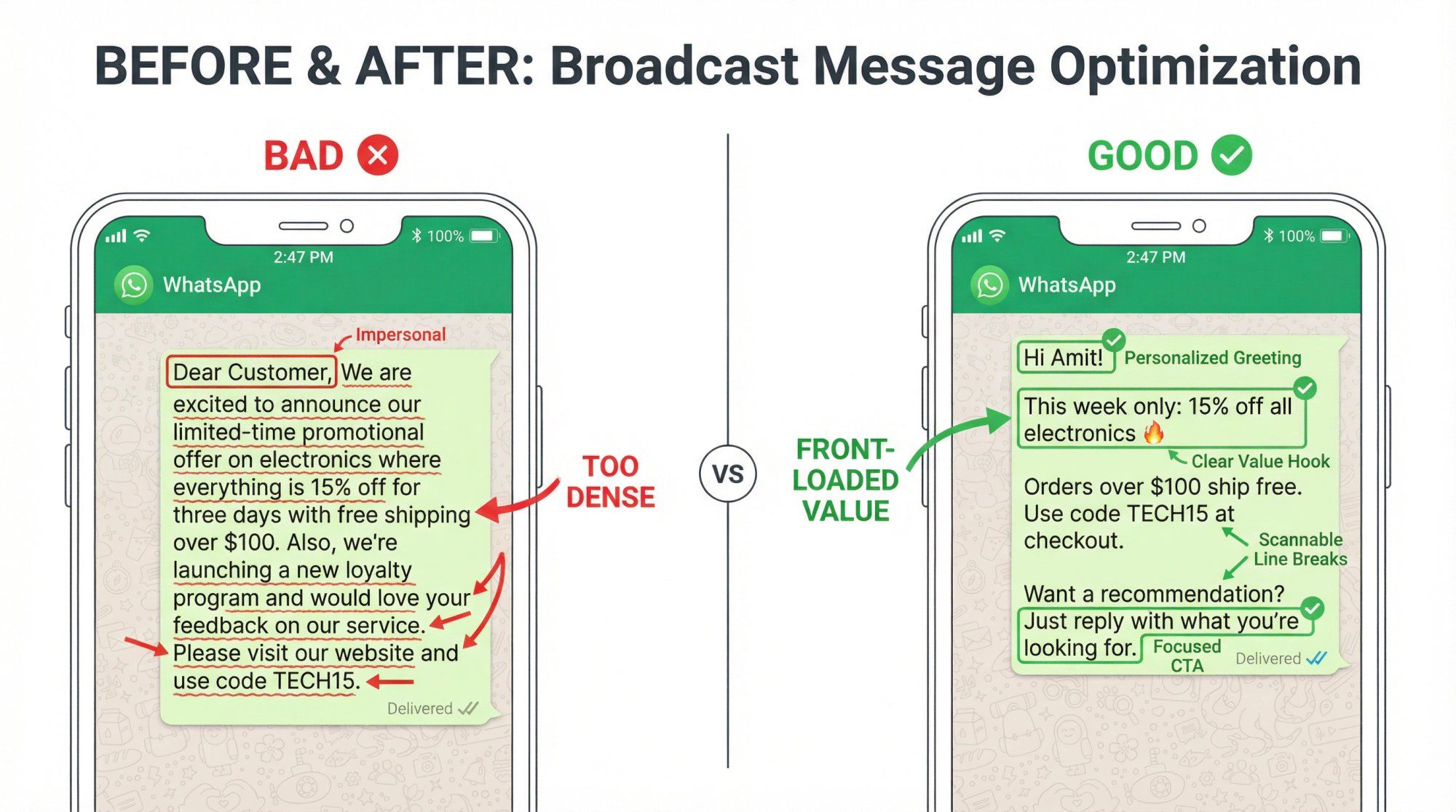
Bad broadcast:
"Dear Customer, We are excited to announce our limited-time promotional offer on electronics where everything is 15% off for three days with free shipping over $100. Also, we're launching a new loyalty program and would love your feedback on our service. Please visit our website and use code TECH15."
What's the goal here? A sale? Feedback? Sign-ups? Nobody knows, so nobody acts.
Better broadcast:
"Hi Amit! This week only: 15% off all electronics 🔥. Orders over $100 ship free. Use code TECH15 at checkout. Want a recommendation? Just reply with what you're looking for."
Same offer, clearer. One goal: get them to either shop or reply with questions. Short enough to read in three seconds. Front-loaded with the hook (15% off).
The first sentence matters most. On lock screens, people see just the opening line. Make it count. Lead with value, urgency, or curiosity. Not with "Dear valued customer..." That's how you get ignored.
• Good: "🔥 50% off until Friday only"
• Good: "You've been selected for VIP early access 👀"
• Bad: "In accordance with our promotional calendar..."
Use line breaks. WhatsApp is a chat app. Dense paragraphs feel heavy. Break up your message visually with short lines, bullet points, or emojis. Make it scannable.
One clear call to action. After reading your message, the next step should be obvious. "Reply YES to claim your discount." "Reply with any questions." "Tap below to book your slot." No ambiguity.
When you respect people's attention by being clear and concise, they reward you with engagement.
Want more replies? Stop making announcements and start asking questions.
Here's the thing about human psychology: we're wired to answer questions. When someone asks us something directly, there's a natural pull to respond. When someone just broadcasts information at us, we read it and move on.
Most businesses use WhatsApp like a megaphone. "New sale live!" "Check out our latest collection!" "Free shipping this week!" These are announcements. They don't invite dialogue. If you don't ask for a reply, you usually won't get one.
Make it conversational:
Instead of: "We have a sale. Check it out [link]"
Try: "We have a sale on now. See anything you like? 😊"
The first is a statement. The second is a conversation starter. The difference is massive.
Types of questions that work:
• Yes/no questions: "Interested in this offer? Reply YES to claim it."
• Multiple choice: "Which color do you prefer, Red or Blue? Reply with your pick."
• Open-ended: "What type of deals would you love to see from us?"
• Preference questions: "Should I send you beauty tips or just sale alerts?"
Even a simple "Is this helpful?" at the end of your message invites a real reply.
Write in first and second person. Use "I," "we," and "you." Make it feel like a dialogue between two people, not a corporate announcement to "customers."
Not this: "Customers can now avail a discount on their next purchase."
This: "You've got a discount waiting on your next order. Want me to apply it?"
The second version sounds like a person talking. The first sounds like a press release.
Emojis help. Used sparingly, emojis make your messages feel friendlier and more human. 51% of consumers are more likely to engage with brands that use emojis in messages. A strategically placed 🎁 or 🔥 can set the tone and catch attention.
When you treat WhatsApp like the conversation platform it is, instead of another broadcast channel, replies go up. People want to talk to people, not robots reading from scripts.
Here's a reality check: typing is work. Tapping is easy.
The easier you make it to respond, the more responses you'll get. This is where WhatsApp's interactive features become your secret weapon.
Quick reply buttons let you include up to three pre-written response options in your message. When someone taps a button, WhatsApp sends that response as if they typed it themselves. No thinking required. No typing required. Just tap and done.
Example broadcast with quick reply buttons:
"New collection dropping tomorrow. Want early access?"
[🟢 Yes, I'm in] [🔵 Send me details] [🔴 Not now]
When someone taps "Yes, I'm in," WhatsApp sends that exact text as their reply to you. You got your response without them typing a single character. This dramatically reduces friction and increases replies.
When to use quick reply buttons:
• Yes/no decisions with a third option ("Talk to someone")
• Category selection ("Skincare" / "Makeup" / "Fragrance")
• Time slot choices ("Morning" / "Afternoon" / "Evening")
• Interest qualification ("New arrivals" / "Sales only" / "Order updates")
• Feedback ("👍" / "👎" / "Talk to support")
List messages work when you need more than three options. Users tap to open a menu, select an item, and WhatsApp sends their choice as a reply. Great for product catalogs, appointment types, or topic selection.
Call-to-action buttons can link to your website or start a phone call, but they don't count as replies. Use these sparingly. If you want engagement, quick reply buttons win.
The psychology of buttons: Buttons act like clear highway signs. They remove decision paralysis. Instead of wondering "what should I say back?", users just pick an option that matches their interest. This increases response rates significantly.
Interactive features receive instant replies because they're visible, fast, and easy. People who might not bother typing out a full response will happily tap a button.
If you're not using interactive buttons in your WhatsApp broadcasts, you're leaving replies on the table.
The best message sent at 3 AM gets zero replies.
Timing matters more than most people realize. Same message, different time, completely different results.
When people actually engage:
| Time Window | Engagement Level | Best For |
|---|---|---|
| 7-9 AM | High | Morning commute, coffee browsing |
| 12-1 PM | High | Lunch break, quick responses |
| 5-7 PM | Highest | Evening wind-down, peak attention |
| 10 PM - 6 AM | Low | Avoid (sleep hours) |
General sweet spots are early morning (7-9 AM), lunch break (12-1 PM), and early evening (5-7 PM). These are windows when people check WhatsApp but aren't buried in work or asleep.
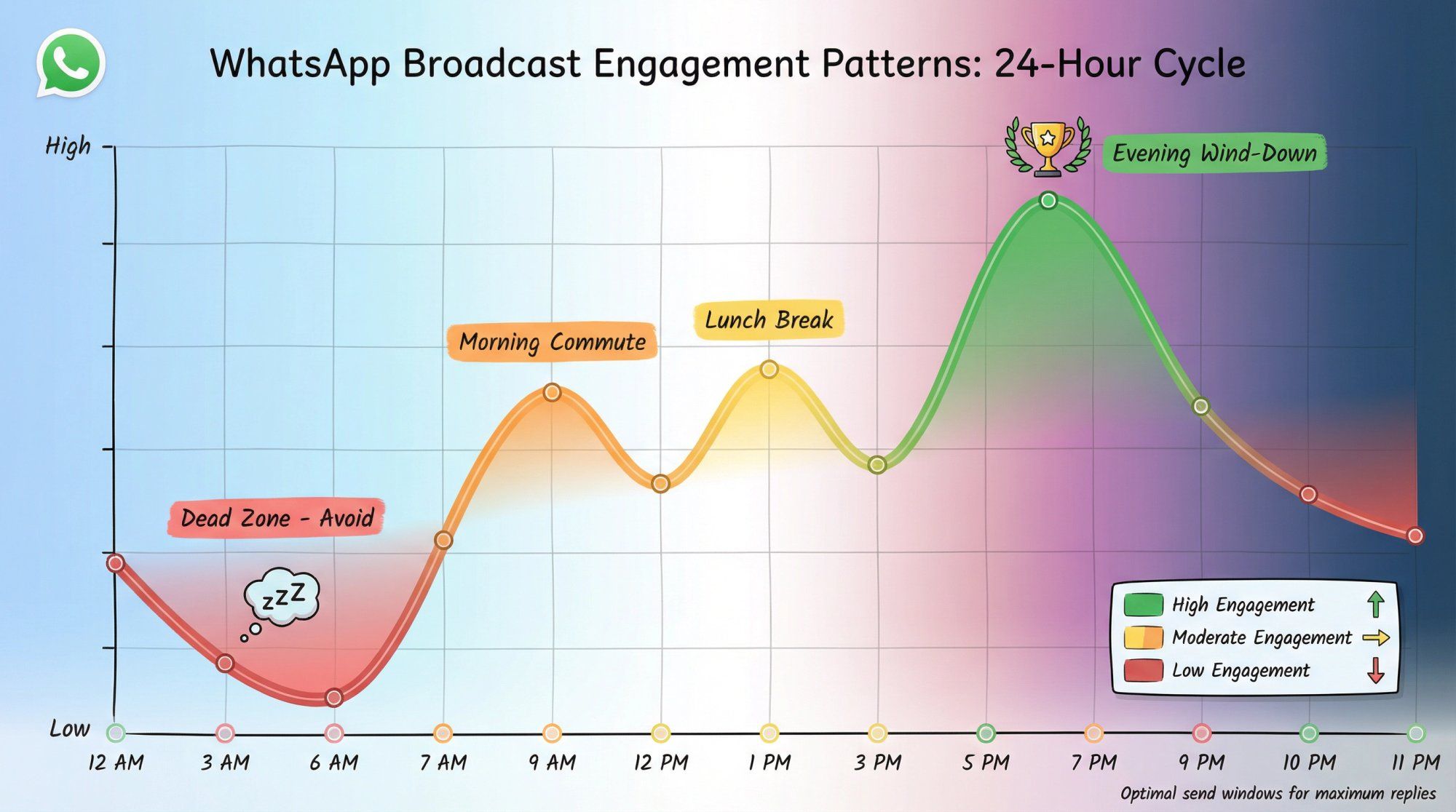
That said, your audience might be different. B2B messages might work better during business hours. Retail offers might pop on weekends. Food delivery promos crush around meal times.
Test and watch your analytics. Most WhatsApp marketing automation platforms show you when messages get opened and replied to. Use that data to find your optimal send times.
Respect time zones. If you have customers across regions, segment by location and schedule sends for local peak times. A Mumbai user doesn't want to get your message at 2 AM because you sent it during New York business hours.
Avoid dead zones. Don't send marketing messages late at night (10 PM - 6 AM) or during typical sleep hours. People will either miss your message entirely or wake up annoyed. Neither drives replies.
Frequency is everything. Here's where most brands mess up: they over-send.
If people start feeling bombarded, they tune out. They might even block you or report you as spam. WhatsApp's quality rating drops when users ignore or report messages. Low quality ratings mean future messages don't deliver.
How often should you send? Only when you have something genuinely valuable to share. For most businesses, that's 1-4 times per month, not daily.
One great broadcast that gets 50% replies beats five mediocre ones that get 5% each.
The per-user limit trap. WhatsApp limits how many marketing messages any single person can receive in a timeframe. If you hit them with too many promotional messages too quickly, later ones won't deliver. Meta throttles your sends to protect users from spam.
Spread out your campaigns. If you have three things to promote this month, don't blast them all in the same week to the same people.
Time-sensitive hooks work. "Flash sale ends in 2 hours" sent at 3 PM can drive quick replies because the urgency is real. Just don't fake urgency. People see through "Limited time!" when you run the same "limited time" offer every week.
Test different send times, watch your engagement patterns, and respect your audience's attention. Quality over quantity, always.
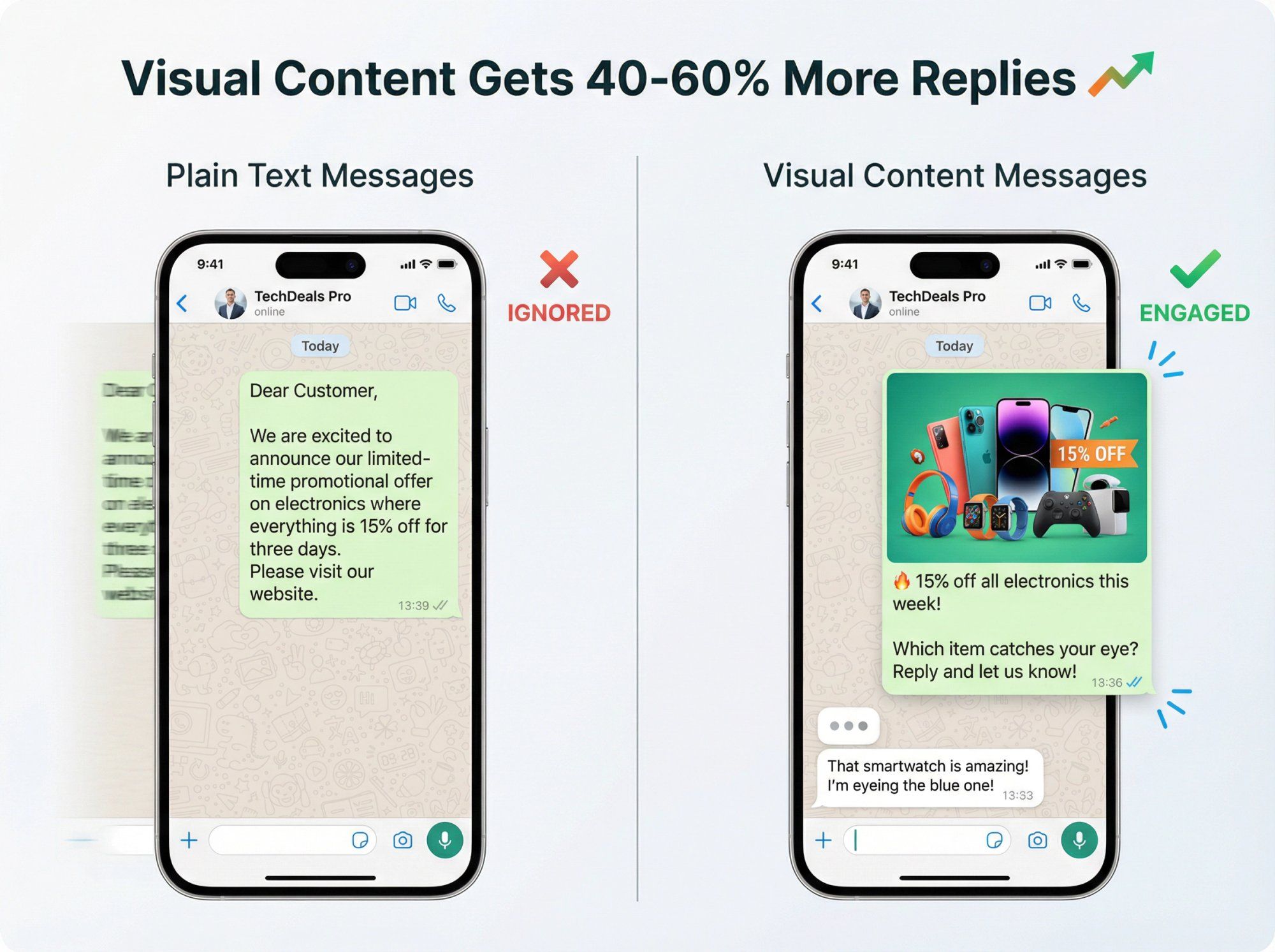
Plain text gets skipped. Visual content gets opened.
WhatsApp supports images, videos, GIFs, PDFs, and documents. Use them. Messages with media get 40-60% higher response rates than text-only broadcasts.
Why media works:
When someone sees a photo or video preview in their chat list, it catches their eye. It stands out among text messages. They're more likely to open it right now instead of later (and "later" usually means never).
Visual content also conveys information faster than text. A 10-second product demo shows what a paragraph can't explain. A chart or infographic delivers data instantly. A photo proves you're a real business, not a scammer.
What to send:
• Product photos: Clear, high-quality images of what you're promoting. Fashion brands should show the outfit. Food businesses should make it look delicious.
• Videos: Keep them short (under 30 seconds for broad appeal). Product demos, store tours, how-tos, or quick greetings from your team all work.
• GIFs: A celebratory GIF when announcing a sale, or a fun reaction GIF can humanize your message.
• PDFs: Catalogs, menus, guides, or checklists. Give people something valuable they can reference later.
Always pair media with text and a question. The media gets attention. The text provides context. The question prompts a reply.
Example:
"👋 Hi! Our Summer Catalog just dropped. (See PDF attached.) Which item catches your eye? Reply and let us know for a surprise discount!"
The catalog provides value. The question drives engagement.
Media builds trust. A text message claiming to be from a business could be spam. A message with a photo of your storefront, or a short video from your founder, or your product packaging feels legitimate. Rich media makes brands feel human, which makes people want to respond.
Keep file sizes reasonable. WhatsApp has a 16 MB limit. Compress videos if needed so they load quickly. Slow-loading media kills engagement.
Visual content hooks attention, conveys information faster, and prompts more replies than plain text ever will.
Nobody replies to messages that waste their time.
Before someone will engage with your broadcast, they need a reason. What's in it for them? If your message is just promotional noise, they'll ignore it. If it offers genuine value, they'll pay attention and often respond.
Value comes in many forms:
• Exclusive discounts or early access
• Helpful information they actually need
• Solutions to problems they have
• Entertainment or inspiration
• Time-saving convenience
The key is making sure the value is front and center, not buried at the end or implied.
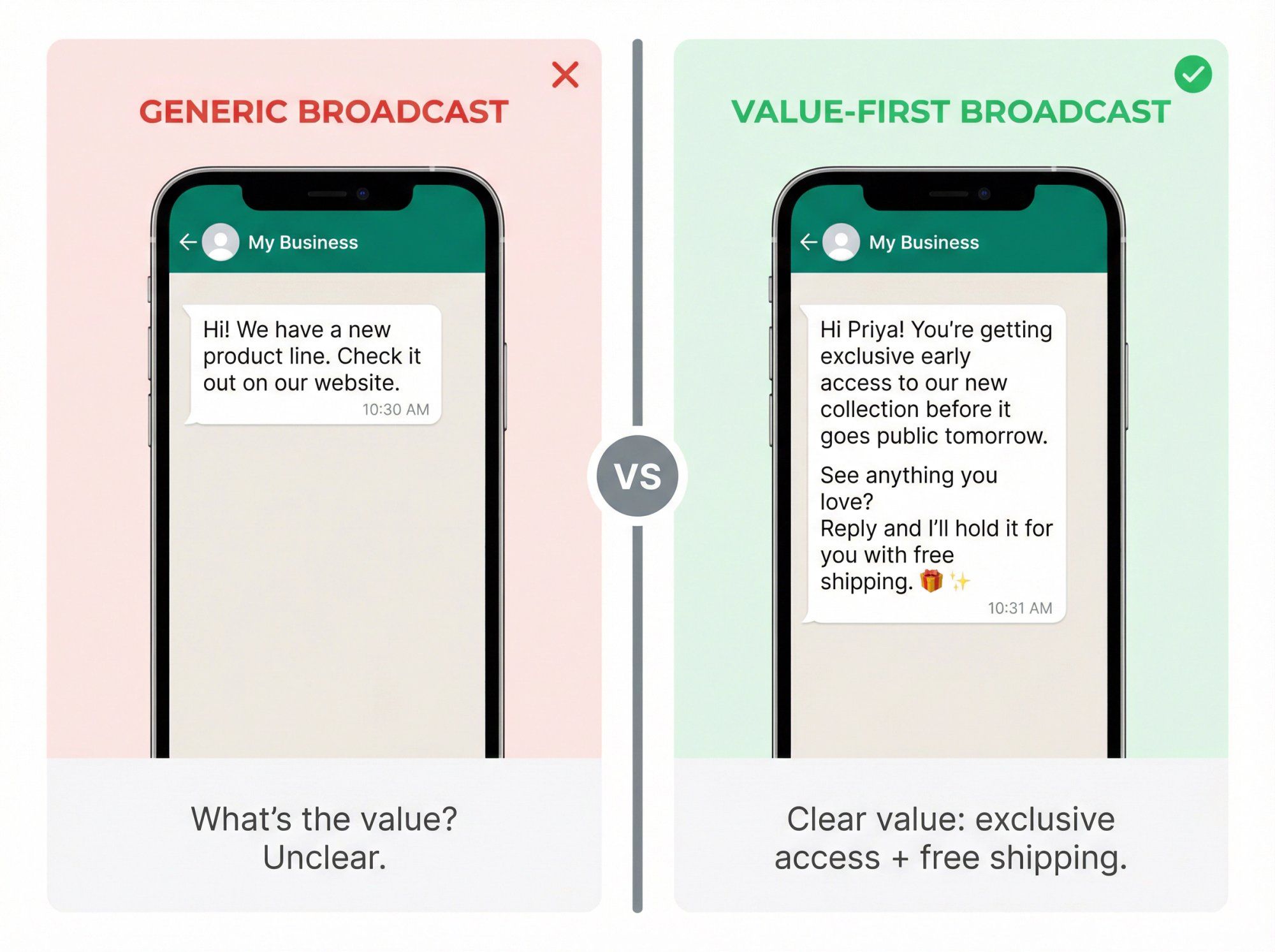
Bad example:
"Hi! We have a new product line. Check it out on our website."
What's the value? Vague. Why should they care? Unclear.
Better example:
"Hi Priya! You're getting exclusive early access to our new collection before it goes public tomorrow. See anything you love? Reply and I'll hold it for you with free shipping."
The value is clear: exclusive access, ability to reserve items, free shipping. The ask is simple: reply if interested.
Examples of value-first broadcasts:
→ "Hey Alex! We just loaded ₹500 credit into your account 🎁. Reply CLAIM to use it on your next order."
→ "Your insurance renewal is coming up in two weeks. Need help with it? Reply and I'll walk you through step-by-step."
→ "Made a quick DIY video just for you. (Link attached.) Was it helpful? 👍 or 👎"
→ "VIP early access to our Black Friday sale starts now. 🖤 Like something in the catalog? Reply and I'll reserve it."
Each one gives something valuable first, then invites engagement.
Use scarcity and urgency when real. "Only 5 consultation slots left for tomorrow" or "Offer expires at midnight" drives faster replies when the constraint is genuine. Fake urgency backfires when people realize you run the same "urgent" offer every week.
Make the benefit of replying obvious. Sometimes you need to spell it out: "Reply with any question. We respond in seconds on WhatsApp!" or "Not sure which plan fits you? Reply and get a free personalized recommendation."
When people see clear value and a clear benefit to engaging, replies go up. When they just see another sales pitch, they keep scrolling.
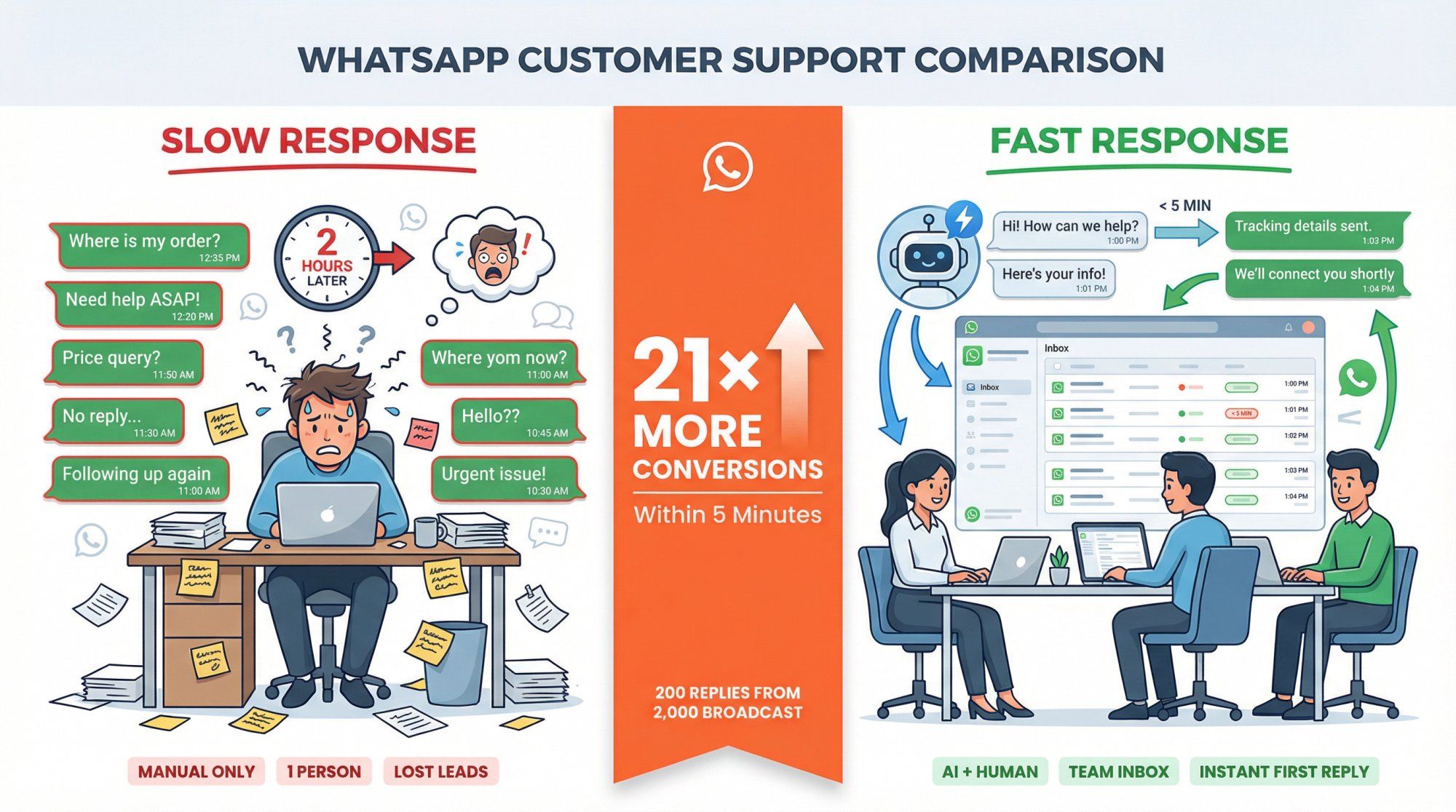
Getting replies is only half the battle. What happens after someone responds determines whether that engagement turns into revenue.
If you ask for replies but then take hours or days to respond back, you've trained your audience not to bother next time. Fast follow-up turns engagement into conversions.
The speed factor: Responding within 5 minutes can make leads 21× more likely to convert compared to waiting longer. WhatsApp is a real-time channel. People expect immediate responses.
When someone replies to your broadcast:
① Acknowledge immediately (even if automated)
② Ask the next logical question or provide the requested information
③ Route to a human if needed
Set up systems to handle reply volume. If you send a broadcast to 2,000 people and 10% reply, that's 200 incoming messages. You need a plan.
Customer communication platforms like Spur offer shared team inboxes where multiple agents can handle WhatsApp conversations. Assign conversations, use saved replies for common questions, and make sure nobody falls through the cracks.
Use automation wisely. AI chatbots can handle the first response instantly. If someone asks to track their order, a bot can pull that information and reply immediately. If they ask a complex question, the bot acknowledges receipt and routes to a human.
WhatsApp's policy expects you to provide ways to escalate to humans when appropriate. Automation handles the repetitive stuff. Humans handle the nuanced conversations.
The 24-hour service window matters. When a customer replies to you, it opens a 24-hour window where you can chat freely without needing approved templates. This is your golden window for back-and-forth conversation. Use it to qualify, assist, and close.
After 24 hours, you need an approved template to message them again if they go quiet. So try to resolve conversations or get commitment within that same day.
Continue the conversational tone. When you reply as a human agent, keep the same friendly vibe from your broadcast. Use their name, acknowledge what they said, and help genuinely.
Example exchange:
Broadcast: "Hey Amit, which color do you like better: Red or Blue?"
Customer: "Red"
You: "Great choice! 🔴 The red one is our best seller. Want me to reserve a Large for you?"
Natural, helpful, moving toward a close.
Track reply response time. This should be a core metric. If your median response time is over an hour, you're losing conversions to competitors who reply in minutes.
When you prove that replying to your messages gets quick, helpful responses, people keep engaging. When replies go into a black hole, they stop bothering.
You can't improve what you don't measure.
Most businesses track the wrong WhatsApp metrics, or worse, don't track anything at all. If you want to increase reply rates, you need to know what's working and what's not.
Essential metrics:
| Metric | Formula | What It Tells You |
|---|---|---|
| Delivery rate | Delivered ÷ Sent | Quality/compliance health |
| Reply rate | Unique replies ÷ Delivered | Your north star metric |
| Reply-to-open rate | Replies ÷ Opens | Message effectiveness |
| Response time | Time to first reply | Conversion potential |
| Qualified reply rate | Intent replies ÷ Total replies | Lead quality |
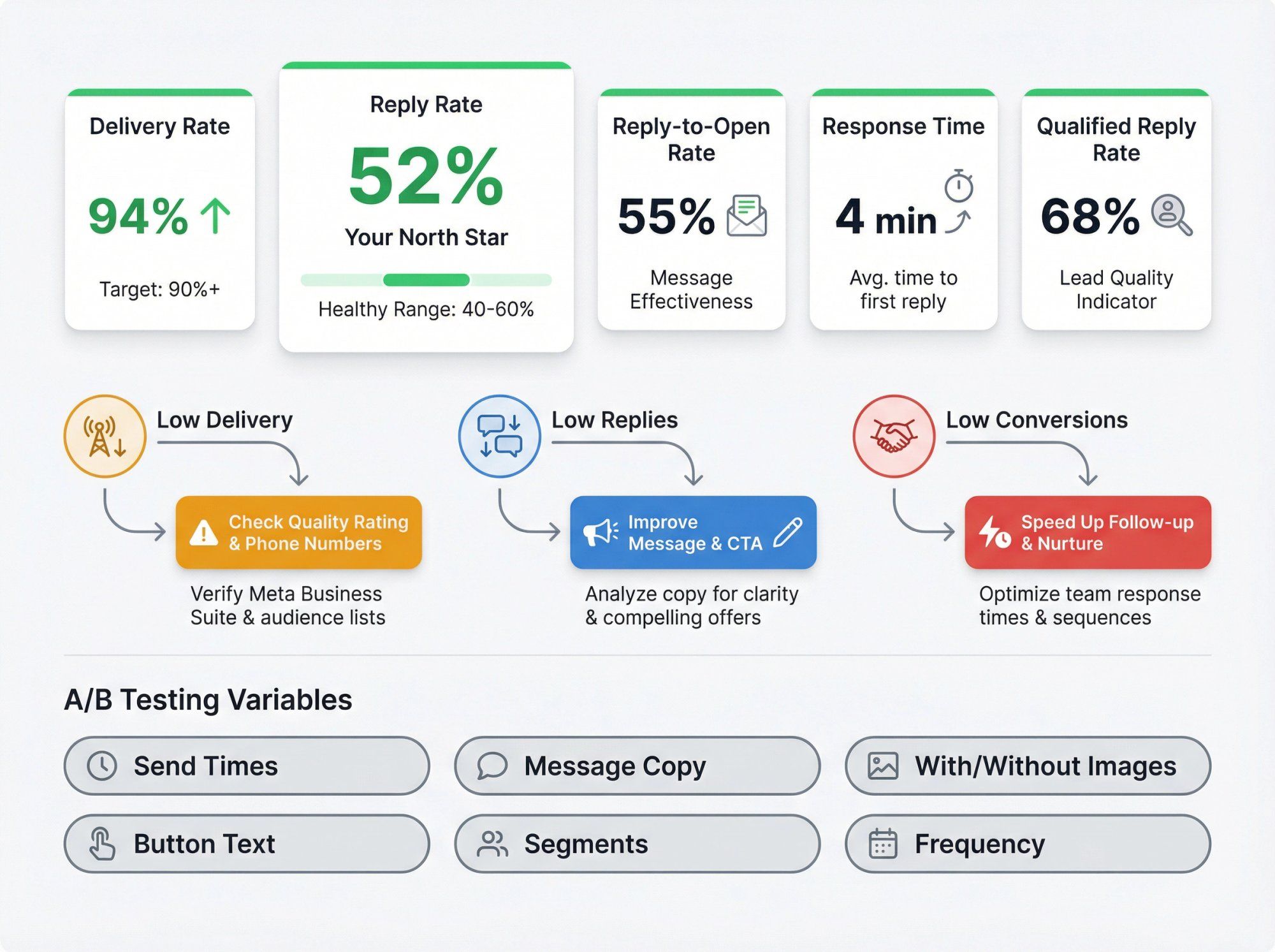
Platforms like Spur show broadcast analytics including delivery, opens, clicks, and per-contact status. Use this data to diagnose issues.
What good looks like: WhatsApp campaigns typically see 90%+ open rates and 40-60% reply rates when well-executed. If you're way below that, there's room to improve.
Diagnose your weak points:
Low delivery despite good templates? Check your quality rating and segment health.
High delivery but low replies? Your message isn't compelling or easy to respond to.
High replies but low conversions? Your follow-up is weak or slow.
A/B test relentlessly. Test different:
• Send times
• Message copy and CTAs
• With/without images
• Button text
• Segment targeting
• Frequency
Change one variable at a time and measure the impact. Over time, you'll build a playbook of what resonates with your specific audience.
Learn from actual replies. Read what people say. Are they confused? Excited? Annoyed? If many people ask the same question, your broadcast wasn't clear enough. If people reply positively, double down on that approach.
Monitor your quality rating. WhatsApp tracks how users respond to your messages. High engagement keeps you in the green. Low engagement or blocks/reports tank your rating, which limits your reach or gets you banned.
Quality rating is based on:
• How many people respond positively
• How few people block or report you
• How engaged your audience is overall
Good reply rates protect your sending reputation.
Set goals and iterate. Maybe you're at 10% reply rate now. Aim for 20% in three months. Track what changes move the needle. Celebrate wins when a broadcast breaks your record.
Treat WhatsApp broadcasts like a continuous optimization process, not a set-it-and-forget-it channel. Measure, learn, improve, repeat.
Everything we've covered so far is theory without the right tools backing it.
Managing WhatsApp broadcasts, Instagram DMs, website chat, and Facebook messages across multiple team members while trying to automate responses, track conversations, and measure results? That's a lot of moving parts. Most businesses either give up, or they cobble together five different tools that don't talk to each other.
Spur was built specifically to solve this: one platform for WhatsApp, Instagram, Facebook, and live chat, with AI that actually does things (not just answers questions), plus a shared inbox so nothing falls through the cracks.
Real-world example: Eves & Gray used Spur's broadcast features with segmentation and DeliveryBoost and hit a 99.18% delivery rate with 88.75× ROI in 24 hours. Not because of magic. Because they could actually execute on segmentation, interactive messages, and fast follow-up without it being a manual nightmare.
Real-world example: Eves & Gray used Spur's broadcast features with segmentation and DeliveryBoost and hit a 99.18% delivery rate with 88.75× ROI in 24 hours. Not because of magic. Because they could actually execute on segmentation, interactive messages, and fast follow-up without it being a manual nightmare.
What makes Spur different:
Actionable AI agents, not just Q&A bots. Spur's AI can track orders, book appointments, update customer records, and take actions in your systems. Most chatbots just answer FAQs. Spur's AI actually completes tasks. That means when someone replies to your broadcast asking about their order status, the AI pulls it up and responds instantly. No human needed for the repetitive stuff.
Train AI on your knowledge. Unlike basic automation tools where AI is limited, Spur lets you train your AI agent on your own content: your website, help docs, product catalog, whatever. It learns your business and handles questions accurately.
One inbox for everything. WhatsApp replies, Instagram DMs, Facebook messages, and live chat all flow into one shared team inbox. Assign conversations, collaborate on responses, use saved replies, and make sure every message gets handled quickly. Spur's shared inbox prevents the chaos of switching between apps.
Built-in broadcasts with targeting. Create broadcasts to specific segments, schedule sends, use interactive buttons, and track delivery/opens/replies in real-time. The platform handles the template approval process and protects your quality rating with features like DeliveryBoost that improves broadcast delivery.
Simpler than technical tools, more powerful than basic ones. Powerful enough for serious automation, simple enough that your team can actually use it without a development background.
The integrations you actually need: Shopify, WooCommerce, Stripe, Razorpay, Shiprocket. If you run ecommerce, Spur connects to your stack and automates cart recovery, order updates, and post-purchase sequences.
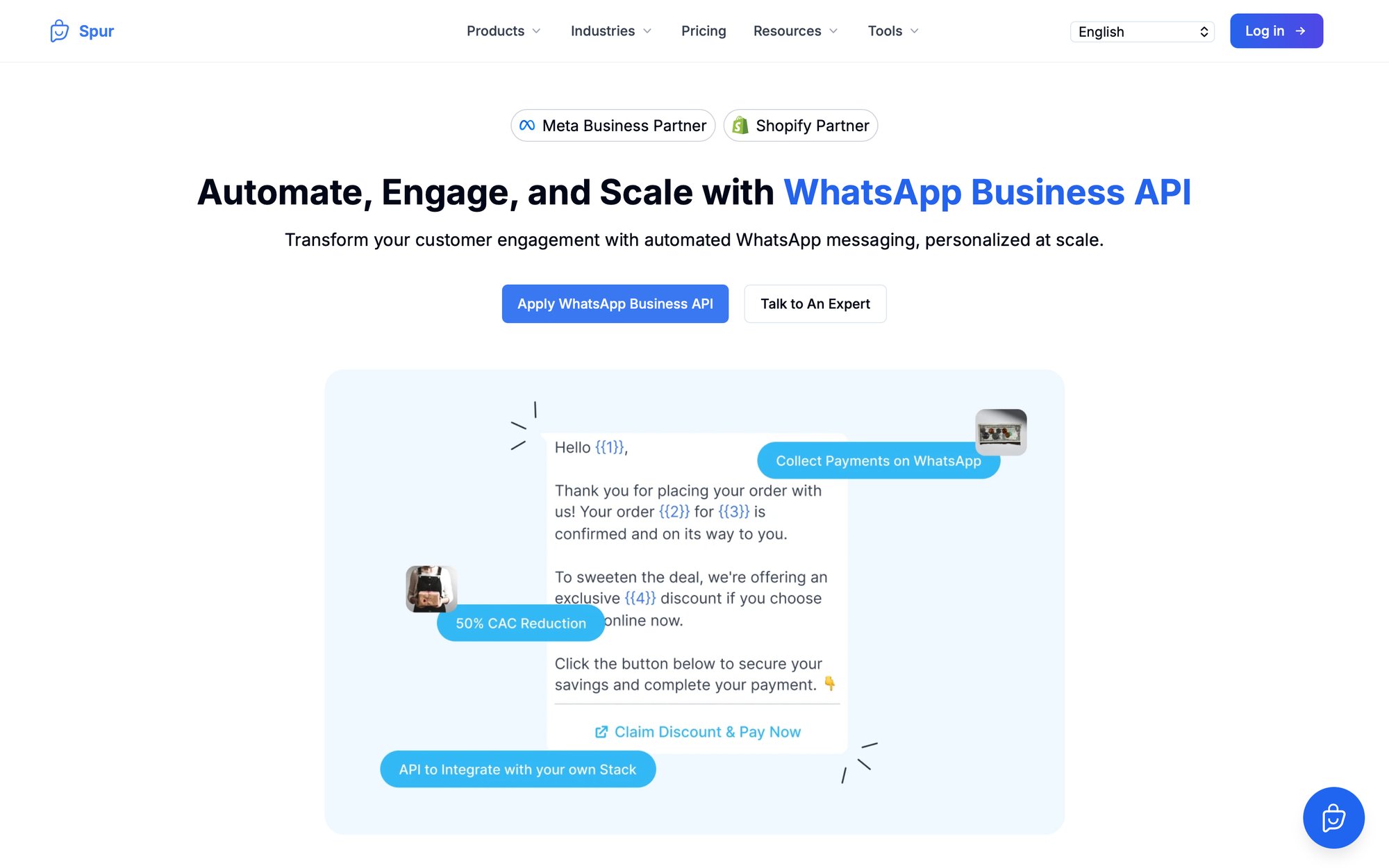
When you use the strategies in this guide (segmentation, personalization, interactive messages, fast responses), you need infrastructure that supports it. Spur is that infrastructure.
What's a good reply rate for WhatsApp broadcasts?
Industry benchmarks show 40-60% reply rates for well-targeted campaigns. If you're below 20%, there's significant room to improve through better segmentation, clearer CTAs, and interactive buttons.
How often should I send broadcasts without annoying people?
Only when you have genuine value to offer. For most businesses, that's 1-4 times per month. Quality beats frequency. One great message per month that gets 50% replies beats weekly spam that gets ignored.
Why aren't my WhatsApp broadcasts delivering to everyone?
Several reasons: per-user marketing limits (WhatsApp caps how many promotional messages one person can receive), low quality rating (if people ignore or block you), or contacts not being opted in properly. Learn how to improve broadcast delivery and engagement to improve delivery rates.
Should I use WhatsApp Business App or Business API for broadcasts?
API if you want to scale. The app caps broadcast lists at 256 contacts and requires recipients to have your number saved. The WhatsApp Business API removes these limits and gives you automation, analytics, and team collaboration features.
Do interactive buttons really increase replies that much?
Yes. Buttons remove typing friction. Instead of having to think of a response and type it out, users just tap an option. This typically doubles reply rates compared to text-only messages.
What should I do when someone replies STOP?
Honor it immediately. Remove them from future broadcasts. This protects your quality rating and keeps your list engaged. Most platforms like Spur's WhatsApp automation handle this automatically.
How fast should I respond to broadcast replies?
Within minutes if possible, within an hour maximum. WhatsApp is a real-time channel. Slow responses kill conversion. Set up customer service automation for instant acknowledgment, then route to humans for complex questions.
WhatsApp broadcasts fail when you treat them like email blasts. They succeed when you design for dialogue.
The brands getting 40-60% reply rates aren't doing anything complicated. They're messaging opted-in audiences, segmenting intelligently, personalizing content, using interactive buttons, timing sends strategically, leading with value, and responding fast when people engage.
Every strategy in this guide comes down to one principle: respect that WhatsApp is a conversation platform. When you broadcast like you're talking to a friend who happens to be interested in your business, people respond. When you blast generic promos at everyone, they ignore you.
Start with one improvement. Maybe it's adding quick reply buttons to your next broadcast. Maybe it's segmenting your list by purchase stage. Maybe it's cutting your response time in half.
Track the impact. Build on what works. Keep optimizing.
The opportunity on WhatsApp is massive. 98% open rates and reply rates that crush every other channel. But you have to earn engagement by making messages personal, valuable, and easy to respond to.
Do that, and you'll turn silent broadcasts into conversations that drive real revenue.
Want to see how the top brands are using WhatsApp for e-commerce? Check out more case studies from businesses crushing it with conversational commerce, or explore Spur's pricing to see how the platform can transform your WhatsApp strategy.