Key takeaways
Not all languages are equal in ChatGPT. See the full proficiency tiers — which ones are fluent, decent, or barely functional.
Ask an AI about this article
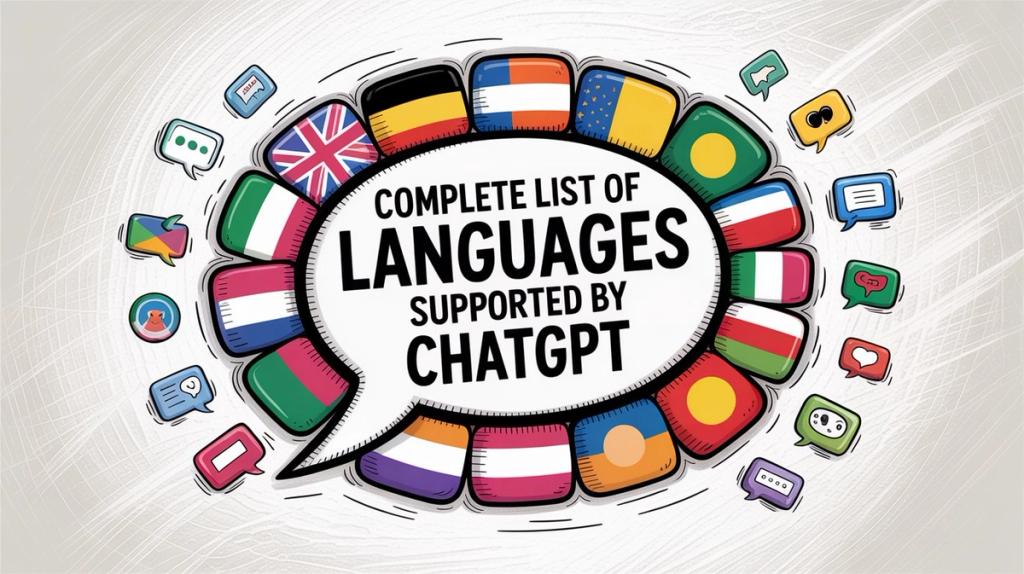
ChatGPT speaks 95+ languages, from Spanish to Swahili to Sanskrit. If you're building customer support or conversational AI, this multilingual power can help you serve global audiences instantly. No more language barriers, no more turning away customers.
ChatGPT amazes users worldwide with its ability to hold natural conversations in dozens of human languages. From simple greetings like "Hello" to complex technical queries, this AI can communicate with people across continents in their native tongues.
This capability transforms how businesses approach customer service, content creation, and global expansion. When Spur built its AI agents for customer support across WhatsApp, Instagram, and Live Chat, Spur leveraged this exact multilingual foundation to serve customers in 95+ languages with instant localization.
In this guide, we'll break down exactly how many languages ChatGPT supports, provide the complete list, explore its coding language capabilities, explain how to use it in different languages, and cover important limitations you need to know.

How Many Languages Does ChatGPT Support in 2025?
OpenAI officially lists 50+ supported languages for ChatGPT's interface and core functionality. This includes the heavy hitters like English, Spanish, French, German, Chinese, and Arabic.
In practice, though, ChatGPT can handle around 95+ languages to varying degrees of proficiency. Essentially, if there's enough text data on the internet in a language, ChatGPT has probably learned some of it during training.
This doesn't mean every language gets equal treatment. ChatGPT performs best in languages with substantial online presence:
High-proficiency languages (extensive training data):
• English, Spanish, French, German, Chinese (Mandarin)
• Portuguese, Russian, Japanese, Korean, Arabic
• Italian, Dutch, Polish, Turkish, Hindi
Medium-proficiency languages (moderate training data):
• Swedish, Norwegian, Danish, Finnish
• Czech, Romanian, Greek, Hebrew, Thai
• Vietnamese, Indonesian, Bengali, Tamil
Lower-proficiency languages (limited training data):
• Regional dialects and minority languages
• Newly standardized languages
• Languages with minimal digital footprint
Industry research confirms that ChatGPT performs best in English, but still delivers solid results across many other languages. The gap is narrowing with each new model release.
Why GPT-4 Changed Multilingual AI Forever
When GPT-4 launched, it brought significant improvements to multilingual capabilities. In benchmark tests, GPT-4 outperformed GPT-3.5 in 24 out of 26 languages tested, including traditionally challenging languages like Latvian, Welsh, and Swahili.
This means the performance gap between English and other languages continues to shrink. Users successfully chat in everything from Spanish to Swahili, Thai to Tamil, with increasingly reliable results.
ChatGPT Languages List: All 95+ Supported Languages
Based on OpenAI's official documentation and extensive real-world testing, here's the comprehensive list of human languages ChatGPT can handle:
European Languages ChatGPT Supports
Region | Languages |
|---|---|
Western Europe | English, Spanish, French, German, Portuguese (European & Brazilian), Italian, Dutch, Catalan, Galician, Basque |
Northern Europe | Swedish, Norwegian, Danish, Finnish, Icelandic, Faroese, Irish |
Central Europe | Polish, Czech, Slovak, Hungarian, Romanian, Moldovan (Romanian variant), German, Austrian German |
Southern Europe | Italian, Spanish, Portuguese, Greek, Albanian, Maltese |
Eastern Europe | Russian, Ukrainian, Belarusian, Bulgarian, Serbian, Croatian, Bosnian, Montenegrin, Slovenian, Macedonian, Lithuanian, Latvian, Estonian |
Asian Languages ChatGPT Supports
East Asia:
• Chinese (Mandarin - Simplified & Traditional)
• Cantonese (Yue)
• Wu Chinese (Shanghainese)
• Min Nan (Hokkien)
• Japanese
• Korean
South Asia:
• Hindi
• Bengali
• Urdu
• Punjabi
• Telugu
• Tamil
• Marathi
• Gujarati
• Kannada
• Malayalam
• Odia (Oriya)
• Sinhala (Sinhalese)
• Nepali
• Sanskrit
Regional Indian Languages:
Bhojpuri, Awadhi, Chhattisgarhi, Haryanvi, Kashmiri, Konkani, Maithili, Marwari, Rajasthani, Santali, Sindhi, Dogri
Southeast Asia:
• Indonesian
• Malay
• Tagalog (Filipino)
• Thai
• Vietnamese
• Burmese
• Javanese
Central Asia:
Kazakh, Uzbek, Kyrgyz, Turkmen, Tajik, Mongolian
Middle East:
• Arabic
• Persian (Farsi)
• Turkish
• Hebrew
• Kurdish
• Pashto
• Armenian
• Georgian
• Azerbaijani
• Bashkir
• Tatar
African Languages ChatGPT Supports
Swahili, Amharic, Somali, Afrikaans, Zulu (limited), Xhosa (limited)
Note: African language support is growing but remains limited compared to European and Asian languages due to less training data availability.
Other Languages ChatGPT Supports
Welsh (Celtic), Basque (language isolate), Maltese (Semitic)
Important note: This list represents languages ChatGPT can handle to some degree. Official OpenAI support covers about 58 languages explicitly, but user testing confirms the AI can work with many more.
Critical understanding: Performance quality depends entirely on training data availability. Languages like French or Spanish will produce fluent, nuanced responses. Languages like Santali or Bhojpuri might yield simpler or occasionally awkward outputs.
Programming Languages ChatGPT Understands
Beyond human languages, ChatGPT is fluent in programming languages too. Its training included massive amounts of source code and technical documentation, making it a valuable coding assistant.
ChatGPT can work with these programming languages:
Language | Primary Use Cases |
|---|---|
Python | AI, data science, scripting, web development |
JavaScript | Web development, Node.js, React, Vue |
TypeScript | Type-safe JavaScript for large applications |
Java | Enterprise applications, Android development |
C++ | Performance-critical systems, gaming |
C# | Windows apps, Unity game development |
Go | Cloud services, systems programming |
Ruby | Web development (Rails), scripting |
PHP | Server-side web development, WordPress |
Swift | iOS and macOS app development |
Kotlin | Android development |
Rust | Systems programming with memory safety |
SQL | Database queries and management |
Shell/Bash | Command-line scripting, automation |
ChatGPT can write code snippets, debug errors, explain algorithms, and translate between programming languages. It doesn't execute code (so outputs aren't tested), but it understands syntax, patterns, and best practices remarkably well.
Always review and test any code ChatGPT generates, especially for production environments. The AI is knowledgeable but can occasionally produce code that looks correct without accounting for edge cases.
How to Use ChatGPT in Different Languages (4 Methods)
The beauty of ChatGPT's multilingual design is simplicity. You don't flip switches or change settings. Just start typing in your target language, and ChatGPT automatically detects it and responds accordingly.
Method 1: Just Start Typing
Type your message in Spanish, and ChatGPT replies in Spanish. Switch to Japanese mid-conversation, and it adapts. The language detection happens automatically.
Example:
• You: "¿Cuáles son los beneficios de la automatización?"
• ChatGPT: "La automatización ofrece varios beneficios..." (continues in Spanish)
Method 2: Explicitly Request a Language
You can tell ChatGPT exactly which language to use:
→ "Please answer in Italian:"
→ "Translate this paragraph into Polish:"
→ "Respond in Brazilian Portuguese:"
This ensures you get output in your desired language, even if you ask the question in English.
Method 3: Change Interface Language
In the ChatGPT app or web interface, you can change the UI language:
① Click your profile icon
② Select Settings > General > Language
③ Choose from the dropdown menu
This localizes the interface (buttons, menus, system messages) but doesn't change the model's capabilities. The instructions are here.
Method 4: Use It as a Translator
ChatGPT works well for translation tasks:
"Translate the following English text to Japanese:
[your text here]"
While ChatGPT translations are generally strong for common language pairs, they're not perfect for highly technical or culturally nuanced content. Review important translations carefully.
Method 5: Mix Languages
ChatGPT can handle conversations involving multiple languages. If you ask a question in English about a French phrase, it manages the context naturally.
Behind the scenes: ChatGPT doesn't use separate models per language. All multilingual knowledge exists in one unified model. When you type a prompt, the AI recognizes the language patterns and generates responses in that language. This allows fluid code-switching and understanding across languages.
How Businesses Use Multilingual AI for Customer Support
Spur built its AI-powered customer support platform on this exact multilingual foundation. Spur's AI agents can handle customer conversations in 95+ languages automatically.
Here's what this means in practice:
→ Instant language detection
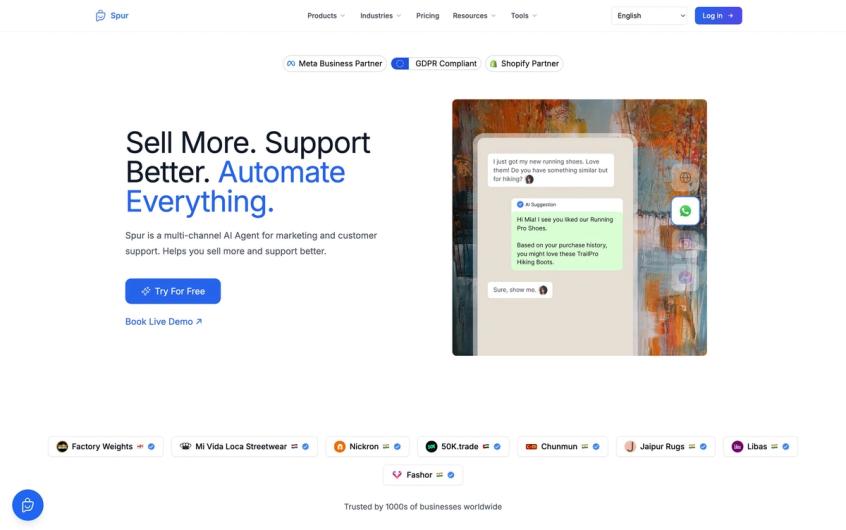
When a customer opens chat on WhatsApp, Instagram, or your website's live chat, our AI immediately recognizes their language and responds accordingly. A customer typing in Hindi gets Hindi responses. Someone writing in Spanish gets Spanish replies.
→ Knowledge base in any language
Unlike basic chatbots, Spur's AI agents train on your knowledge base and product data. This means accurate, contextual responses in 95+ languages, not just generic translations.
→ Seamless human handoff
When the AI can't handle a query, it routes to your support team with full conversation context, preserving the customer's language preference throughout.
This multilingual capability has helped businesses like yours serve global audiences without hiring multilingual support teams. One AI agent, 95+ languages, deployed across WhatsApp, Instagram, Facebook Messenger, and Live Chat.
Want to see it in action? Start your free trial and test multilingual AI support for yourself.
ChatGPT Language Limitations You Need to Know
ChatGPT's multilingual abilities are impressive, but you need realistic expectations. It's not a flawless human translator or native speaker.

1. Uneven Accuracy Across Languages
Performance varies significantly by language. English gets the most accurate, articulate responses because English dominates training data. Major languages like Spanish, French, Chinese, and Arabic also perform very well.
Languages with less training data (Maltese, Marwari, regional dialects) might produce:
• Simpler vocabulary
• Occasional grammatical awkwardness
• Minor errors
• Less idiomatic expression
Rule of thumb: Expect excellent performance in high-resource languages, decent results in medium-resource languages, and basic competency in low-resource languages.
2. Cultural Nuances and Idioms
ChatGPT sometimes translates too literally. It might miss:
• Cultural context
• Humor and jokes
• Idiomatic expressions
• Slang and colloquialisms
• Proverbs that don't translate directly
The AI recognizes patterns but doesn't truly "understand" culture. It can misinterpret or translate idioms word-for-word, losing the intended meaning.
For critical or culturally sensitive communications, have a native speaker review outputs.
3. Language Mixing and Confusion
When conversations switch between languages or prompts include multiple languages, ChatGPT occasionally gets confused. It usually maintains the question's language, but if unsure, it might:
• Respond in the wrong language
• Revert to English
• Mix languages in one response
If this happens, just specify your desired language explicitly in the next prompt.
4. Script and Formatting Issues
ChatGPT handles different writing scripts (Latin, Cyrillic, Arabic, Chinese characters, Devanagari, etc.) correctly. However, right-to-left scripts like Arabic or Hebrew sometimes display with alignment issues in the chat interface, depending on the platform.
The content remains correct, but visual presentation might need adjustment.
5. Names and Transliteration
ChatGPT sometimes struggles with:
• Proper nouns not originally in the target language
• Place names with multiple localized versions
• Personal names requiring transliteration
It might spell names differently or guess at localized versions. Double-check proper nouns in important contexts.
6. Knowledge Cutoff Applies to All Languages
ChatGPT's knowledge stops at its training cutoff date (September 2021 for GPT-3.5, April 2023 for GPT-4). This applies across all languages.
If you ask about recent events in German or new slang in Japanese that emerged after the cutoff, ChatGPT won't have that information.
7. Not Quite a Native Creative Writer
ChatGPT can generate creative content in many languages, but smaller languages might yield:
• More generic styles
• Noticeable repetition
• Less nuanced prose
It lacks the finesse of a skilled human writer in languages with limited training data.
8. Bias and Tone
Training data biases affect outputs. Some users find ChatGPT defaults to formal or polite tones in certain languages based on common training sources. You can usually steer this with instructions like "use casual tone" or "write formally," but it's worth noting.
Bottom line: ChatGPT is an incredibly capable multilingual assistant, but not a perfect substitute for native speakers or professional translators in high-stakes scenarios. Use it to get 90% of the way there, then polish the remaining 10% for critical applications like legal documents, marketing copy aimed at specific cultures, or sensitive communications.
Why Multilingual AI Matters for Global Business
The ability to communicate in dozens of languages isn't just a cool feature. It fundamentally changes how businesses can serve global audiences.
Reaching More Customers
A multilingual AI interacts with users in their preferred language. For businesses, this means serving Spanish-speaking customers in Mexico City, Swahili speakers in Nairobi, and Mandarin users in Shanghai with equal ease.
Research consistently shows that 76% of online consumers are more likely to purchase if websites or support are in their native language. About 40% won't buy at all if content only appears in another language.
By deploying multilingual AI customer support, you tap into markets and demographics that would otherwise feel excluded.

Dramatically Better Customer Experience
People trust services more when they can interact in their native tongue. A customer struggling through English support feels frustrated. That same customer chatting fluently in their language feels valued and understood.
Clarity increases. Friction decreases. A French customer starting a conversation with "Bonjour, j'ai besoin d'aide" gets a better experience than being forced into English-only support.
Massive Cost Savings
Traditional multilingual support meant hiring bilingual staff or professional translators for each language. That's expensive and doesn't scale beyond a few core languages.
With AI like Spur's multilingual agents, you get automatic understanding and responses in 95+ languages at no extra staffing cost. One AI handles inquiries in English, Spanish, Chinese, Arabic, Hindi, and dozens more simultaneously.
This eliminates the need for massive multilingual call centers while providing 24/7 coverage in every language. Explore Spur's pricing to see how accessible this technology has become.
Consistent Information Globally
One AI model delivering responses in all languages ensures consistency. Every customer gets the same accurate information (just translated), rather than potentially varying answers from different human reps.
This standardizes your knowledge base globally.

Faster Content Localization
Need product descriptions in 10 languages? ChatGPT can draft those translations in minutes. While you'd have humans finalize important content, the initial heavy lifting happens instantly.
This speed creates competitive advantages when entering new markets.
Digital Inclusion
On a broader level, multilingual AI bridges language divides. Non-English speakers access the same information and assistance as English speakers. This helps students learning in native languages, translates knowledge to underserved languages, and ensures AI benefits more than just the English-speaking world.
Real-World Example: Multilingual Customer Support with Spur
Spur has seen firsthand how powerful multilingual AI becomes when applied to real business challenges.
Spur's platform handles customer conversations across multiple channels:
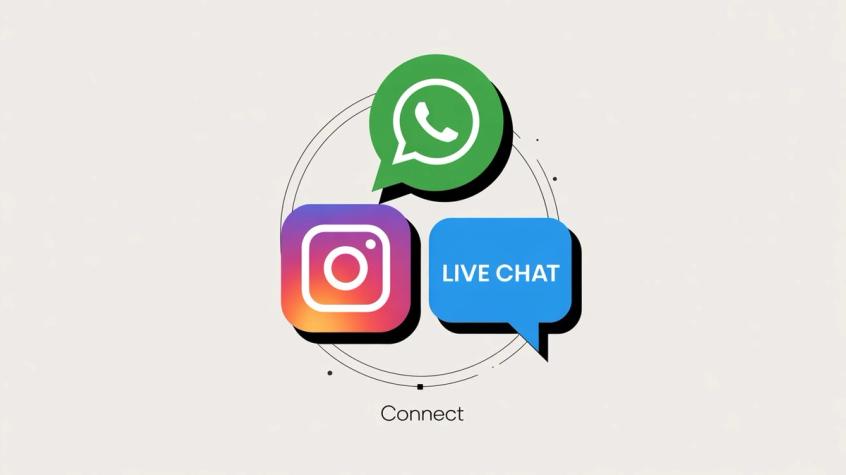
WhatsApp Business API: Broadcasts, automated replies, and conversational commerce in 95+ languages
Instagram Automation: Comment-to-DM flows and story reply automation, automatically detecting and responding in the customer's language
Live Chat Widget: Website visitors get instant support in their preferred language without manual language selection
Key advantage: Spur's AI agents don't just translate. They're trained on your specific knowledge base, product catalog, and brand voice. This means accurate, contextual responses in 95+ languages that feel natural and on-brand.
Businesses using Spur report:
• 60-80% of customer queries resolved by AI without human intervention
• Instant 24/7 multilingual support without hiring multilingual teams
• Higher customer satisfaction from native-language interactions
• Reduced support costs while expanding global reach
When the AI can't handle a query, it seamlessly hands off to your human team with full context, preserving the customer's language preference throughout.
Check out our case studies to see real examples of businesses scaling globally with multilingual AI support.
Curious how this works for your business? Sign up for Spur and experience multilingual AI customer support yourself.
The Future of Multilingual AI (What's Coming Next)
The trajectory points toward increasingly sophisticated multilingual capabilities:
More Languages, Better Quality
Researchers are actively gathering diverse training data to include underrepresented languages. This means better support for:
→ African languages with limited online presence
→ Indigenous languages in the Americas
→ Pacific region languages
→ Regional dialects currently underserved
Efforts include crowdsourced translations and specialized datasets to teach AI languages that don't dominate the internet.
Smarter Translation and Localization
Future models will better preserve tone, context, and cultural nuances rather than direct word-for-word translation. The newest models already show more context awareness. This trend continues, making AI responses feel naturally fluent and culturally appropriate in each language.
Closing the English Performance Gap
Ongoing work aims to reduce bias from English dominance in training data. By balancing datasets and fine-tuning language-specific nuances, future ChatGPT versions might handle all languages with near-equal proficiency.
The goal: A complex query in Turkish gets an answer as detailed and accurate as one in English.
Multimodal and Voice Capabilities
While text dominates now, ChatGPT is integrating multimodal features. Future versions might:
• Speak aloud in different languages
• Interpret spoken queries in various languages
• Provide real-time voice translation
• Enable natural spoken dialogue in many tongues
OpenAI already added voice conversation modes for select languages in late 2023. As speech synthesis and recognition improve, expect this to expand dramatically.

Domain-Specific Language Mastery
We might see specialized modes particularly good at certain languages or domains:
• "Legal Spanish" mode
• "Medical Japanese" mode
• "Technical German" mode
These fine-tuned versions would overcome current limitations with highly technical or localized jargon.
Human-AI Collaboration Workflows
Rather than replacing human experts, AI becomes a partner. Workflows might involve:
① AI drafts content in multiple languages
② Human translators refine and polish
③ Result: Dramatically faster process with maintained quality
Tools for these collaborations will become more user-friendly and integrated into existing workflows.
The vision: Language becomes a non-issue in global information exchange. You'll converse with AI (or between humans with AI mediation) in any language pair effortlessly. Knowledge and services currently locked by language barriers will open to anyone worldwide.
Wrapping Up: ChatGPT Speaks Your Language
ChatGPT's ability to communicate in 95+ languages represents a massive leap forward in AI accessibility and global reach. From Hindi to Hungarian, Swahili to Swedish, this AI can hold conversations, answer questions, translate text, and provide support across dozens of human languages plus numerous programming languages.
The multilingual capabilities aren't perfect. English still dominates, and rare languages receive less fluent responses. Cultural nuances sometimes get lost, and idioms occasionally translate literally. But the trajectory is clear: language gaps continue closing with each model iteration.
For businesses, this multilingual power opens unprecedented opportunities. You can serve global customers without massive multilingual teams. Platforms like Spur demonstrate this in practice, with AI agents handling customer conversations in 95+ languages across WhatsApp, Instagram, and Live Chat simultaneously.
The barriers that once made global customer service prohibitively expensive are crumbling. Language no longer needs to limit your market reach or customer satisfaction.
Whether you say "Hello," "Hola," "नमस्ते" (Namaste), or "你好" (Nǐ hǎo), ChatGPT responds in kind. The future of truly global, accessible AI is here. And it speaks your language.
Ready to deploy multilingual AI for your business? Try Spur free for 7 days and experience AI-powered customer support that automatically adapts to every customer's language. Or explore our integrations with Shopify, WooCommerce, Stripe, and more to see how easily you can add multilingual support to your existing tech stack.
Frequently Asked Questions About ChatGPT Languages
OpenAI officially supports around 50-58 languages in ChatGPT's interface, including major languages like English, Spanish, French, German, Chinese, Arabic, Japanese, Korean, Hindi, and Portuguese. However, in practice, ChatGPT can understand and respond in 95+ languages to varying degrees, including many regional and less common languages not formally listed.
Yes, absolutely. ChatGPT performs best in English because English text dominates its training data. Other major languages with substantial online presence like Spanish, French, German, Chinese, Arabic, and Japanese also perform very well. Languages with less training data (smaller regional languages, minority dialects) will produce simpler or occasionally less fluent responses. The performance gap continues to narrow with each new model release.
Yes, ChatGPT can translate text between many language pairs. You can input text in one language and ask for translation into another. For example: "Translate the following English text to Japanese: [text]." While ChatGPT's translations are generally good for common language pairs, they're not perfect for highly technical, legal, or culturally nuanced content. For critical translations, have a professional translator review the output.
Simply start typing in that language, and ChatGPT will automatically detect it and respond accordingly. You can also explicitly specify the language in your prompt: "Please answer in Italian:" or "Respond to this question in Spanish." Additionally, you can change the interface language in ChatGPT settings to localize the UI, though this doesn't change the model's language capabilities.
ChatGPT is fluent in many programming languages including Python, JavaScript, TypeScript, Java, C++, C#, Go, Ruby, PHP, Swift, Kotlin, Rust, SQL, and shell scripting. It can write code snippets, debug errors, explain algorithms, and translate code between languages. However, ChatGPT doesn't execute code, so always review and test any generated code before using it in production.
Yes, ChatGPT can manage conversations involving multiple languages. You can ask a question in English about a French phrase, or switch languages mid-conversation, and it generally maintains context. However, if prompts heavily mix languages or are ambiguous, ChatGPT might occasionally get confused. If it responds in the wrong language, simply specify your desired language explicitly in the next prompt.
Not for all use cases. ChatGPT is an excellent tool for draft translations, casual communications, and general understanding across languages. However, it's not a perfect substitute for professional human translators in high-stakes scenarios like legal documents, marketing copy targeting specific cultures, medical texts, or content requiring deep cultural nuance. Think of ChatGPT as getting you 90% of the way there, with human experts handling the final 10% polish for critical applications.
To some extent, yes. ChatGPT can handle various dialects like Brazilian Portuguese vs. European Portuguese, or different Chinese variants (Mandarin, Cantonese, Wu). It also recognizes regional Indian languages like Bhojpuri, Haryanvi, and Marwari. However, proficiency in dialects depends heavily on available training data. Well-documented dialects work better than obscure regional variants with limited online presence.
Multilingual AI like Spur's customer support platform allows businesses to serve global audiences without hiring multilingual teams. Benefits include reaching more customers (76% of consumers prefer native-language support), dramatically better customer experience, massive cost savings compared to hiring multilingual staff, consistent information across all languages, faster content localization, and 24/7 support availability in 95+ languages simultaneously. Learn more about how Spur helps businesses scale globally.
Main limitations include:
• Uneven accuracy (English is strongest, rare languages are weakest)
• Cultural nuances and idioms often missed
• Language mixing when prompts involve multiple languages
• Formatting issues with right-to-left scripts in some interfaces
• Transliteration struggles with proper nouns
• Knowledge cutoffs affecting all languages equally
• Less sophisticated creative writing in low-resource languages
• Potential tone biases based on training data
For critical applications, human review remains important.
Simply start a conversation in your language and evaluate the responses. Ask varied questions to test understanding, request translations, have it explain concepts, and assess whether the replies feel natural and accurate. If you're building customer support like Spur offers, test realistic customer scenarios in your target languages to gauge whether the AI can handle your specific use case effectively. Try Spur free for 7 days to test multilingual support with your actual customer queries.
Sources
The pages this article links out to, in the order they appear.
- OpenAI officially lists 50+ supported languages help.openai.com
- GPT-4 launched, it brought significant improvements openai.com
Was this article useful?