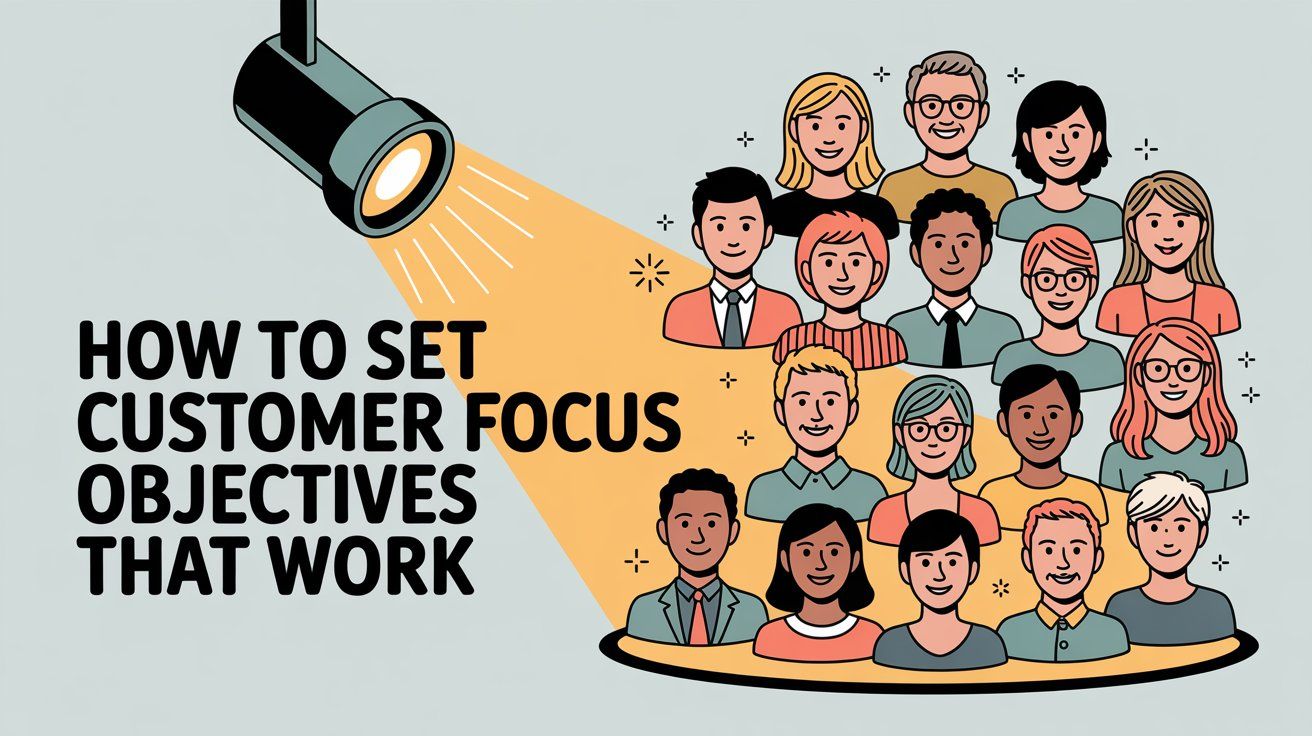
How to Set Customer Focus Objectives That Work (2025)

Discuss with AI
Get instant insights and ask questions about this topic with AI assistants.
💡 Pro tip: All options include context about this blog post. Feel free to modify the prompt to ask more specific questions!
TL;DR: Your customers have endless choices and zero patience for poor service. Setting clear customer focus objectives isn't optional anymore. This guide shows you exactly how to define measurable goals, implement omnichannel support, and leverage AI-powered tools like Spur to turn customer satisfaction into sustainable growth.
Customers have more choices than ever. Every interaction with your brand gets compared to the best experiences they've had anywhere else.
One slip, and they're gone. Research shows that 57% of customers would switch to a competitor after just one bad experience.
But here's the flip side. When you get it right, the payoff is massive. Studies indicate that 91% of customers are more likely to make repeat purchases after a great support experience. Some customers will even pay a premium. About 25% of consumers will happily shell out an extra 10% if they're confident they'll get outstanding service.
What does this mean for you?
Companies that set clear customer focus objectives and actually execute on them build loyalty, earn trust, and drive growth that lasts. The businesses that treat "customer-first" as a real strategy (not just a slogan) are the ones winning in 2025.
This guide breaks down exactly what customer focus means, why it's critical, and how to establish concrete objectives that put your customers at the heart of everything you do.
What Is Customer Focus and Why Does It Matter?
Customer focus is a business strategy that puts your customers' needs first in every decision. It's about aligning your products, services, and operations to consistently deliver value and great experiences.
This isn't just the support team's job. It's an organization-wide mindset. When you prioritize customers consistently, you create a cycle: customers feel valued, they stay longer, spend more, and tell others about you. Customer focus is the foundation of loyalty. By signaling that customers come first, you earn trust and advocacy.

What Happens When You Ignore Customer Needs?
We already know that most customers won't hesitate to leave after poor service. Neglecting customer needs drives up churn and makes acquisition far more expensive. It's much cheaper to keep happy customers than constantly replace unhappy ones.
Customer focus is directly tied to your bottom line. CX leaders consistently report that the impact of customer experience on business growth is extremely high. Studies show that satisfied clients buy again and refer new customers, boosting revenue and profitability.
Why Customer-Focused Companies Win
The benefits stack up fast:
Higher customer loyalty and retention
Prioritizing customers builds trust and long-term relationships, leading to repeat business. Loyal customers stick around and tend to spend more over time.
Increased revenue
Happy customers come back. They also buy more and refer friends. Positive word-of-mouth from delighted customers can be your biggest growth driver. Unhappy customers do the opposite.
Stronger brand reputation
Companies known for great customer care develop credibility that differentiates them from competitors. This makes it harder for others to steal your customers.
Employee engagement
When a company genuinely values customers, it translates into better internal culture. Employees take pride in delivering good service. Engaged employees give even better service. It's a virtuous cycle.

Critical insight: Being customer-focused isn't "nice to have" anymore. It's a strategic requirement to survive and thrive in today's marketplace.
How to Define Customer Focus Objectives That Drive Results
Telling your team to "be customer-centric" won't cut it. You need specific, measurable objectives that make customer focus tangible.
Customer focus objectives are concrete targets (often tied to customer experience metrics) that ensure you consistently meet or exceed customer expectations. These objectives turn the abstract idea of "putting customers first" into real outcomes your team can rally around.
Great objectives share a few traits: They align with your broader business goals, they're SMART (Specific, Measurable, Achievable, Relevant, Time-bound), and they directly impact the customer experience. Think of them as the compass for your team, guiding daily actions toward what matters most.
Where to Set Customer Focus Objectives
Speed and responsiveness
Customers are impatient. In a Salesforce survey, 83% of customers expect immediate assistance when they contact a company.
A typical objective: "Improve first response time on live chat from 2 minutes to under 60 seconds by Q4."
Faster responses show customers you value their time. Spur's AI Live Chat can help you achieve instant response times with intelligent automation.
Customer satisfaction and quality
You might aim to "Increase CSAT from 85% to 92% in the next year."
Metrics like CSAT, Net Promoter Score (NPS), and Customer Effort Score (CES) are useful yardsticks. Instead of a vague goal like "make customers happier," define it as "Raise CSAT from 60% to 80% within six months by improving agent training and response quality."
This way, you can track if initiatives actually work.
Retention and loyalty
An objective here could be "Reduce customer churn rate from 10% to 7% by year-end."
Retaining customers is cheaper than acquiring new ones. Tactics might include proactive outreach to at-risk accounts or loyalty programs powered by WhatsApp automation.
Resolution and efficiency
Aim for targets like "Increase first-contact resolution rate to 85%" or "Achieve 40% self-service resolution via help center and chatbot."
Higher first-contact resolution means customers get issues solved faster without being passed around. Spur's actionable AI agents can process orders, track shipments, and resolve queries in real-time, dramatically improving your first-contact resolution rates.
Engagement and feedback
Set goals around customer feedback: "Increase feedback survey response rate to 50%, and implement at least 3 customer-suggested improvements each quarter."
Learn how to effectively collect and analyze customer feedback to drive continuous improvement.
How to Apply the SMART Framework
"Improve support" is too vague. But "Achieve an average live chat response time of <60 seconds by end of Q3" is:
| SMART Element | How It Applies |
|---|---|
| Specific | Clear metric and target (response time <60 seconds) |
| Measurable | You can track it with analytics |
| Achievable | Given your team and tools, it's realistic |
| Relevant | Aligns with your customer-first mission |
| Time-bound | Has a clear deadline (end of Q3) |
SMART goals rally your team and eliminate guesswork. Avoid vague statements and set concrete targets.

Pro tip: Align customer-focused objectives with your company's values. If "customer-first" is a core value, then objectives like "Maintain 95% CSAT while growing ticket volume" reinforce it in practice. Some companies even tie bonuses to customer satisfaction metrics, showing everyone is accountable.
7 Proven Strategies to Achieve Customer Focus Objectives
Setting targets is step one. Now comes execution. Here are seven strategies to help you hit your customer focus goals.
1. How to Build a Customer-Focused Culture
Culture eats strategy for breakfast. If you want to put customers first, start inside your company.
Make customer focus a core value. This means leadership must champion it, and every team (even those who don't directly interact with customers) should understand how their work impacts the customer experience. When everyone shares a "think customer" mindset, it breaks down silos and unites the company.
How to do this:
Hire for empathy and customer-centric attitudes.
Look for traits like empathy, communication skills, patience, and problem-solving. Zappos hires based on cultural fit and empowers call center employees to "deliver WOW through service."
Train and motivate your team.
New agents should be onboarded with a customer-first mindset. All employees should receive ongoing training in customer service skills in empathy, active listening, and conflict resolution. Share customer success stories in meetings. Encourage departments to spend time talking to customers.
Share feedback company-wide.
When a customer praises an employee, celebrate it. When complaints come in, discuss what went wrong and how to fix it. Transparency ensures everyone learns.
Recognize and reward customer-centric behavior.
Set customer-focused performance goals and tie incentives to them. When employees go the extra mile, acknowledge it. Some companies create "customer champion of the month" awards.
Finally, lead by example. Company leaders should engage with customers directly. When employees see the CEO personally call an upset customer to apologize, it cements the customer-centric ethos.

2. How to Understand Your Customers Deeply
You can't meet customer needs if you don't fully understand them.
Start by gathering data and feedback. Build detailed customer profiles or personas that capture key segments. Learn who your customers are, their goals, common questions, and preferred channels. Use analytics to map the customer journey and identify friction points.
→ Listen to customers in their own words
Conduct surveys, interviews, and focus groups. Monitor social media and reviews. These inputs highlight what customers actually care about. Learn effective ways to collect customer feedback systematically.
→ Use empathy as your superpower
66% of consumers expect companies to understand their needs and expectations. Don't make them constantly explain themselves. Anticipate what they want.
Encourage your team to "put themselves in the customer's shoes" for every interaction. Role-playing exercises help. When planning a new policy, ask "How will this make our customers' lives better?"
→ Anticipate future needs
By deeply understanding customers, you can set objectives that truly matter. If feedback shows customers value personalization, you might implement a tailored recommendation system. If they complain about lack of proactive communication, start sending regular update emails.
Understanding customers also helps you anticipate future needs. When you know customers that well, you can set visionary objectives that solve problems they haven't even vocalized.

3. How to Meet Customers Where They Are (Omnichannel)
Your customers live on multiple channels. They expect to engage with you seamlessly across all of them.
Being customer-focused means being available on the platforms your customers prefer. Whether that's phone, email, live chat, social media, or messaging apps like WhatsApp and Instagram.
Consider this: 86% of customers expect communications to transition smoothly between channels. A customer might message you on Facebook, follow up via email, then call by phone. They expect you to know it's the same person and continue the conversation with full context.
If they have to repeat their issue every time they switch channels, it's frustrating and it signals your company isn't customer-centric.
To avoid that, implement an omnichannel strategy:
① Offer a range of contact channels
Analyze your customer base and identify their top preferred channels. Younger customers might favor chat or WhatsApp. Others prefer phone for complex issues.
This could mean adding live chat to your website for instant help, deploying chatbots on messaging apps like WhatsApp, Instagram, or Facebook Messenger, and maintaining active support on social media.
If a large segment of your audience is on WhatsApp, integrating the WhatsApp Business API can let you engage them with automated messages and quick responses.
Tools like Spur bring together WhatsApp, Instagram DMs, web chat, and Facebook Messenger in one unified inbox. This means agents can respond with full context across channels, making the customer experience seamless.
② Unify customer data across channels
Use a shared inbox or CRM that aggregates conversations from all sources. This gives your team a 360° view of each customer.
If John Doe emails you then later hops on chat, the agent can see the email history and pick up right where it left off. Modern platforms can stitch these interactions together under one customer profile.
Customers feel heard and known, not like they're dealing with separate departments in each channel. Spur's unified inbox ensures seamless context across all messaging channels.
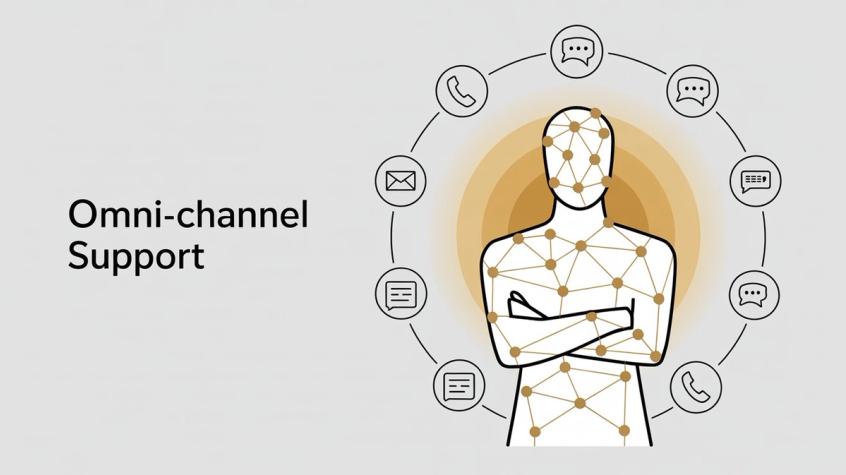
③ Ensure consistency in support quality
Train your team to provide the same level of help on every channel. Whether a customer tweets at you or calls your hotline, they should get accurate answers and a friendly experience.
Regularly audit the experience on each channel and gather feedback about channel preferences and pain points.
Real-world example: Four Seasons Hotels discovered their guests wanted to communicate on their own terms, so they introduced support via 10 different digital channels (from WhatsApp to SMS to Twitter). No matter how a guest contacts the concierge, Four Seasons ensures a seamless, high-touch experience using a unified messaging platform.
Make it effortless for customers to reach you on their channel of choice. When you remove friction and meet them where they are, you demonstrate respect for their preferences.
4. How to Make Customer Interactions Easy and Personal
Another objective should be to minimize customer effort and make every interaction feel personal.
Streamline the customer experience:
Audit how easy (or hard) it is for customers to do basic things: finding information, getting issues resolved, making purchases, returning products. Identify pain points and set objectives to eliminate them.
| Customer Pain Point | Solution |
|---|---|
| Can't find help on website | Implement self-service knowledge base |
| Repeat issue multiple times | Enable single view across departments |
| Cumbersome returns | Simplify to 3 clicks or less |
| Slow responses | Deploy AI chatbots for instant help |
About 67% of customers opt for self-service first if available. Spur's AI agents can be trained on your knowledge base to provide instant, accurate self-service answers.
If customers have to repeat their issue multiple times, enable a single view of conversations across departments. This prevents the "I already gave you this info!" frustration.
If returns are cumbersome, simplify the process to require no more than 3 clicks. Reducing complexity shows you respect the customer's time. Automate order processing to streamline returns and exchanges.
Personalize wherever possible:
Customers hate feeling like a number. Use data to tailor interactions.
63% of customers expect agents to know their unique needs and history. Train agents to reference past purchases or preferences. When a VIP customer calls, flag them so agents give priority.
If a customer has an open order, an agent should see that and proactively update them during a support call. Spur's CRM integrations enable this level of personalization across all channels.
Make customers feel heard:
Train your team in active listening and empathy. Create channels for customers to voice feedback easily. When they provide feedback, acknowledge it and follow up with actions taken.
Sometimes even if you can't immediately solve a problem, simply listening carefully and reassuring the customer can salvage the relationship.

In summary, set goals around reducing customer effort (make things easy) and increasing personalization (make it feel human). When every interaction is painless and personable, customers reward you with loyalty.
5. How to Collect Feedback and Continuously Improve
Listening to your customers will reveal areas to improve. No matter how well you think you're doing, there's always room to get better.
Make it an objective to establish feedback loops and act on what you learn.
Collect customer feedback proactively:
Don't wait for complaints. Use surveys to regularly gauge sentiment:
• After support interactions, send a brief CSAT survey ("How was your experience?"). Monitor that score over time with customer service performance indicators
• Use Net Promoter Score (NPS) quarterly to see how likely customers are to recommend you
• Consider Customer Effort Score (CES) surveys after key interactions, asking if it was easy to accomplish their task
• If you have a community or social media presence, monitor discussions and ask open-ended questions like "What can we do better?"
Perhaps set an objective like "Achieve 30% response rate on post-service surveys and analyze results monthly for actionable insights." Learn proven ways to collect customer feedback effectively.
Close the loop:
Feedback is useless if it goes into a black hole. Share feedback with relevant teams. More importantly, act on it.
Identify trends. If customers keep mentioning a confusing policy, rewrite it. If many request a new feature, discuss its feasibility. Learn how to handle customer complaints effectively.
Even when suggestions aren't viable, reach out to those customers to thank them and explain. Honesty goes a long way.
Use feedback to drive innovation:
Many breakthrough improvements come from customer ideas. Amazon works backwards from customer needs (often expressed in feedback) to drive new services.
Encourage your team to view complaints as opportunities. If multiple customers complain about slow support on weekends, maybe it's time to introduce a 24/7 AI chatbot. Spur's AI Live Chat solution can resolve common queries instantly at any hour, responding to feedback like "I can't get help after 5pm."
Customers' expectations evolve. Set an objective like "Review and update our customer service processes every 6 months based on feedback and new trends." By treating customer focus as an ongoing journey, you'll stay ahead of competitors who grow complacent.
6. How to Use Technology to Enhance Customer Focus
In 2025, being customer-focused is greatly enabled by smart use of technology. The goal isn't to replace the human touch, but to augment your service with tools that make it faster, smarter, and more scalable.
Deploy AI and automation for instant support
Customers love quick answers. AI-powered chatbots and virtual agents can handle common inquiries in seconds, any time of day. 79% of companies are confident in AI/automation's future role in customer service.
A well-implemented chatbot can resolve simple issues, guide users to resources, or collect information before handing off to a human. All of which reduces wait times. Learn more about what is a virtual agent and how it differs from traditional chatbots.
For example, Spur's AI Live Chat agent can be trained on your knowledge base to answer FAQs and even perform actions like order lookups automatically, resolving 70% of customer queries instantly. By using an AI agent, you ensure customers get help 24/7 without delay.
One pro tip: integrate your chatbot with your CRM or database so it can personalize answers ("Hi Alice, looks like you ordered a size M. Would you like to initiate an exchange?"). Always provide a route to a human for complex questions with seamless chatbot to human handoff.
Implement self-service tools
Many customers prefer solving issues on their own if you give them the means. A robust knowledge base or FAQ site can empower users to find answers quickly. Check out FAQ templates and chatbot for FAQ best practices.
Some companies go further with community forums or AI-driven Q&A. Modern solutions even offer conversational FAQs. Instead of static pages, customers can ask questions in natural language and get an answer from your knowledge base.
As an objective, you might aim to "Deflect 20% of support volume to self-service by year-end."
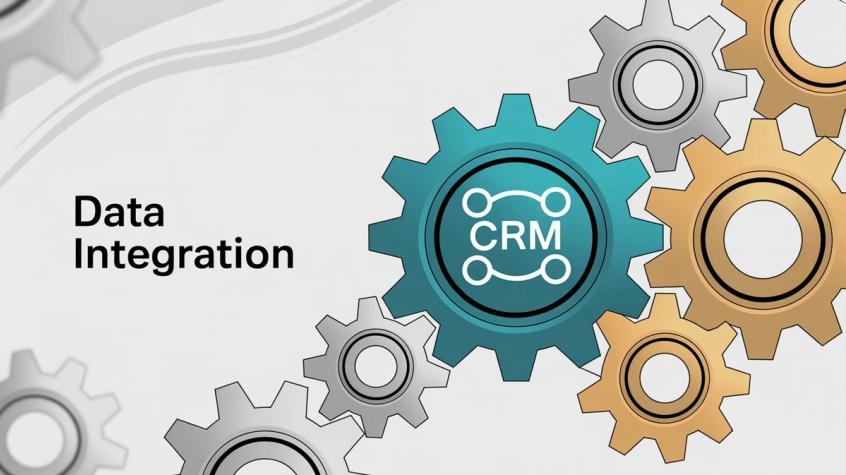
Use CRM systems and data analytics
A good CRM stores all interactions and preferences, enabling your team to treat each customer individually. Ensure your support and sales tools are linked. If a VIP customer contacts support, the agent should know it and maybe offer a small perk. Explore CRM WhatsApp integration options.
Analytics tools can identify trends like common complaint topics or peak contact times, so you can proactively address them. Data also helps in predictive support. If a customer hasn't used a service in a while, you could have an agent reach out before they consider leaving.
Connect your systems (integrations)
Often, customer frustration arises when staff lack information. Integrate your helpdesk, e-commerce, billing, and other systems so agents can see all relevant info in one place.
If a customer asks "Where's my order?", your agent (or bot) should be able to pull delivery status instantly from the shipping system. Spur integrates with major platforms like Shopify, WooCommerce, Stripe, Razorpay, and more.
The more you streamline your backend, the smoother the customer's experience.
Stay current with tech trends
New channels and tools emerge constantly. Part of being customer-focused is meeting rising expectations. Keep an eye on what leaders in CX are doing. You don't need every shiny tool, but adopt those that genuinely solve customer pain points.
As a goal, "Pilot at least 2 new support technologies this year" can ensure you don't fall behind.
Use technology as a force-multiplier. Automation and AI can handle routine tasks so your humans can focus on high-value interactions. Data systems ensure no customer falls through the cracks.
Always evaluate tech through the lens of "will this make the experience better for our customers?" If yes, it likely helps your objectives.
7. How to Empower Your Customer-Facing Teams
Your employees are the ones delivering the customer experience. To reach your customer focus objectives, you must also focus on your team's experience.
An overworked or undertrained support team will struggle to keep customers happy. A well-supported team will go above and beyond.
Provide thorough training and knowledge
Ensure every agent has deep knowledge of your products and policies. Give them access to a knowledge base or internal wiki so they can quickly find answers. Regularly train them on new features.
When agents are confident and informed, customers get better solutions faster. Set a goal like "All support staff complete quarterly training modules on product updates and customer service skills." Explore call center training best practices.
Set clear service standards and goals
As we discussed, having goals like response time targets or CSAT scores is important. Make sure the team understands these connect to real customer happiness. When goals are met, celebrate as a team. If missed, treat it as a learning opportunity.
Give your team the right tools
Using antiquated or clunky systems can hamper even the best reps. Invest in intuitive software for ticketing, CRM, etc. Features like AI assist for agents (suggesting answers or summarizing conversations) can boost productivity and reduce stress.
If agents spend less time on mundane tasks thanks to automation, they have more energy to genuinely connect with customers. Learn about automating customer support effectively.
Manage workload to prevent burnout
It's hard to deliver smiles and empathy when you're burned out. Monitor support volumes and staffing. If your team is constantly slammed, hire more or extend coverage (or implement that chatbot to offload simple queries).
An unhappy or overwhelmed agent isn't in the best position to deliver a great customer experience. Supporting your team is supporting your customers indirectly.

Empower agents to solve problems
Give your team latitude to use their judgment to make customers happy. Ritz-Carlton famously allows employees a discretionary budget to resolve guest issues on the spot.
Your policy could be: "Any agent can offer a refund or credit up to $X to satisfy a customer without manager approval." When front-liners don't have to escalate every little thing, issues get resolved faster and more satisfactorily.
Recognize great work
Call out instances of excellent customer-focused service. Share customer compliments company-wide. This reinforces what "good" looks like and motivates the team.
By empowering your support teams, you create a positive feedback loop: employees feel valued and equipped, so they deliver fantastic service, which makes customers happy, which makes the job more rewarding.
How Spur Helps You Achieve Customer Focus Objectives
Building a customer-focused organization sounds great in theory. But execution is where most businesses struggle.
Here's where Spur comes in.
Spur is a multi-channel AI messaging platform designed specifically to help businesses like yours put customers first. Unlike basic chatbots that just answer FAQs, Spur's AI agents are actionable. They can track orders, book appointments, update records, and handle complex workflows while maintaining a seamless conversation.
Why Spur Is Different
① Actionable AI Agents (Not Just Q&A Bots)
Most chatbots can tell you what your return policy is. Spur's AI can actually process your return, update your account, and confirm the refund. It connects to your backend systems to take real actions, not just provide information.
This directly supports your customer focus objectives around speed and first-contact resolution.
② Knowledge Base Training
Unlike many messaging platforms, Spur's AI can be trained on your specific data. Your FAQs, product docs, help articles. This means more accurate, personalized responses. Learn how to train a chatbot on your website data.
When customers get instant, correct answers 24/7, your CSAT scores climb.
③ Multi-Channel Unified Inbox
Your customers are on WhatsApp, Instagram, Facebook Messenger, and your website. Spur brings all these channels into one unified inbox.
Agents see the full conversation history regardless of channel. No more asking customers to repeat themselves. This delivers on that omnichannel promise we talked about.
④ User-Friendly (Unlike Technical Tools)
Some messaging platforms are powerful but meant for technical folks. Spur is designed for teams that need results fast, without deep engineering resources. You can set up automations, train your AI, and launch campaigns without writing code. Explore our no-code automation tools.
How Spur Supports Your Customer Focus Objectives
| Your Objective | How Spur Helps |
|---|---|
| Improve response times | AI responds instantly 24/7, resolving 70% of queries without human intervention |
| Increase first-contact resolution | Actionable AI can process orders, track shipments, update accounts in real-time |
| Provide omnichannel support | Unified inbox for WhatsApp, Instagram, FB, Live Chat with full context |
| Personalize interactions | AI pulls customer data to tailor responses; agents see complete history |
| Scale without adding headcount | Automation handles repetitive queries, freeing agents for complex issues |
| Boost customer satisfaction | Faster, accurate, personalized support across channels leads to higher CSAT/NPS |
What Results Can You Expect from Spur?
Businesses using Spur's platform have seen:
• 70% of customer queries resolved instantly by AI, dramatically reducing wait times
• Seamless handoff to human agents when needed, maintaining conversation context
• Higher customer satisfaction from instant, accurate support on customers' preferred channels
• Lower support costs by automating repetitive tasks while maintaining quality
Ready to Put Customers First?
If you're serious about achieving your customer focus objectives, you need tools that work as hard as you do.
Try Spur free for 7 days and see how actionable AI, unified messaging, and smart automation can transform your customer experience.
No credit card required. No commitment. Just results.
Your Action Plan: Putting It All Together
Being customer-focused is a journey, not a one-time project. Here are the major pieces:
✓ Clear Objectives
Establish specific, measurable customer focus objectives that align with your business goals. These turn lofty ideals into actionable targets your team can rally around.
✓ Customer-Centric Culture
Foster a culture where every employee values and prioritizes customers. Hire for empathy, train extensively, reward customer-first behavior.
✓ Deep Customer Understanding
Invest time in knowing your customers through data and dialogue. Use that knowledge to anticipate needs and personalize experiences.
✓ Seamless Omnichannel Experience
Be available and consistent wherever customers want to reach you. Unify those channels so customers never feel like they're starting over.
✓ Ease and Personalization
Make every interaction easy (minimal effort, quick resolutions) and make every customer feel heard and valued.
✓ Constant Feedback & Improvement
Solicit feedback regularly, analyze it, and act on it. Show customers you're listening by making improvements and telling them about it.
✓ Smart Use of Technology
Embrace tools like AI chatbots, automation, and data analytics to scale up your customer service without sacrificing quality.
✓ Empowered Teams
Support the people who support your customers. Give your team the training, authority, and tools they need, and maintain a healthy working environment.
Why Customer Focus Is Your Competitive Advantage
In 2025 and beyond, customer focus is one of the biggest competitive differentiators. Product features can be copied. Prices can be undercut. But a truly customer-centric organization stands out in any industry.
Companies like Amazon and Zappos didn't become legends by accident. They did it by obsessing over customers and sweating the small details that improve each customer's day.
You can apply those same principles at any scale.
How to Get Started Today
Start with small wins:
• Speed up email responses
• Launch a new FAQ section
• Implement live chat on your website with Spur's Live Chat solution
• Set your first SMART customer focus objective
Measure everything. Learn from failures. Celebrate successes. Over time, you'll not only meet your targets but exceed them as customer-centric thinking gets embedded in your company's DNA.
Stay committed. Stay curious about your customers. Never stop asking "how will this benefit the customer?" when making decisions.
That simple question, backed by concrete objectives and actions, is the compass that will keep your company true to the path of customer focus.
Frequently Asked Questions
What's the Difference Between Customer Service and Customer Focus?
Customer service is one function (support, help desk, etc.). Customer focus is an organization-wide strategy that puts customer needs at the center of every decision, from product development to marketing to operations. Customer service is part of customer focus, but customer focus is much broader.
How Do I Measure Customer Focus Objectives?
Track metrics like:
• CSAT (Customer Satisfaction Score): Post-interaction surveys. Learn how to calculate CSAT score
• NPS (Net Promoter Score): How likely customers are to recommend you
• CES (Customer Effort Score): How easy it was to get help
• First Contact Resolution Rate: Issues solved on first interaction
• Response Time: How fast you reply to inquiries
• Churn Rate: How many customers you're losing
• Customer Lifetime Value: Total value a customer brings over time. Learn how to increase customer lifetime value
Compare these metrics before and after implementing your objectives. Improvement equals success.
Can Small Teams Be Customer-Focused?
Absolutely. Customer focus isn't about team size—it's about mindset and priorities. Small teams can actually be more agile in responding to customer needs.
Use tools like AI chatbots to handle routine queries so your team can focus on high-value interactions. Spur's platform is designed for small teams that want to deliver big-company customer experience without big-company resources.
How Quickly Will I See Results from Customer Focus Initiatives?
Some results are immediate (like faster response times if you implement live chat). Others take longer (like improved retention rates or NPS scores).
Generally:
→ Response time improvements: 1-4 weeks
→ CSAT increases: 1-3 months
→ Retention/loyalty improvements: 3-6 months
→ Revenue impact: 6-12 months
The key is to start now and measure consistently.
Should I Focus on All Channels or Just a Few?
Start with the channels your customers actually use most. Don't spread yourself too thin trying to be everywhere at once.
Analyze where your customers are trying to reach you (website chat? WhatsApp? Instagram DMs?) and prioritize those. Add channels gradually as you have capacity to maintain quality.
A unified platform like Spur makes it easier to manage multiple channels without needing separate tools for each.
How Do I Get Leadership Buy-In for Customer Focus Initiatives?
Show them the numbers:
• 57% of customers leave after one bad experience
• 91% make repeat purchases after great support
• Customer-focused companies see higher retention and lower acquisition costs
Present a business case showing ROI: "If we reduce churn by 5% through better customer service, that's $X in retained revenue." Leaders respond to data and financial impact.
What's the Biggest Mistake Companies Make with Customer Focus?
Treating it as a marketing slogan instead of an operational reality. Putting "customer-first" on your website means nothing if your processes, culture, and objectives don't actually prioritize customers.
The second biggest mistake? Collecting feedback but never acting on it. Customers notice when their input goes into a black hole.
How Can AI Help with Customer Focus Without Losing the Human Touch?
AI handles the repetitive, routine queries (order status, password resets, basic FAQs) instantly, 24/7. This frees your human agents to focus on complex issues that need empathy and judgment.
The key is smart handoff. When AI can't help, it should seamlessly connect customers to a human agent with full context of the conversation. Spur's platform does exactly this with intelligent chatbot to human handoff.
What's One Customer Focus Objective Every Business Should Set?
Improve first response time.
Customers value speed. Whether it's email, chat, or social media, faster responses show you respect their time. Set a concrete target: "Respond to all customer inquiries within 2 hours during business hours."
This single objective can dramatically improve customer satisfaction and set the tone for your entire customer focus strategy.
How Often Should I Update My Customer Focus Objectives?
Review quarterly, adjust annually. Customer expectations evolve, your business changes, and new technologies emerge.
Set a calendar reminder every 3 months to review your metrics and ask: "Are our current objectives still relevant? What new challenges have customers mentioned? What's working and what's not?"
Make adjustments as needed, but give objectives enough time (at least 6 months) to show meaningful results before completely changing course.