Key takeaways
Looking beyond Chatbase? Explore AI platforms that answer questions and take action. WhatsApp automation, Instagram DMs, and unified inboxes.
Ask an AI about this article
TL;DR: Looking beyond Chatbase for AI customer support? The right alternative depends on your needs. If you want just Q&A on your website, platforms like LiveChatAI or Crisp work well. Need social media automation too? ManyChat and Chatfuel excel there. But if you're after a unified solution that handles both support and marketing across WhatsApp, Instagram, web chat, and more (with actionable AI that can track orders, book meetings, and send campaigns), Spur delivers that complete package without juggling multiple tools.
Customers today expect instant, AI-driven help, but the popular Chatbase platform isn't the only way to deliver it. Chatbase is a no-code tool that lets you train a chatbot on your own data (like website pages or PDFs) to answer customer questions. It's been a go-to choice for creating AI support agents without coding. As businesses scale up or need more advanced capabilities though, many start looking for a Chatbase alternative that fits them better.
This guide breaks down why you might switch and reviews 8 top alternatives to Chatbase in 2025, from all-in-one support suites to open-source bot builders. We'll also cover tips on choosing the right platform for your needs.
What Are the Limitations of Chatbase?
Chatbase is powerful for quick Q&A bots, but it isn't perfect for every scenario. Here are some common reasons companies explore other options:
Does Chatbase Offer Enough Customization?
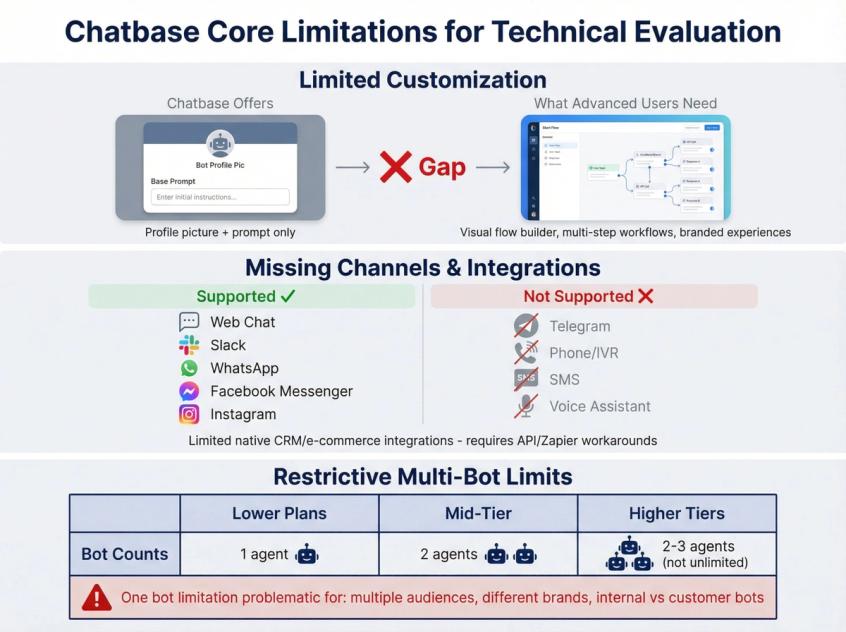
Chatbase offers a basic framework for building bots, but some users find it too restrictive. For example, the UI has minimal customization (essentially just adding a profile picture and tweaking the base prompt).
There's no visual flow builder for crafting rich conversational paths or multi-step workflows. If your use-case needs more tailored dialogues or branded experiences, this can be a blocker.
What Channels and Integrations Does Chatbase Support?
Out-of-the-box, Chatbase can deploy on web chat widgets, Slack, WhatsApp, Facebook Messenger, and Instagram (covering many text channels). But it doesn't natively handle other channels like Telegram or voice/phone IVR at all.
It also lacks built-in support for common CRM or e-commerce systems beyond a few integrations. You can use APIs, Zapier/Make, or custom actions to connect external tools, but not everyone has the resources to build those links.
Many Chatbase alternatives come with broader channel support (including SMS, voice, or Telegram) and deeper plug-and-play integrations for CRM, email, e-commerce, etc.
Can You Run Multiple Chatbots in Chatbase?
If you need several distinct bots (say one for customers and a different one for internal use), Chatbase may fall short. The lower plans restrict you to one AI agent at a time. Even on higher tiers, you get at most 2–3 agents per workspace unless you pay extra.
This "one bot" limitation is problematic for organizations serving different audiences or multiple brands. Alternatives often let you create multiple chatbots or an unlimited number of bots under one account.
Does Chatbase Support Proactive Marketing Automation?
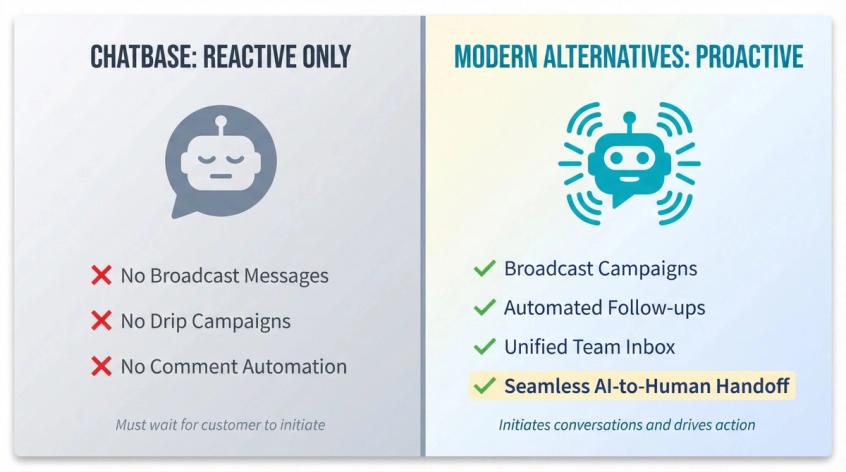
Chatbase agents are reactive (they answer questions when asked). But they can't initiate conversations or send outbound messages on their own. For instance, Chatbase has no ability to broadcast a message or drip a follow-up sequence to users.
It also doesn't have social media comment automation, lead capture forms, or other marketing automation capabilities on channels like Facebook/Instagram or WhatsApp.
If you want your chatbot to proactively engage customers (like recovering abandoned carts, greeting website visitors, or DMing someone who commented on your post), you'll need an alternative platform focused on those marketing use-cases. Platforms like Spur's Instagram Automation excel at comment-to-DM automation and proactive engagement.
How Does Chatbase Handle Human Handoff?
While Chatbase can "escalate" complex queries, it doesn't include a full live chat or ticketing system itself. You must integrate with something like Zendesk Sunshine or Slack to let a human take over chats. There's no shared inbox or agent console built into Chatbase.
Some alternatives provide an all-in-one inbox where AI and human agents collaborate seamlessly (conversation history, assignments, etc.), without bolting on a separate helpdesk. Spur's unified inbox ensures seamless handover between AI and human agents.
How Much Does Chatbase Cost at Scale?
Chatbase uses a credit-based pricing model, which can get expensive as your usage grows. The Hobby plan ($40/month) allows roughly 2,000 messages, and beyond that you pay $12 per extra 1,000 messages. Serving 30k+ messages a month could push the bill well above a few hundred dollars.
Also, removing Chatbase's branding or using a custom domain costs extra fees. Many Chatbase alternatives offer more predictable or flexible pricing (for example, unlimited messaging on higher tiers, or pay-per-resolution models) which might save money at scale.
Is Chatbase Prone to AI Hallucinations?
Chatbase bots sometimes hallucinate (give incorrect answers not supported by your content). As of late 2024, Chatbase had no specific anti-hallucination mechanism, occasionally leading to wrong or made-up responses.
While any GPT-based chatbot can hallucinate, some alternatives are starting to add guardrails (like verification steps or multiple LLMs) to improve factual accuracy. If answer quality is a concern, you may want to compare how different platforms handle this (some allow retrieval from a knowledge base only, to keep answers grounded).
In short, Chatbase is excellent for quick deployment of a Q&A bot, but you might outgrow it if you need more channels, richer customization, marketing outreach, or an integrated support solution. Now, let's look at the leading alternatives and what they offer.
What Are the Top 8 Chatbase Alternatives for 2025?
Below we review eight of the best Chatbase alternatives available today. Each of these platforms lets you build AI-powered chatbots or virtual agents, but they vary in focus:
| Platform Category | Examples | Best For |
|---|---|---|
| All-in-One Support Suites | BoldDesk | Unified support solution with bot, inbox, ticketing, knowledge base |
| Conversational Marketing Platforms | Chatfuel, ManyChat | Social media automation, sales/marketing on Instagram, FB, WhatsApp |
| Omnichannel AI Agents | LiveChatAI, Spur | Wide channel coverage, actionable bots that perform tasks (CRM, bookings, etc.) |
| Developer-Friendly / Open-Source | Botpress | Maximum extensibility, on-premise deployment, source code access |
We'll detail each option's key features, pricing approach, and ideal use cases relative to Chatbase. All pricing and features are current as of late 2025 (but always double-check latest details, as these products evolve fast).
Spur Review: AI Agents That Support & Sell Across WhatsApp, Instagram & Web
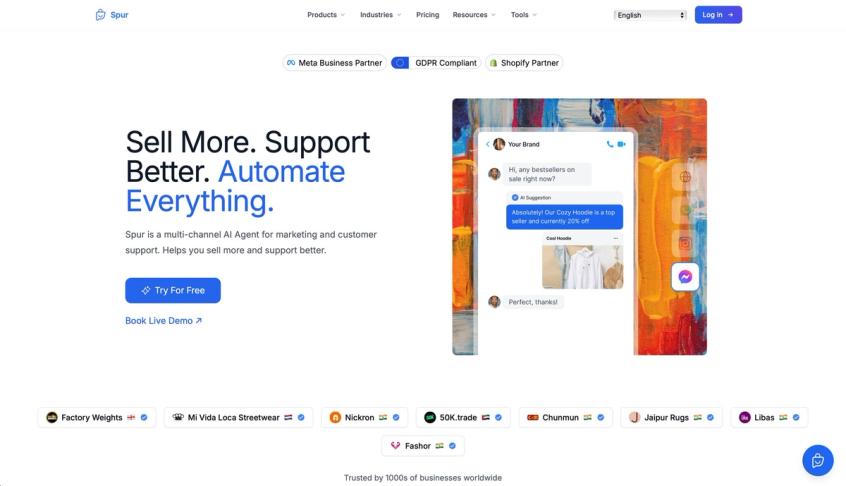
When you need more than just Q&A (when you want an AI that can answer questions, perform tasks, and drive sales across the channels your customers actually use), that's where Spur comes in.
We built Spur because we saw a fundamental gap in the market: most chatbot platforms force you to choose between support or marketing, between AI intelligence or channel reach, between answering questions or taking action. We wanted to create a platform that didn't make you compromise.
What Makes Spur Different from Chatbase?
Actionable AI (Not Just Chatting)
Unlike Chatbase or most alternatives that stop at answering questions, Spur's AI agents can actually do things. When a customer asks "Where's my order?", our AI doesn't just say "Check your email" (it looks up the order in your Shopify or WooCommerce store, tells them the exact status, and can even initiate a return if needed). Need to book a meeting? The AI pulls up your calendar and schedules it. Want to process a payment? It integrates with Stripe or Razorpay to complete the transaction.
This is what we call actionable AI (chatbots that don't just converse, they execute). Track orders. Update records. Book appointments. Process refunds. All without human intervention, but with human-level understanding.
The Channels That Actually Matter
We focus on where your customers really are: WhatsApp, Instagram, Facebook Messenger, and your Spur's Live Chat.
On Instagram, Spur can automatically DM people who comment on your posts (the "Comment-to-DM" funnel that converts engagement into conversations). On WhatsApp, we handle everything from broadcasts to cart recovery to order updates. On your website, our AI-powered chat widget qualifies leads while collecting contact details. And unlike Chatbase, which can't do any of this proactive engagement, Spur makes it effortless.
One Inbox for Everything
Every conversation (whether it starts on Instagram, WhatsApp, Facebook, or your website) flows into a unified team inbox. Your support team sees the full context, the AI's responses, and can jump in seamlessly when needed. No more switching between tools, no more lost conversations, no more "Can you send that on email instead?"
Support and Marketing in One Platform
This is where Spur truly shines. We don't make you choose.
For support, our AI handles FAQs, tracks orders, processes returns, and escalates complex issues to your team with full context. For marketing, we offer broadcasts, drip campaigns, automated cart recovery, and even tools to optimize your Click-to-WhatsApp and Click-to-Instagram-DM ads.
You can send a WhatsApp broadcast about your sale, and when customers reply with questions, the same AI that sent the message can answer them. You can set up an abandoned cart sequence, and when someone returns, the AI remembers the conversation and picks up where you left off. This seamless blend of marketing and support is something Chatbase simply can't do.
Built for E-commerce and D2C Brands
We integrate natively with Shopify, WooCommerce, Stripe, Razorpay, and even logistics platforms like Shiprocket. This means Spur understands your business from day one. Our AI can pull product details, check inventory, look up order status, process refunds (all because it's connected to your actual systems).
And because we're focused on commerce, we've built features specifically for it: automated order confirmations, shipping updates, review requests, and cart recovery flows that actually convert.
Privacy and Compliance You Can Trust
We host our servers in Frankfurt, EU, and allow you to set WhatsApp data localization to Europe for GDPR compliance. Your customer data stays where it should, under the regulations that matter to your business.
How Much Does Spur Cost Compared to Chatbase?
Unlike Chatbase's confusing credit system that can balloon costs, Spur offers straightforward, scalable pricing:
- AI Start at $39/month (monthly) or $31/month (annual): Shopify integration, WhatsApp automation, Click-to-WhatsApp Ads, 25 flows, 1 AI agent with 2,000 credits, 2 team seats
- AI Accelerate at $159/month (monthly) or $127/month (annual): 2 AI agents with 12,000 credits, 5 seats, 50 flows, webhooks, custom AI actions, priority support
- AI Max at $499/month (monthly) or $399/month (annual): 3 AI agents with 40,000 credits, 10 seats, unlimited flows, dedicated account manager, bulk WhatsApp pricing
We also offer a 7-day free trial so you can test everything risk-free. And unlike some platforms, we're transparent about WhatsApp conversation costs (we pass them through at Meta's official rates via our wallet system, no markup).
Why Choose Spur Over Chatbase?
Let's be direct: if all you need is a simple Q&A bot for your website, Chatbase might work fine. But if you want to:
- Sell more by engaging customers on WhatsApp and Instagram with AI that can handle product questions, cart recovery, and order tracking
- Support better with a unified inbox where AI and humans work together seamlessly across all channels
- Automate everything from FAQ responses to broadcasts to cart recovery to Click-to-DM ad campaigns
Then Spur is built for you.
We've helped brands achieve incredible results: 88.75x ROI in 24 hours, 73x ROI on targeted broadcasts, 64 orders from a single Instagram Live with automated comment-to-DM. These aren't just chatbot metrics (they're real business outcomes).
Ready to See the Difference?
Stop juggling multiple tools for chat, support, and marketing. Start your free 7-day trial with Spur and see how actionable AI can transform your customer experience and drive real revenue. No credit card required, no commitment (just results).
Or if you want to learn more about how Spur compares to other platforms, book a demo with our team and we'll show you exactly how we can help your business grow.
BoldDesk Review: All-in-One Helpdesk with AI Agent
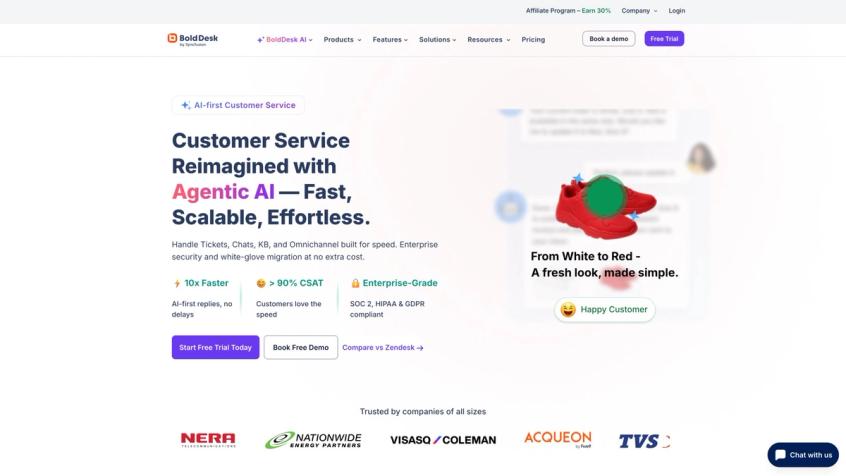
BoldDesk is a next-generation helpdesk platform that tightly blends traditional support tools with AI. Unlike Chatbase, which is a standalone chatbot solution, BoldDesk provides a unified support environment (tickets, live chat, knowledge base, etc.) with an AI agent baked in. This means your AI chatbot is directly connected to your support workflows, rather than being a separate add-on.
What Makes BoldDesk's AI Agent Different?
Autonomous AI Agent
BoldDesk's AI can resolve customer issues end-to-end, not just answer FAQs. It can execute predefined actions via API integrations (for example, resetting a password, checking an order status, updating an account) all during the chat. It continuously learns from past tickets and feedback to improve over time.
Contextual Ticketing
When the AI can't handle something, BoldDesk does a smart handoff to human agents. The full conversation and context carry over into a ticket seamlessly. Your team uses the BoldDesk interface to manage these escalations alongside normal tickets.
Omnichannel Support
BoldDesk's AI agents work across the channels the helpdesk supports (live chat widgets, email, possibly WhatsApp or others via integrations). Customers get a consistent experience, and agents see all channels in one inbox.
No Third-Party Helpdesk Needed
A big difference from Chatbase is you don't need an external live chat or ticket system (BoldDesk is the system of record). This can simplify your stack and eliminate integration hassles. All the standard helpdesk features (workflow automation, SLA management, CSAT surveys, etc.) are included alongside the AI.
Customization and Compliance
BoldDesk allows deep customization of the AI's behavior and responses to match your brand's voice and policies. It also touts enterprise-grade security with compliance certifications like SOC 2, HIPAA, GDPR (appealing if you're in a regulated industry).
How Much Does BoldDesk Cost?
BoldDesk uses a hybrid pricing model. You pay per human agent (starting around $12 per agent/month) plus a small fee per successful AI resolution (about $0.75 per issue solved by the bot). This outcome-based pricing means you're charged only when the AI actually handles something, not just for usage.
For teams that resolve thousands of tickets, it can be cost-effective. (By contrast, Chatbase charges by message volume regardless of whether an answer helped or not.) BoldDesk offers tiers (Scale, Momentum, Enterprise) with increasing features. For instance, the Momentum plan ($25/agent/mo) unlocks the AI agent at that $0.75/resolution rate. All plans include unlimited tickets and free onboarding support.
Who Should Use BoldDesk Instead of Chatbase?
Organizations that want to upgrade their customer support system with AI. If you were considering Chatbase but realized you also need a robust ticketing system or live chat, BoldDesk can kill two birds with one stone. It's suited for mid-size to enterprise teams that value an all-in-one solution, have a moderate budget, and possibly need compliance assurances. On the flip side, if you purely need a small chatbot for your website and already use another helpdesk, BoldDesk might be overkill.
LiveChatAI Review: Scalable AI Chatbot with One-Click Actions
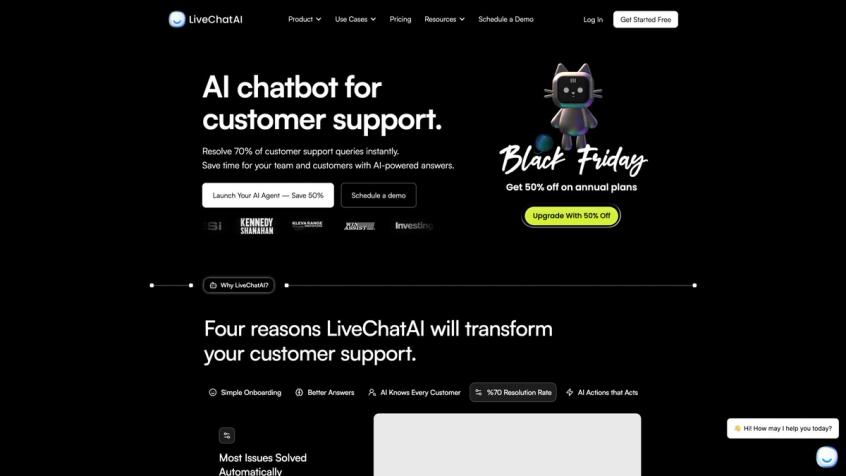
LiveChatAI is a rising competitor that, as the name suggests, focuses on live-chat style AI agents. It's positioned as a cost-efficient Chatbase alternative that covers more channels and automation out-of-the-box. Think of LiveChatAI as an AI chatbot builder + multi-channel messenger combined, similar in spirit to Chatbase but with a few twists.
What Are LiveChatAI's Standout Features?
Rapid No-Code Setup
LiveChatAI emphasizes speed. You can create an agent in minutes by pasting your website URL or docs, which it will crawl to train the bot. No coding needed, and even no OpenAI key needed (they manage the LLM behind the scenes). This is very much like Chatbase's ease of feeding a knowledge base, and the target user is a non-technical team.
AI "Action" Library
A standout feature is the library of one-click AI Actions. LiveChatAI agents don't just answer questions; they can perform tasks like booking a meeting via Calendly, looking up a Shopify product, sending a Slack alert, or updating a CRM record (all within the chat).
These pre-built integrations let the bot "do things" (much like Chatbase's newer AI Actions for booking or CRM updates). For example, if a user says "I'd like to schedule a demo," the bot can pull up a Calendly calendar and set it, no human needed. This focus on actionable chats is a big theme in 2025.
Omnichannel Reach
LiveChatAI supports deployment on websites, in mobile apps, on social messengers, SMS, email, and more (similar to Sendbird's omnichannel approach). It claims agents work "anywhere, all the time." Practically, this means you can use the same AI agent on your web chat, WhatsApp, Instagram, Telegram, and even via API on custom channels. (By contrast, Chatbase's channels are mainly web and a few messaging apps.) If reaching customers on every possible channel is key, this is a plus.
Continuous Learning and Language Support
LiveChatAI handles 95+ languages out-of-the-box. It also remembers context across multi-turn conversations and even across sessions, striving for more human-like, continuous chats. It's designed so that if a customer returns later, the agent can recall past interactions (within limits). Multi-language is something Chatbase also supports (80+ languages), so they're comparable there.
Analytics and Handoff
The platform includes built-in analytics dashboards to track things like deflection rate, customer satisfaction, and usage patterns. It also has a live chat handoff (meaning if the AI can't help, it can transfer the user to a human agent through the LiveChatAI interface with full conversation history). This spares you from needing a separate live chat system for escalations.
What Does LiveChatAI Cost?
One of LiveChatAI's big selling points is flexible pricing. Plans start with a Free tier (250 messages/month) to try out. Paid plans range from Basic ($39/mo for 4,000 messages), up to Advanced ($189/mo for unlimited messages), and an Expert tier ($389/mo) also unlimited but with more enterprise features.
All plans allow multiple bots (Basic includes 1 bot, higher tiers allow more). Notably, the unlimited messaging options mean your costs won't spike if volume surges. This is a different model from Chatbase's pay-per-message credits, and can be attractive for high-volume use cases. Essentially, LiveChatAI is betting on a flat-rate model at scale, whereas Chatbase would charge roughly $500 for about 40k messages (per month).
Who Should Choose LiveChatAI Over Chatbase?
Teams that want a Chatbase-like bot with more muscle (especially small to mid-sized businesses that need broad channel coverage and affordable scaling). If you anticipate heavy chatbot usage (tens of thousands of chats) or want your bot to do things like schedule appointments and handle e-commerce queries, LiveChatAI is a strong alternative. It's also good for those who prefer predictable flat pricing over worrying about message credits. Since LiveChatAI is relatively new (launched around 2023), you'd want to ensure it meets any security or support standards your org requires. But its feature set is cutting-edge for omnichannel AI customer service.
Botpress Review: Open-Source AI Platform for Developers
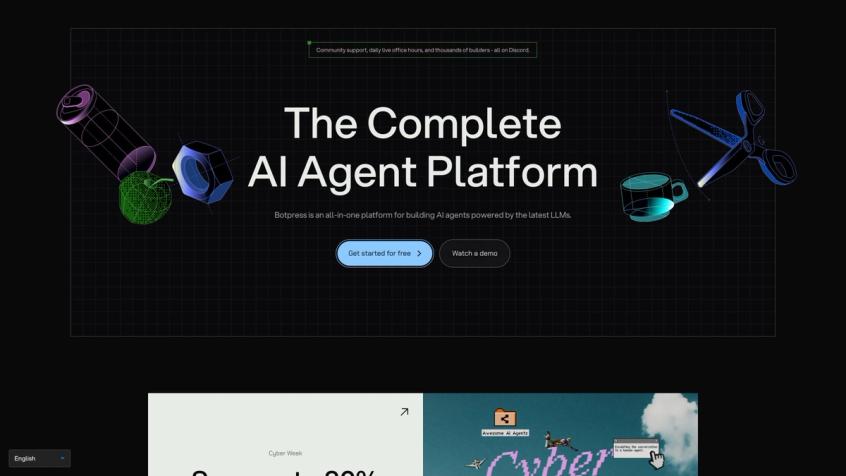
If you have development resources and want total control over your chatbot, Botpress is a top alternative. Botpress is an open-source conversational AI framework (written in JavaScript/TypeScript) that lets you build, deploy, and host your own bots. It's been around for years and is known for being highly extensible. Essentially, Botpress is the polar opposite of a no-code tool like Chatbase: it's a dev platform for chatbots.
Why Choose Botpress for Custom AI Agents?
Open-Source and Self-Hostable
The core Botpress Server is open-source (GPL license for community edition). You can run it on your own servers or cloud, which is attractive if you need data privacy or on-premise deployment. Unlike Chatbase, which is a SaaS cloud service, Botpress gives you the code. There's also a cloud offering and enterprise edition with extra features, but the ability to self-host is a big differentiator.
Extensibility
Botpress provides a rich plugin architecture and SDK. Developers can create custom modules, define flows, integrate with any database or API, and even modify the underlying NLU engine if needed. You're not limited by a predefined set of integrations; anything you can code, you can connect. This is ideal if your chatbot needs to hook into in-house systems or you have unique logic to implement.
Visual Flow Builder + Code when needed
It offers a visual dialog manager interface for building bot flows (state graphs, decision trees, etc.), which is useful for mapping out conversations. But you can drop down to code for advanced logic. This hybrid approach is great for teams that want to craft complex interactions. Chatbase, by comparison, doesn't have a visual flow editor at all (it relies on pure Q&A). So if you need a mix of free-form Q&A and structured flows, Botpress provides the latter.
Choice of NLP Models
Botpress allows integration of different NLP providers. It historically had its own NLU, and now supports using large language models (GPT-3/4, etc.) as well. You can even mix and match (use rules for certain intents and GPT for others). This flexibility can help control costs (use cheaper model for simple FAQ, only call GPT-4 for hard questions) and performance.
Community and Prebuilt Modules
There's a community around Botpress that has created various connectors and modules. For example, connectors to Telegram, WhatsApp (via Twilio or other APIs), Slack, etc., have been built. You may still need to do some tweaking, but you're not necessarily starting from scratch for each channel.
What Does Botpress Cost?
The open-source Botpress is free to use. The company also offers a Botpress Cloud with pay-as-you-go pricing roughly around $0.01 per API call/message, plus premium enterprise plans for dedicated infrastructure. The cost will depend on usage and whether you use their managed services or self-host. In the context of Chatbase, if you have low volume, Chatbase's free or $40 plan might be simpler. But if you anticipate very high volume or want to avoid per-message costs by hosting yourself (and possibly fine-tuning an open LLM), Botpress could be more economical long-term. Keep in mind self-hosting has its own maintenance costs though.
When Should You Use Botpress Instead of Chatbase?
Developers, IT-heavy organizations, and use-cases requiring on-prem or heavy customization. If you have a capable engineering team or the budget to hire Botpress experts, it's arguably the most powerful platform (you can tailor everything). Industries like finance or healthcare that are wary of SaaS may prefer an open-source solution. Also, if you want to integrate a chatbot deeply into your product (say, in your mobile app or as part of your software), Botpress gives you the building blocks. Non-technical teams will likely find it too complex though (it's not plug-and-play like Chatbase). In summary, Botpress is best when full control and extensibility matter more than quick setup.
BotPenguin Review: Unlimited Bots & Conversations
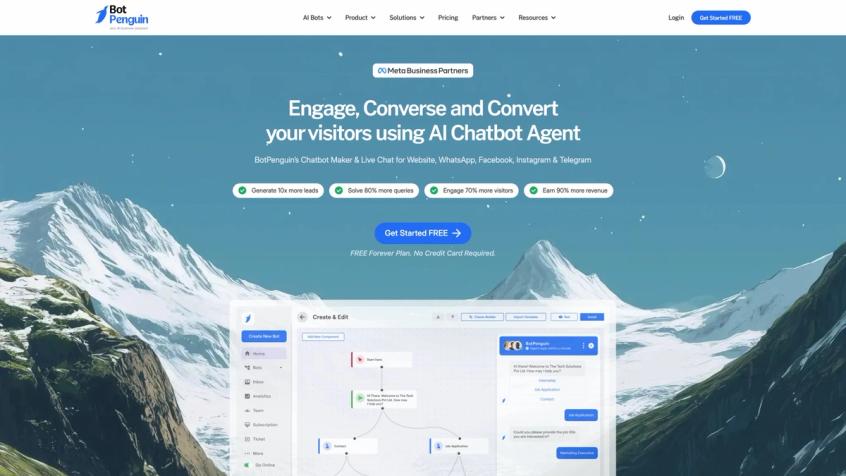
BotPenguin is a user-friendly chatbot platform geared toward businesses that want to be everywhere their customers are (web, WhatsApp, Facebook, Instagram, Telegram, etc.). It markets itself as an affordable, omnichannel Chatbase alternative with more features included. If Chatbase feels limited to just Q&A on a website, BotPenguin tries to give you a broader customer engagement toolkit in one package.
What Makes BotPenguin Stand Out?
Multi-Channel Support
BotPenguin shines in channel coverage. You can deploy bots on your website, WhatsApp, Facebook Messenger, Instagram DM, Telegram, and even offer chat on channels like Line or Skype (plus more via Zapier). Essentially, it ensures you "never miss a conversation" by unifying all those entry points. Chatbase, in comparison, didn't support Telegram or some social channels as of early 2025. So if your customers reach out on varied platforms, BotPenguin keeps it under one roof.
Unlimited Bots & Conversations
A big selling point: BotPenguin does not impose strict limits on the number of chatbots or conversations on many of its plans. They advertise unlimited chatbots and unlimited messaging even on relatively low-priced plans. This is a stark contrast to Chatbase's limits (where even the $150 plan caps you at 2 bots and roughly 12k messages). For a business or agency that needs lots of bots (for multiple clients or departments) or handles a high volume of chats, this could be a huge cost advantage.
No-Code Bot Builder with Templates
BotPenguin offers a visual, drag-and-drop chatbot builder. It also comes with 40+ pre-designed templates for different industries and use cases (e-commerce, real estate, customer support, etc.). You can launch a bot in minutes using these templates and then train it further on your data. This makes setup easy for non-tech users. It also supports multilingual bots (95+ languages) out of the box.
Integration and Actions
It boasts 60+ integrations natively, including CRM and email marketing tools, plus over 6,000 via Zapier. BotPenguin bots can segment users with tags/attributes, trigger campaigns, schedule messages, and even let customers book appointments (through Google Calendar, Calendly, etc.) right in the chat.
These capabilities mean the bot isn't just answering FAQs (it's assisting in marketing and sales funnels). For example, it can automatically send drip campaigns to nurture a lead after an initial chat, or broadcast a promotion to all subscribers on WhatsApp or Messenger. Chatbase has none of those campaign/broadcast features.
Human Handoff & Live Chat
BotPenguin includes a live chat dashboard so that your agents can jump in when needed. It supports real-time human takeover, with features like typing indicators and conversation history. This way, it can function as a combined chatbot + live chat system.
How Affordable Is BotPenguin?
One of BotPenguin's strongest claims is being a budget-friendly alternative. They frequently mention that Chatbase's pricing is a barrier for some, whereas BotPenguin has a more accessible model. For instance, BotPenguin offers a free plan and low-tier plans that allow unlimited conversations, which can save money if you have lots of traffic. (Exact pricing varies, but as an example, their highest annual plan was quoted around $3,990/year which supports unlimited usage, whereas Chatbase's highest published plan was roughly $500/month with limits.)
Is BotPenguin Right for Your Business?
Small-to-medium businesses and digital marketers who need a do-it-all chatbot across marketing and support. If you're running an online store, for example, BotPenguin can capture leads from your Facebook comments (with "comment to DM"), answer product queries on your site, send out WhatsApp promotions, and escalate to your team when needed (all in one tool). It's especially useful if you want to automate lead generation and customer engagement on social media channels, which is something Chatbase simply wasn't designed for.
The trade-off is that BotPenguin, being broad, might not have the ultra-deep AI capabilities or polish in each area that a specialized tool has. Its AI is quite capable (you can train on your website or FAQs, much like Chatbase), but enterprise users might find the analytics or advanced NLP tuning less robust than dedicated platforms. Nonetheless, for many businesses the overall value (features vs. price) is hard to beat.
Chatfuel Review: Best for Facebook & Instagram Bots
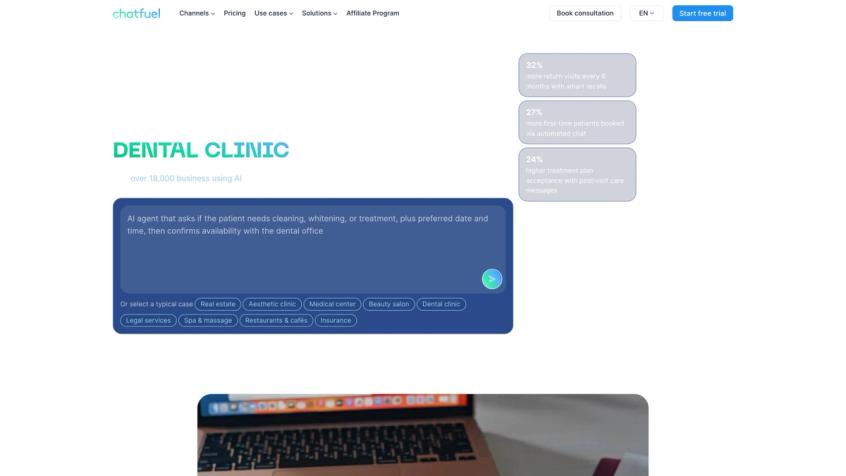
Chatfuel is one of the veterans in the chatbot space, originally known as a leading platform for building Facebook Messenger bots. It has since expanded to support Instagram and WhatsApp bots, and recently added AI capabilities to train bots on your content. Chatfuel can be seen as a Chatbase alternative focused on sales and marketing conversations on social channels. It's especially popular for e-commerce and lead generation via Facebook/Instagram.
What Are Chatfuel's Core Strengths?
Visual Bot Builder
Chatfuel offers an intuitive drag-and-drop interface to design chat flows. Even non-coders can create interactive conversation sequences with cards, quick replies, forms, and more. This is great for guided experiences like product finders or quiz-like flows. Chatbase, conversely, doesn't have a visual flow editor (it relies on pure Q&A). So if you want a mix of free-form Q&A and structured flows, Chatfuel provides the latter.
Multi-Channel Marketing Focus
Chatfuel excels at connecting with customers on Facebook, Instagram, and WhatsApp. For example, you can build an Instagram DM bot that handles FAQs or showcases products, and an automated Facebook Messenger bot for your page that can qualify leads or take orders. They also introduced WhatsApp bot support (which tends to be pricier due to WhatsApp's template costs). Out-of-the-box integrations with Facebook's systems (for Facebook Ads) allow things like click-to-Messenger or click-to-Instagram-DM ad campaigns that lead into your bot flows. This is something Chatbase doesn't do (Chatbase's WhatsApp integration is more about answering questions via the Cloud API, not running ad-linked campaigns).
ChatGPT-Powered Responses
Recognizing the trend, Chatfuel has integrated OpenAI's GPT model into its platform. This means aside from scripted flows, the bot can fall back on a ChatGPT-like Q&A that you train on your data. Essentially, Chatfuel added a feature similar to Chatbase: you can upload a document or input your website URL, and Chatfuel's AI will use that knowledge to answer user queries in a conversational way. This hybrid approach (flows + AI) gives flexibility. For example, the bot can greet and give options ("track order, product info, talk to support") via a flow, but if the user asks something off-script, the GPT brain can attempt an answer from the knowledge base.
E-commerce and CRM Integrations
Chatfuel has specific integrations for e-commerce, like Shopify, and can pull in product data to recommend items or check order status. It also connects to systems like HubSpot or Zapier, enabling you to log leads or update a CRM when a conversation happens. This is important for using the chatbot as part of a sales funnel.
Proven at Scale on FB/IG
With over 7+ years in the market, Chatfuel has powered many large Facebook bots. It's optimized for the quirks of those platforms (Messenger's rules). If your primary need is customer engagement on Facebook or Instagram, Chatfuel is arguably the most specialized tool for that. Many e-commerce brands use it for things like DMing coupon codes to users who comment on a post (comment-to-DM) or running automated Messenger campaigns.
What Is Chatfuel's Pricing Model?
Chatfuel's pricing is channel-based. As of 2025, the Business plan for Facebook + Instagram bots starts around $14.39/month, whereas for WhatsApp bots it starts around $41.29/month. Essentially, WhatsApp bots are priced higher due to the additional costs involved. They also have an Enterprise plan for higher volumes. The pricing often scales by number of subscribers or monthly active users in your bot, rather than pure message count.
Compared to Chatbase ($40/mo Hobby for one bot), Chatfuel can be cheaper if you're just doing a basic FB bot, but costs can add up if you use multiple channels or have tens of thousands of users. One advantage is that Chatfuel's pricing includes all the front-end features (broadcasts, flows, etc.) (you're not paying per message aside from WhatsApp template fees). Also, no additional OpenAI charges on your end; it's included when you use their AI feature.
When Should You Use Chatfuel Instead of Chatbase?
Marketers, retailers, and small businesses whose chatbot strategy centers on social media and messaging apps. If you're running a Shopify store and want to automate Instagram DMs, or you're a service business generating leads through Facebook ads, Chatfuel is built for you. It's less appropriate if you need a website or helpdesk chatbot only (in that case Chatbase or others might be simpler). Also, Chatfuel's AI knowledge training is newer, and by some accounts not as advanced in understanding as Chatbase's core (Chatfuel's NLP can sometimes fail to interpret input exactly, according to user feedback). But the gap is closing. Overall, choose Chatfuel as a Chatbase alternative if your priority is driving engagement and sales on FB/IG/WhatsApp with a mix of guided flows and AI answers.
ManyChat Review: Instagram & WhatsApp Marketing Automation
ManyChat is another major player in the chatbot world, often mentioned in the same breath as Chatfuel. It's widely used for building bots on Instagram, Facebook Messenger, and WhatsApp, and it pioneered the concept of "chat marketing." ManyChat's platform is similar to Chatfuel's (visual flow builder, no-code), but with its own ecosystem of features and a huge user community. Recently, ManyChat has also integrated AI to power free-form Q&A in its bots. While ManyChat wasn't originally designed for knowledge base Q&A, it's worth considering as an alternative if your needs straddle marketing and support.
What Makes ManyChat Unique?
Visual Flow Designer & Templates
ManyChat provides a very approachable flow builder where you can craft conversations with triggers, conditions, and actions. For instance, you can create a sequence: if user says "pricing", send a card with pricing info, then ask "Would you like to be contacted by sales?" etc. It also offers a library of templates (for things like collecting an email, running a contest, FAQs for an online store, etc.), so you can get started quickly. This strong focus on flows makes it easy to enforce certain paths or collect structured data (like lead info), which pure Chatbase-style bots might not do as well.
Instagram & Facebook Automation
ManyChat is officially partnered with Meta and was one of the first to support the Instagram Messaging API for automation. This means it can automatically respond to Instagram story mentions, comments, and DMs in a way that complies with Instagram's rules. For example, you can set up ManyChat to DM someone the moment they comment a specific keyword on your Instagram post (popular for giveaways or "comment to get a link" campaigns). On Facebook, ManyChat can auto-reply to comments and send follow-up Messenger messages, use One-Time Notifications, and more. These marketing automation features are beyond Chatbase's scope, and even beyond what Chatfuel historically offered, making ManyChat very attractive for social engagement.
E-commerce Integrations
ManyChat connects with Shopify and other e-commerce tools. You can embed product catalogs in chat, recover abandoned carts via Messenger/WhatsApp messages, and track conversion events. It effectively acts as both a support bot (answering "Where's my order?") and a marketing tool (sending a promo code or back-in-stock alert). Chatbase does not offer proactive outreach like that, so ManyChat covers that gap.
AI Assist (Beta)
In 2024, ManyChat introduced AI capabilities, such as an "AI Reply" that can draft responses for unanswered questions using GPT. While ManyChat doesn't let you upload an entire knowledge base in the same way Chatbase does, it can be "trained" in context. The AI feature is still evolving (users have noted it's decent for simple FAQs but not a full replacement for a trained knowledge model). Given ManyChat's strong structured features though, the AI can be used to handle off-script queries as a fallback, and the platform will likely continue improving this. Importantly, ManyChat cannot yet ingest large documents or sitemaps like Chatbase; it's more about summarizing or rephrasing info you program into it (or pulling from connected sources via API). So if your primary need is an AI that can answer from lengthy documentation, ManyChat isn't as straightforward. But for short answers and helping your team craft replies, it's a nice add-on.
Multi-Channel from One Workflow
ManyChat, like BotPenguin, allows you to build a flow once and deploy it across Messenger, Instagram, WhatsApp, or even SMS. It will adjust the format as needed (for example, WhatsApp might use text templates for buttons). This unified approach can save time if you want a presence on all channels.
How Much Does ManyChat Cost?
ManyChat offers a Free plan for basic bots on Messenger (up to a certain audience size). The Pro plans start around $15/month and up, scaling with your number of subscribers and active contacts. WhatsApp is typically an add-on because it involves BSP (Business Service Provider) fees; ManyChat's WhatsApp pricing might involve a separate package. In general, ManyChat's cost is comparable to Chatfuel (possibly cheaper for purely FB/IG usage, but can become significant if you have tens of thousands of subscribers since it charges per 1,000 subscribers beyond the free limit). The value is that those subscribers can then be engaged repeatedly (which could be more ROI positive than Chatbase's per-message cost if you're doing marketing outreach).
Is ManyChat Better Than Chatbase for Marketing?
Businesses that primarily view chatbot automation as a way to grow sales, capture leads, and engage customers on social media, while still handling basic support queries. ManyChat is less ideal for pure knowledge base support compared to Chatbase; you wouldn't use it to ingest a 100-page FAQ document, for example. But if your FAQ is fairly short or you don't mind manually inputting Q&A pairs (ManyChat does have a "Q&A" feature where you can list common questions and their answers), it can do the job. ManyChat's strength is being a unified marketing + support bot. For instance, a fashion brand can use it to automatically answer "Do you ship to Canada?" and also send a broadcast about a Black Friday sale. If that aligns with your needs, ManyChat is a compelling Chatbase alternative that adds a lot of marketing muscle.
(Notably, we've observed that ManyChat's AI add-on doesn't allow training on your full knowledge base, only on provided Q&A pairs, which is a limitation we aim to solve at Spur. So, if training on your own data is crucial, keep that in mind.)
Crisp Review: Live Chat + AI Chatbot Combined
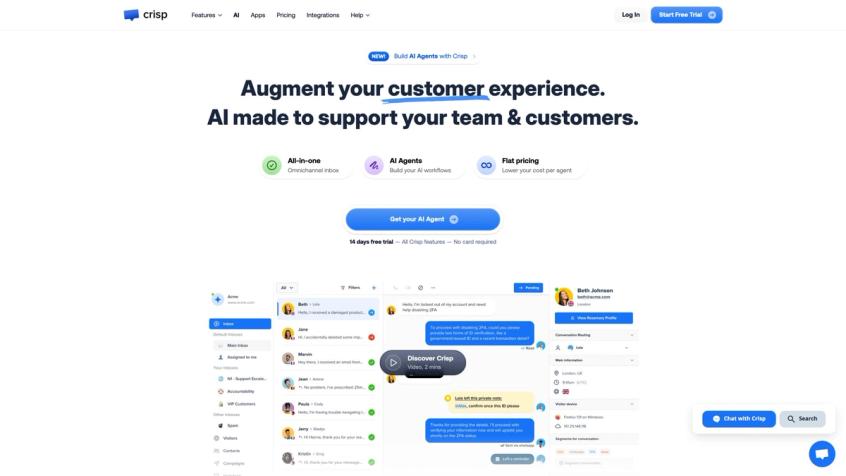
Crisp is a customer communication platform that offers a little bit of everything: live chat software for your website, multi-channel messaging (website, mobile, email, Messenger, etc.), a shared inbox for your team, and recently, an AI chatbot add-on. Crisp could be seen as a competitor to platforms like Intercom or Zendesk, but they've introduced Crisp AI to stay current. As a Chatbase alternative, Crisp brings the advantage of a built-in human support suite plus an AI agent that can be trained on your content.
What Does Crisp Offer Beyond Chatbase?
Shared Inbox for All Channels
Crisp's core product is a centralized inbox where your team can respond to chats from multiple sources (your website chat widget, Facebook Messenger, Twitter DMs, email, etc.). It's like a helpdesk lite. This means your AI chatbot in Crisp is directly connected to a place where humans can monitor and intervene. If the bot can't handle something, an agent can jump in via the Crisp dashboard. This one-stop approach is great for small teams who don't want separate systems for bot and live chat.
AI Knowledge Base Training
Crisp AI (often called Crisp Chatbot) lets you train a bot on your website content or knowledge base, similar to Chatbase. You can feed it your FAQ or documentation, and it will generate answers from that data. It's designed so that the bot is available 24/7 on your channels to handle common queries. The difference is when it gets a question it can't answer confidently, it can seamlessly route the visitor to a human in the same chat. Chatbase can escalate, but typically via an integration (Crisp does it natively since the live chat is built-in).
Multi-Channel Deployment
You can deploy Crisp's chatbot on your website chat widget, but also have it respond on WhatsApp (via Twilio), Messenger, Telegram, etc., using Crisp's integrations. Crisp supports Telegram and other channels that Chatbase doesn't by itself. So if you want, say, a Telegram chatbot that uses your knowledge base, Crisp can provide that through its connector (Chatbase alone would require you to build a custom integration via API for Telegram).
Campaigns and Automation
Crisp has some marketing features like sending targeted messages to users (a chat nudge if they've been on the pricing page for 60 seconds). It's not as robust as ManyChat for campaigns, but you can create some automated workflows. Crisp also supports "MagicMap" to see live visitors and engage proactively. These are more live-chat oriented features, but they complement the AI: you could let the AI handle basic stuff and then proactively invite a human chat for high-value visitors.
What Is Crisp's Pricing?
Crisp's pricing is simpler: a Pro plan (roughly $25/mo) and Unlimited plan (roughly $95/mo) per website, which include various features and chat volume. The AI chatbot feature comes with the Unlimited plan (or as an add-on). There isn't a per-message charge for the bot responses themselves, aside from any OpenAI usage limits behind the scenes (Crisp might cap or charge extra after X number of AI conversations, specifics to check on their site). But generally, if you're already paying for Crisp's suite, adding the chatbot is cost-effective. This can be an advantage over Chatbase which would be an additional cost on top of other tools.
Who Should Choose Crisp Over Chatbase?
Teams that want a combined live chat + chatbot solution primarily for customer support on web and social channels. Crisp is often used by SaaS companies, startups, and SMBs that need to manage inbound inquiries across different channels. If you were considering Chatbase but realized you also need a good live chat and maybe a lightweight CRM, Crisp could kill those birds with one stone (similar to BoldDesk but aimed at a smaller scale). The AI in Crisp might not be as advanced in features as Chatbase's (Chatbase has custom code actions, for example, whereas Crisp's bot is more Q&A-focused), but it covers the main need of answering FAQ from your docs. Also, Crisp's mobile app and team collaboration (sharing notes in chats, etc.) are perks if you want your support staff to have a full toolkit. In summary, Crisp is a great Chatbase alternative if improving customer support efficiency is your goal and you appreciate having a human+AI hybrid inbox.
Chatbase Alternatives: Pricing & Features Comparison
| Platform | Starting Price | Key Strength | Best For |
|---|---|---|---|
| BoldDesk | $12/agent/mo + $0.75/resolution | All-in-one helpdesk with AI | Mid-size teams needing unified support |
| LiveChatAI | Free (250 msg/mo) | Unlimited messaging plans | High-volume usage at flat rates |
| Botpress | Free (open-source) | Complete customization | Developer-heavy organizations |
| BotPenguin | Free plan available | Unlimited bots/conversations | Agencies, multi-brand businesses |
| Chatfuel | $14.39/mo (FB/IG) | Social media marketing flows | E-commerce on Facebook/Instagram |
| ManyChat | Free (basic) | Instagram automation | Social media lead generation |
| Crisp | $25/mo (Pro plan) | Live chat + AI combo | Small teams wanting unified inbox |
| Spur | $31/mo (annual) | Actionable AI + Marketing + Support | D2C brands, WhatsApp/IG automation |
How to Choose the Best Chatbase Alternative for Your Business
We've covered a lot of options (from enterprise helpdesks to social media bot tools to open-source frameworks). How do you decide which is best for you? Here are a few considerations to guide your choice:
⭐ Business Size and Budget
A startup or small business will have different needs than a large enterprise. Smaller teams often focus on affordability and ease of use, leaning toward no-code platforms with flat pricing. Larger organizations might justify higher costs for advanced features, compliance, and scalability. Be realistic about your budget for both the software and the internal resources to manage it. (For example, Botpress is free but requires developer time, which is its own cost.)
⭐ Primary Use Case (Support or Marketing or Both?)
Ask yourself what the main goal of your chatbot is. If it's customer support automation, you'll want strong knowledge base integration, possibly ticketing, and accuracy in answers (BoldDesk, LiveChatAI, Spur, Crisp fit here). If it's marketing and sales, you'll need proactive engagement tools, rich messaging features, and CRM hooks (ManyChat, Chatfuel, BotPenguin excel there). Some platforms, like Spur, aim to handle both, but you should still map your priority. Choose a platform that naturally aligns with your use-case out of the box (it will get you to value faster).
⭐ Technical Skill Available
Consider your team's technical prowess. No-code platforms like Chatbase, Spur, or ManyChat let non-engineers build powerful bots with a visual interface. Developer frameworks like Botpress or Rasa give ultimate control but require programming. If you don't have a developer and don't want to hire one, lean toward no-code. If you have an engineering team that loves to tinker (or strict infosec requirements that mandate self-hosting), an open-source or custom-build approach could be viable. It's crucial to be realistic here: the coolest features in an open platform mean nothing if you can't reliably implement and maintain them.
⭐ Integration with Your Stack
List out the tools you absolutely need to connect. Do you use Shopify? Salesforce or HubSpot CRM? Do you rely on Zendesk or Intercom? Ensure the alternative you consider has either a native integration or an easy workaround (Zapier, API, etc.) for those systems. Also consider channels: if your audience is big on Telegram or WeChat, pick an alternative that supports those, since Chatbase doesn't. On the flip side, if you mainly just need a website chat and occasional email deflection, you don't need to pay extra for 10 channels you won't use.
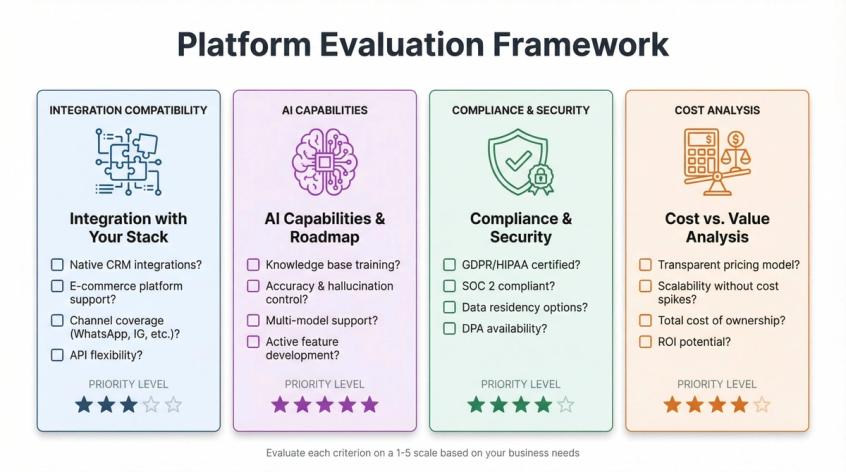
⭐ AI Capabilities and Roadmap
All these platforms use AI, but not equally. Evaluate how each one sources answers (strictly your data vs. open web vs. both), whether you can trust its accuracy, and if it offers features to reduce errors (like human review, multiple model options, or source citations). Some solutions (like BoldDesk or Spur) let you fine-tune how the AI behaves or when it should escalate. If maintaining a certain tone or compliance in answers is critical, look for those customization options. Also, check if the vendor is actively updating AI features (this field is moving fast, and you want a partner that keeps up).
⭐ Compliance and Security
For enterprises or sensitive industries, things like GDPR compliance, SOC 2 certification, HIPAA compliance, and data residency are key. BoldDesk explicitly mentions those compliances; Spur provides GDPR-focused data localization; LivePerson and Ada are known for enterprise security, etc. If you have specific requirements (needing a DPA or the ability to scrub customer data), make sure the alternative can meet them. Sometimes this will narrow the field considerably (for instance, open-source Rasa might be the choice for on-prem, or a big vendor like Microsoft Power Virtual Agents for strict compliance).
⭐ Cost vs. Value Analysis
Finally, weigh the total cost of ownership against expected benefits. Chatbase's simple pricing might actually be costlier if you need to add on a bunch of other tools (live chat software, etc.) to fill gaps. An "all-in-one" alternative might seem pricier per month, but if it replaces two or three separate subscriptions (and saves you time hopping between them), it could be worth it. Look at your estimated volume (number of conversations or users) and project the costs on each platform over a year. Most offer free trials (take advantage of those to gather real data on how many messages or API calls you'd use, then extrapolate the cost). Also consider ROI: if BoldDesk's bot solves enough tickets to save one support rep's salary, that might justify its cost easily.
Pro tip: If possible, start with a pilot on 2–3 platforms that seem to fit your needs. Many have a free tier or trial. Create a small knowledge base or use a subset of customers, and run parallel tests. Measure things like accuracy of answers, how easy the setup was, and how customers responded. The quantitative data (deflection rate, CSAT, conversion rate uplift, etc.) combined with qualitative feedback will make the best alternative pretty clear.
Finding the Right AI Chatbot Platform for Your Needs

The landscape for AI chatbots and virtual agents in 2025 is rich and evolving. Chatbase may have been one of the early darlings (a quick way to get a ChatGPT-like bot on your site), but as we've seen, there are plenty of alternatives that cater to different needs. Your goal should be to find the platform that aligns with your business goals and growth stage.
- If you need a complete support solution with AI at its heart, something like BoldDesk or Crisp could transform your helpdesk workflow by combining bot and agent into one powerhouse.
- If you're all about lead gen and marketing automation on social, ManyChat or Chatfuel might serve you better, turning DMs into conversions with a mix of AI and scripted flows.
- For those who demand full control or self-hosting, Botpress (or frameworks like Rasa) give the flexibility to build exactly what you envision (just be ready to invest the dev effort).
- And if you're looking for a way to sell more and support better simultaneously across WhatsApp, Instagram, web, and beyond, Spur provides that multi-channel, actionable AI approach out of the box.
Ultimately, the best Chatbase alternative is the one that makes your customers happier and your team more efficient. All the options in this guide have their strengths; now it's up to you to match those to your priorities. Consider starting with the one that fits your most pressing need (be it cutting support backlog or boosting sales or both). Most solutions offer a free trial or demo (use them!). Get a feel for the UI, see how the AI handles your actual FAQs, and check that the integration with your systems works as advertised.
In 2025 and beyond, AI agents will play an ever larger role in business growth and customer experience. Choosing the right platform now will set the foundation for how well you meet your customers' expectations in this new era of instant, intelligent service.
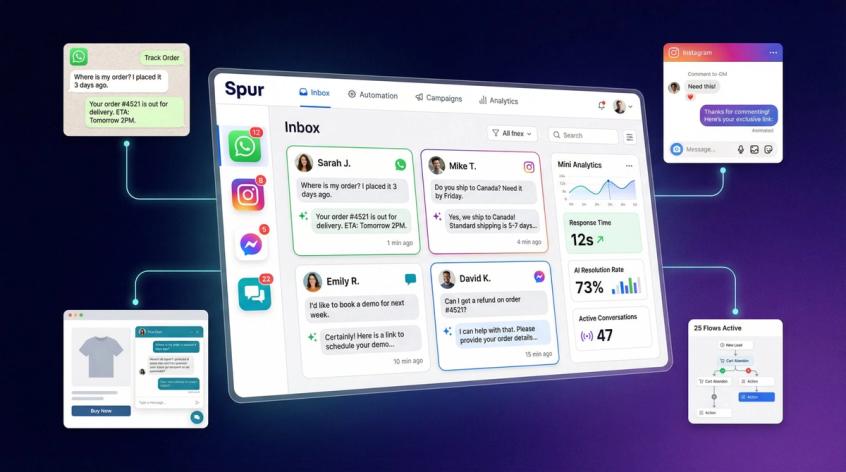
Ready to see what AI can do when it's built for both support and growth? Start your free trial with Spur today (no credit card required, no long setup, just results). Or schedule a demo and let us show you exactly how we can help you sell more, support better, and automate everything.
Frequently Asked Questions
Several platforms offer free tiers: LiveChatAI (250 messages/month), BotPenguin (free forever plan), and ManyChat (free for basic Messenger bots). Spur offers a 7-day free trial of our full platform, which is often better for evaluating whether a tool truly fits your needs. For long-term free usage, BotPenguin's free plan is the most generous, though it has limitations on advanced features.
Most alternatives offer better integration options than Chatbase. BoldDesk and LiveChatAI provide extensive API access and integrations. ManyChat and Chatfuel connect with major e-commerce platforms like Shopify. Spur offers native integrations with Shopify, WooCommerce, Stripe, Razorpay, and other commerce tools (plus custom webhooks for any system). The key is to verify that your specific tools are supported before committing to a platform.
For WhatsApp specifically, Spur, BotPenguin, and ManyChat are strong contenders. Spur excels here because we were built with WhatsApp Business API as a core focus (offering broadcasts, drip campaigns, cart recovery, order updates, and AI-powered responses all in one platform). We also handle WhatsApp conversation costs transparently through our wallet system and offer features like DeliveryBoost for high-volume sending. If WhatsApp is critical to your business, Spur is purpose-built for that.
Most modern alternatives support multiple languages. LiveChatAI and BotPenguin both claim 95+ languages. Chatfuel and ManyChat support major languages but may require manual setup per language. Spur supports multiple languages and can be trained on your content in any language your business operates in. The AI models (GPT-4, Claude, Gemini) that power these platforms are inherently multilingual, so the real question is how easy each platform makes it to manage multi-language content.
Migration difficulty varies by platform. Most alternatives allow you to upload your knowledge base (PDFs, website URLs, etc.) just like Chatbase, so recreating the bot's knowledge is straightforward. The challenge is in recreating any custom flows, integrations, or actions you've built. Spur offers onboarding support to help you migrate, and our team can assist with knowledge base setup, channel connections, and integration configuration. We've helped dozens of businesses migrate from various platforms.
Yes, most alternatives provide more comprehensive analytics. BoldDesk offers detailed resolution metrics and CSAT tracking. LiveChatAI provides deflection rate, satisfaction, and usage analytics. Spur includes analytics for both AI performance and campaign effectiveness (including conversation analytics, agent performance, campaign ROI, and channel-specific metrics). If data-driven optimization matters to your team, nearly any alternative will give you deeper insights than Chatbase's basic message count statistics.
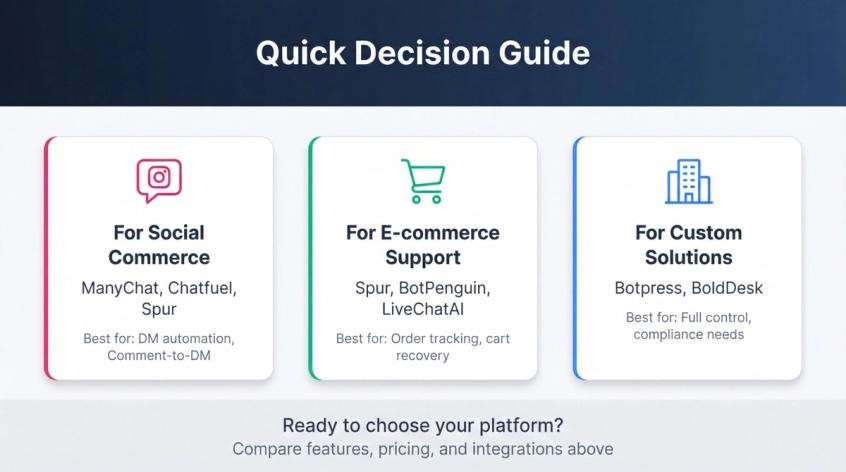
ManyChat and Chatfuel are veterans in Instagram automation, with strong Comment-to-DM and story mention features. Spur offers the same Instagram automation capabilities (comment-to-DM, story replies, auto-responses) while also connecting Instagram conversations to your unified inbox alongside WhatsApp, web chat, and Facebook. This means you can have AI handle Instagram DMs while your team manages escalations in one place. If you need Instagram automation plus the ability to nurture those leads across channels, Spur provides that cohesive experience.
Absolutely. Spur is specifically built for e-commerce and D2C brands, with native Shopify and WooCommerce integrations, automated order tracking, cart recovery flows, and payment processing via Stripe/Razorpay. ManyChat and Chatfuel also have strong e-commerce features for social commerce. But if you want a platform that handles both the marketing side (cart recovery, broadcasts, Click-to-WhatsApp ads) and the support side (order tracking, returns, product questions) in one system, Spur is the only one built from the ground up for commerce.
Was this article useful?